. 2014 Jan;16(1):21-30.
doi: 10.1593/neo.131658.

Chromatin redistribution of the DEK oncoprotein represses hTERT transcription in leukemias

Affiliations

Chromatin redistribution of the DEK oncoprotein represses hTERT transcription in leukemias

Maroun Karam et al. Neoplasia. 2014 Jan.

Abstract

Although numerous factors have been found to modulate hTERT transcription, the mechanism of its repression in certain leukemias remains unknown. We show here that DEK represses hTERT transcription through its enrichment on the hTERT promoter in cells from chronic and acute myeloid leukemias, chronic lymphocytic leukemia, but not acute lymphocytic leukemias where hTERT is overexpressed. We isolated DEK from the hTERT promoter incubated with nuclear extracts derived from fresh acute myelogenous leukemia (AML) cells and from cells expressing Tax, an hTERT repressor encoded by the human T cell leukemia virus type 1. In addition to the recruitment of DEK, the displacement of two potent known hTERT transactivators from the hTERT promoter characterized both AML cells and Tax-expressing cells. Reporter and chromatin immunoprecipitation assays permitted to map the region that supports the repressive effect of DEK on hTERT transcription, which was proportionate to the level of DEK-promoter association but not with the level of DEK expression. Besides hTERT repression, this context of chromatin redistribution of DEK was found to govern about 40% of overall transcriptional modifications, including those of cancer-prone genes. In conclusion, DEK emerges as an hTERT repressor shared by various leukemia subtypes and seems involved in the deregulation of numerous genes associated with leukemogenesis.


Figures
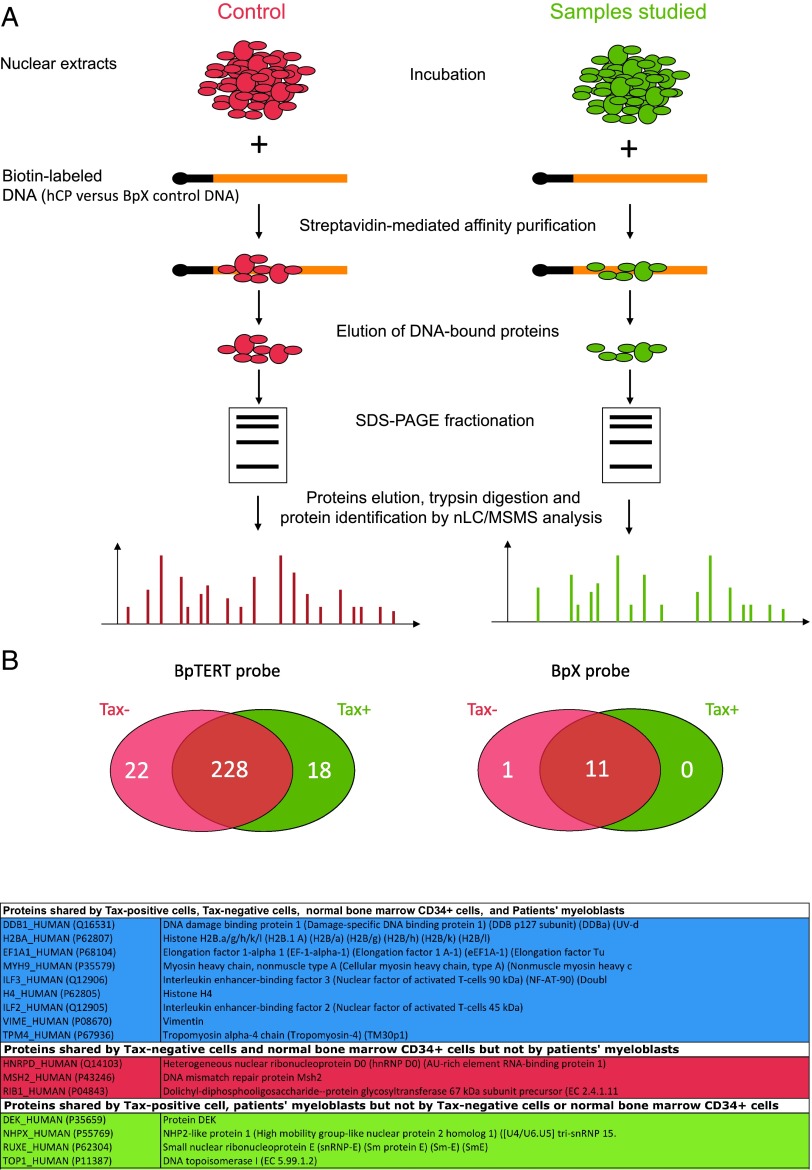
Figure 1
Figure 1
Proteomic analysis of hTERT promoter occupancy. (A) Nuclear protein extracts were prepared either from HeLa cells transfected with a Tax-expressing plasmid (right) or from fresh BM AML tumor cells. HeLa cells transfected with the control empty plasmid and normal BM CD34+ cells served as controls (left). Proteins were incubated with biotin-labeled DNA probes that corresponded to the hCP or to a control DNA stretch (BpX), as detailed in the Materials and Methods section. After SDS-PAGE fractionation, eluted products were digested with trypsin and then analyzed by MS. (B) The Venn diagram (top) represents the distribution of proteins detected in Tax+ versus Tax- NEs analyzed as shown in A. Data correspond to proteins recurrently detected in three independent experiments. Isolated proteins are described in Table W2. (Bottom) Distribution of hTERT promoter partners shared between transfected HeLa cells and BM cells derived from donors or from patients with AML.
Figure 2
Figure 2
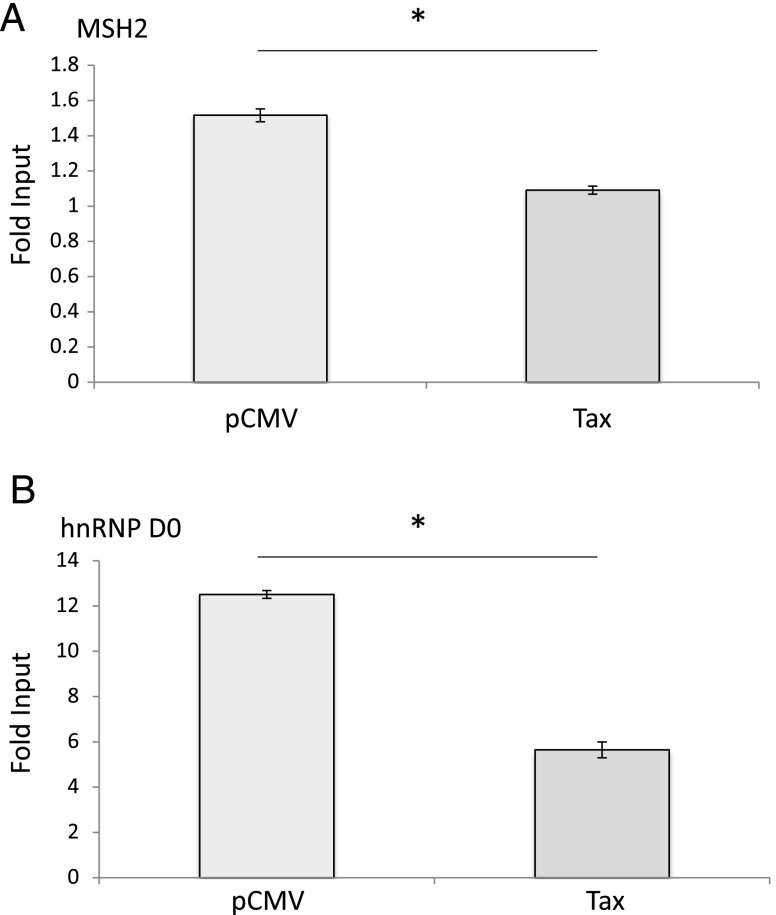
hnRNP D0 and MSH2 are displaced from the hTERT promoter upon Tax expression. Analysis of MSH2 (A) and hnRNP D0 (B) associations with the hTERT promoter was carried out by qChIP with HeLa cells expressing or not Tax, using antibodies against hnRNP D0 and MSH2 and qPCR with PCR primers complementary to the hTERT promoter, as described in the Materials and Methods section. qChIP assays were performed in triplicates with P < .05 (*) tested with the one-tailed Mann-Whitney test.
Figure 3
Figure 3
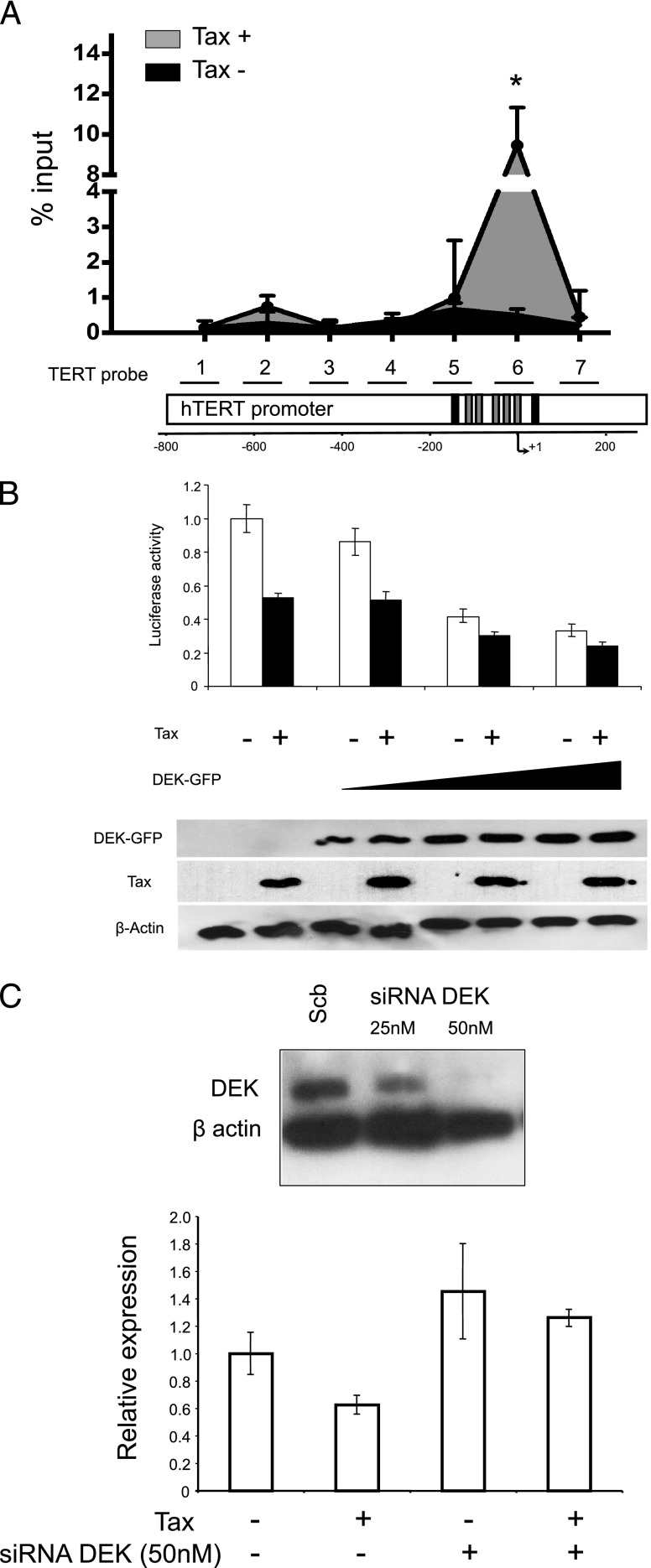
DEK binds to and suppresses the hTERT promoter on Tax expression. (A) DEK and hTERT promoter association in Tax-expressing cells. The seven primer pairs used for ChIP and qChIP spanned a 964-bp region of the hTERT promoter. This region encompasses several known critical sites involved in the regulation of hTERT transcription, including the transcription initiation site, the start codon, as well as GC and E boxes. The black boxes represent the E boxes, while the gray boxes represent the five Sp1 binding sites. + 1 is the transcription initiation site. qChIP analysis of DEK association with the hTERT promoter was carried out as described in the Materials and Methods section. Results (means ± SDs) are representative of triplicate experiments. *P < .05, Mann-Whitney test. (B) HeLa cells were co-transfected with WT hTERT promoter-luciferase reporter plasmid TERTLuc800, in combination with the pCMV-Tax plasmid and/or a control vector (pCMV) in the absence or presence of increasing amounts of pNGLV3-DEK. Forty-eight hours after transfection, HeLa cells were collected and transcriptional activity was assayed by luciferase activity (see Materials and Methods section). (Bottom) DEK and Tax expression in transfected HeLa cells were assayed by Western blot analysis. (C) DEK knockdown increased endogenous hTERT expression and prevented its repression by Tax. hTERT expression was quantified through quantitative real-time PCR in HeLa cells transfected with the pCMV-Tax plasmid and/or control vector and/or the DEK siRNA (50 nM) and/or scrambled RNA. siRNAmediated knockdown of DEK expression was checked by Western blot analysis (top). Data shown in B and C are the means (±SDs) of one representative experiment performed in triplicate.
Figure 4
Figure 4
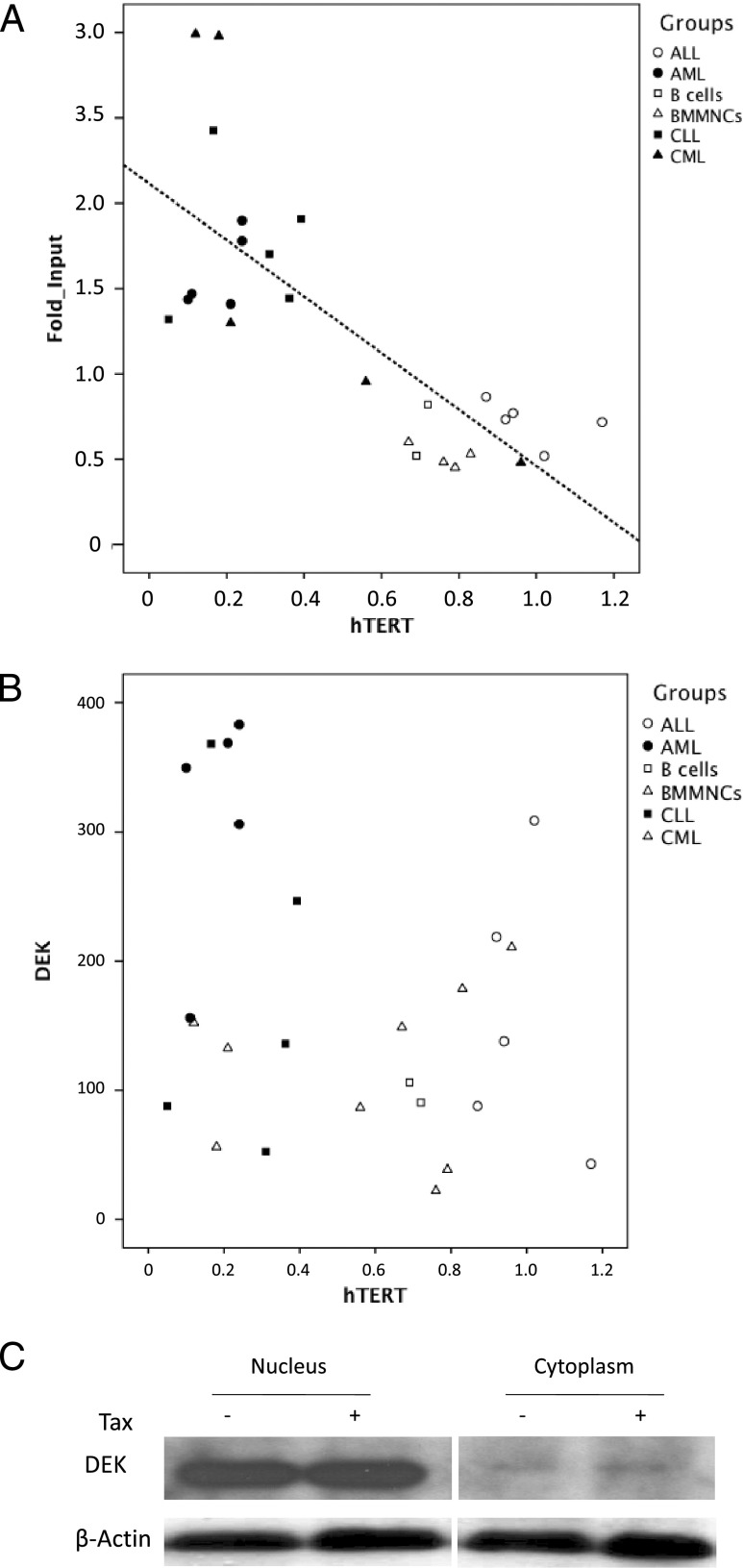
In vivo and ex vivo, DEK recruitment on the endogenous hTERT promoter correlates with hTERT transcriptional repression but not with DEK expression. (A) Analysis of DEK association with the hTERT promoter was carried out by qChIP using an antibody against DEK and qPCR with the TERT6 primer pair as described in the Materials and Methods section. For each sample, hTERT expression was measured by qRT-PCR. AML, CML, and ALL cells and BMMNCs were derived from the BM, while purified B cells and malignant CLL cells were derived from the blood. All patient samples were collected at the time of diagnosis, after written informed consent. Signals were normalized to input, and background levels in immunoprecipitation (IP) with control IgGs were assigned. (B) DEK expression did not correlate with hTERT transcriptional repression in hematological samples. For each sample, DEK and hTERT mRNA were quantified by qRT-PCR. (C) Tax expression did not modify DEK expression. NEs and cytoplasmic extracts from Tax- versus control empty vector-transfected HeLa cells were analyzed by Western blot analysis with an anti-DEK antibody.
Figure 5
Figure 5
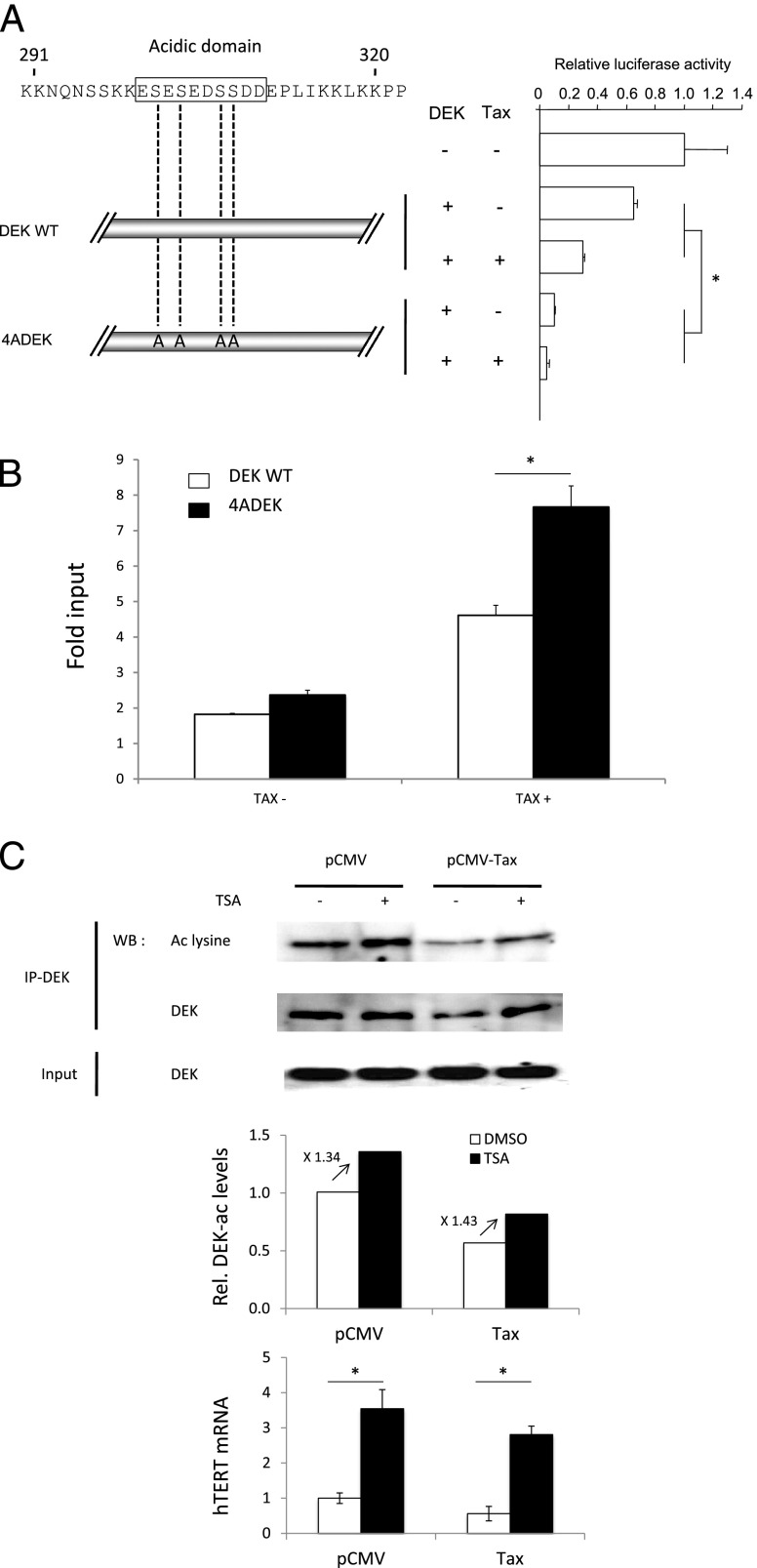
Transcriptional repression of hTERT depend on posttranslational modifications of DEK. (A) Mutations of the DEK phosphorylation site increase the repressive effect of DEK and Tax on hTERT promoter activity. HeLa cells were co-transfected with theWT hTERT promoter-luciferase reporter plasmid TERTLuc800, in combination with either the pCMV-Tax plasmid, the pNGLV3-DEK WT, or the pNGLV3-4ADEK mutant. Transcriptional activity was assayed by luciferase activity (see Materials and Methods section). (B) Mutations of the DEK phosphorylation site increased the recruitment of DEK on the hTERT promoter. qChIP was carried out with an anti-DEK antibody and the TERT6 primer pair, and nuclear proteins were derived from HeLa cells co-transfected with either the pCMV-Tax plasmid, the pCMV control vector, the pNGLV3-DEK WT, or the pNGLV3-4ADEK mutant. (C) Tax decreased DEK acetylation in a TSA-independent manner. HeLa cells were transfected with Tax or the control empty pCMV plasmid in the presence of TSA or DMSO and subjected to immunoprecipitation and Western blot analysis for DEK. The Western blot analysis membrane was stripped and reprobed with an anti-acetylated lysine antibody. The endogenous expression of hTERT was measured by qRT-PCR. Error bars represent the S.D. in triplicate experiments. Data shown in B and C are the means (±SDs) of one representative experiment performed in triplicate. *P < .05, Mann-Whitney test.
Figure 6
Figure 6
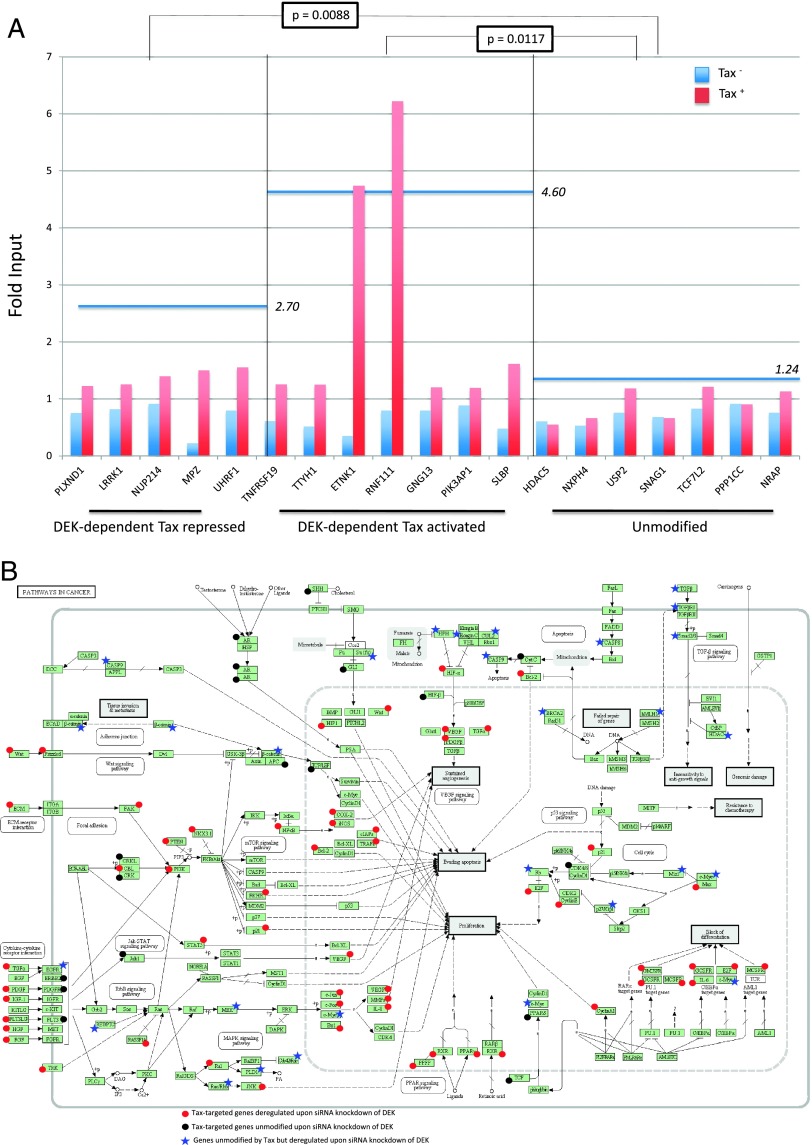
qChIP analysis of DEK-promoter association upon Tax expression for genes other than hTERT. (A) HeLa cells were transfected with either pCMV-Tax or control pCMV empty vector, and qChIP was carried out with a DEK antibody and PCR primers complementary to a promoter region encompassing the transcription start site of 19 genes. For each gene, the signal was normalized to input for Tax+ (blue) and Tax- HeLa cells (red). As indicated at the bottom, these genes included five DEK-dependent/Tax-repressed (left), seven DEK-dependent/Tax-activated (center), and seven DEK-independent/Tax-unmodified genes (right). For each gene category, a horizontal blue line represents the mean DEK-promoter association ratio of Tax+ to Tax- signals. (B) Distribution of “cancer” pathways according to the DEK-dependent (red circles) versus DEK-independent (black circles) nature of Tax-targeted genes. A blue asterisk identifies Tax-independent genes that were deregulated on siRNA knockdown of DEK.

References

    1. Deng Y, Chan SS, Chang S. Telomere dysfunction and tumour suppression: the senescence connection. Nat Rev Cancer. 2008;8:450–458. - PMC - PubMed
    1. Christodoulidou A, Raftopoulou C, Chiourea M, Papaioannou GK, Hoshiyama H, Wright WE, Shay JW, Gagos S. The roles of telomerase in the generation of polyploidy during neoplastic cell growth. Neoplasia. 2013;15:156–168. - PMC - PubMed
    1. Kuzyk A, Mai S. Selected telomere length changes and aberrant three-dimensional nuclear telomere organization during fast-onset mouse plasmacytomas. Neoplasia. 2012;14:344–351. - PMC - PubMed
    1. Campbell LJ, Fidler C, Eagleton H, Peniket A, Kusec R, Gal S, Littlewood TJ, Wainscoat JS, Boultwood J. hTERT, the catalytic component of telomerase, is downregulated in the haematopoietic stem cells of patients with chronic myeloid leukaemia. Leukemia. 2006;20:671–679. - PubMed
    1. Drummond MW, Hoare SF, Monaghan A, Graham SM, Alcorn MJ, Keith WN, Holyoake TL. Dysregulated expression of the major telomerase components in leukaemic stem cells. Leukemia. 2005;19:381–389. - PubMed

Supplementary References

    1. Gabet AS, Mortreux F, Charneau P, Riou P, Duc-Dodon M, Wu Y, Jeang KT, Wattel E. Inactivation of hTERT transcription by Tax. Oncogene. 2003;22(24):3734–3741. Prepublished on 2003/06/13 as doi:10.1038/sj.onc.1206468. - PubMed
    1. Hausmann S, Biddison WE, Smith KJ, Ding YH, Garboczi DN, Utz U, Wiley DC, Wucherpfennig KW. Peptide recognition by two HLA-A2/Tax11-19-specific T cell clones in relationship to theirMHC/peptide/TCR crystal structures. J Immunol. 1999;162(9):5389–5397. - PubMed
    1. Cleary J, Sitwala KV, Khodadoust MS, Kwok RP, Mor-Vaknin N, Cebrat M, Cole PA, Markovitz DM. p300/CBP-associated factor drives DEK into interchromatin granule clusters. J Biol Chem. 2005;280(36):31760–31767. Prepublished on 2005/07/01 as doi:10.1074/jbc.M500884200. - PubMed
    1. Smith MR, Greene WC. Identification of HTLV-I tax trans-activator mutants exhibiting novel transcriptional phenotypes. Genes Dev. 1990;4(11):1875–1885. Prepublished on 1990/11/01 as doi:10.1101/gad.4.11.1875. - PubMed
    1. Viollet B, Lefrancois-Martinez AM, Henrion A, Kahn A, Raymondjean M, Martinez A. Immunochemical characterization and transacting properties of upstream stimulatory factor isoforms. J Biol Chem. 1996;271(3):1405–1415. Prepublished on 1996/01/19 as doi:10.1074/jbc.271.3.1405. - PubMed

Publication types

MeSH terms