The recombinant vaccinia virus gene product, B18R, neutralizes interferon alpha and alleviates histopathological complications in an HIV encephalitis mouse model
- PMID: 24564363
- PMCID: PMC4080846
- DOI: 10.1089/jir.2013.0072
The recombinant vaccinia virus gene product, B18R, neutralizes interferon alpha and alleviates histopathological complications in an HIV encephalitis mouse model
Abstract
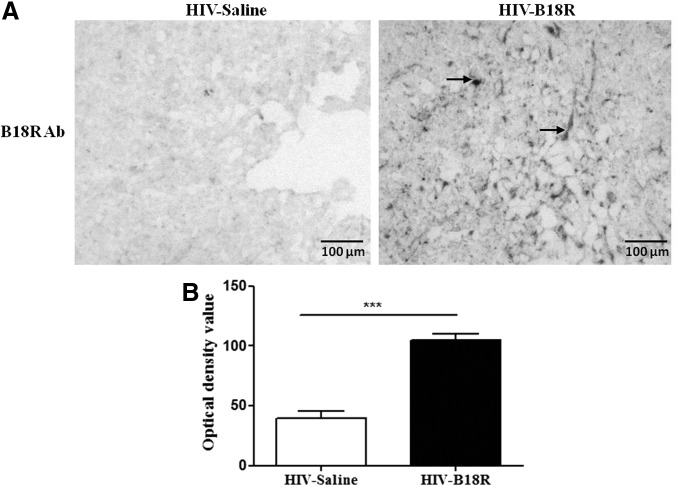
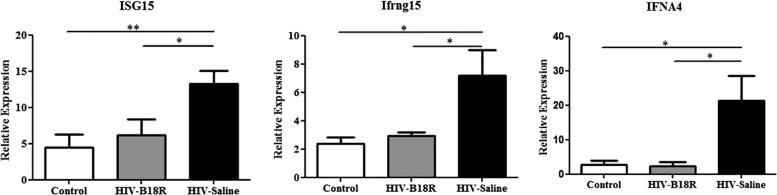
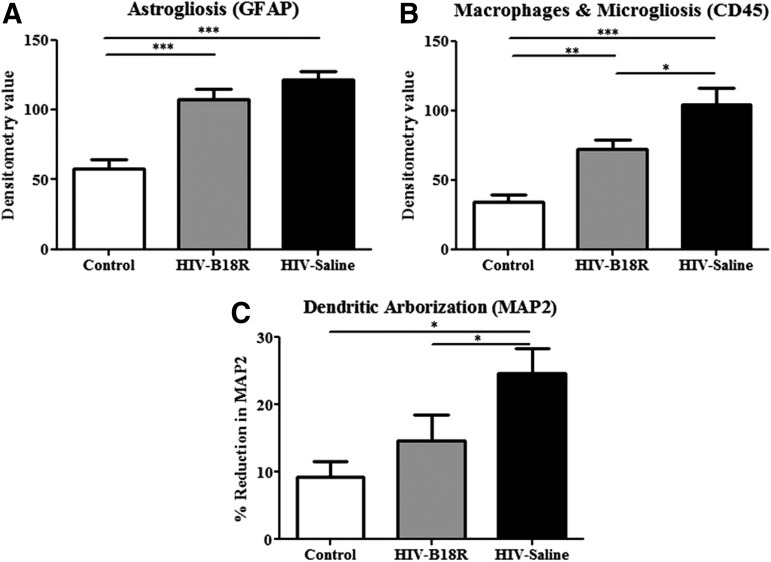
Interferon-alpha (IFN-α) has been identified as a neurotoxin that plays a prominent role in human immunodeficiency virus (HIV)-associated neurocognitive disorders and HIV encephalitis (HIVE) pathology. IFN-α is associated with cognitive dysfunction in other inflammatory diseases where IFN-α is upregulated. Trials of monoclonal anti-IFN-α antibodies have been generally disappointing possibly due to high specificity to limited IFN-α subtypes and low affinity. We investigated a novel IFN-α inhibitor, B18R, in an HIVE/severe combined immunodeficiency (SCID) mouse model. Immunostaining for B18R in systemically treated HIVE/SCID mice suggested the ability of B18R to cross the blood-brain barrier (BBB). Real-time PCR indicated that B18R treatment resulted in a decrease in gene expression associated with IFN-α signaling in the brain. Mice treated with B18R were found to have decreased mouse mononuclear phagocytes and significant retention of neuronal arborization compared to untreated HIVE/SCID mice. Increased mononuclear phagocytes and decreased neuronal arborization are key features of HIVE. These results suggest that B18R crosses the BBB, blocks IFN-α signaling, and it prevents key features of HIVE pathology. These data suggest that the high affinity and broad IFN-α subtype specificity of B18R make it a viable alternative to monoclonal antibodies for the inhibition of IFN-α in the immune-suppressed environment.
Figures
References
-
- Avgeropoulos N, Kelley B, Middaugh L, Arrigo S, Persidsky Y, Gendelman HE, Tyor WR. 1998. SCID mice with HIV encephalitis develop behavioral abnormalities. J Acquir Immune Defic Syndr Hum Retrovirol 18(1):13–20 - PubMed
-
- Brew BJ, Halman M, Catalan J, Sacktor N, Price RW, Brown S, Atkinson H, Clifford DB, Simpson D, Torres G, Hall C, Power C, Marder K, McArthur JC, Symonds W, Romero C. 2007. Factors in AIDS dementia complex trial design: Results and lessons from the abacavir trial. PLoS Clin Trials 2(3):e13. - PMC - PubMed
-
- Clifford DB, McArthur JC, Schifitto G, Kieburtz K, McDermott MP, Letendre S, Cohen BA, Marder K, Ellis RJ, Marra CM. 2002. A randomized clinical trial of CPI-1189 for HIV-associated cognitive-motor impairment. Neurology 59(10):1568–1573 - PubMed
Publication types
MeSH terms
Substances
Grants and funding
LinkOut - more resources
Full Text Sources
Other Literature Sources
Medical
Molecular Biology Databases