


Eosinophilic esophagitis
- PMID: 24566295
- PMCID: PMC4332835
- DOI: 10.1016/j.anai.2014.01.023
Eosinophilic esophagitis
Abstract
Objective: To review the understanding of the pathogenesis of eosinophilic esophagitis (EoE) and the role of the immune system in the disease process.
Data sources: Peer-reviewed articles on EoE from PubMed searching for "Eosinophilic Esophagitis and fibrosis" in the period of 1995 to 2013.
Study selections: Studies on the clinical and immunologic features, pathogenesis, and management of EoE.
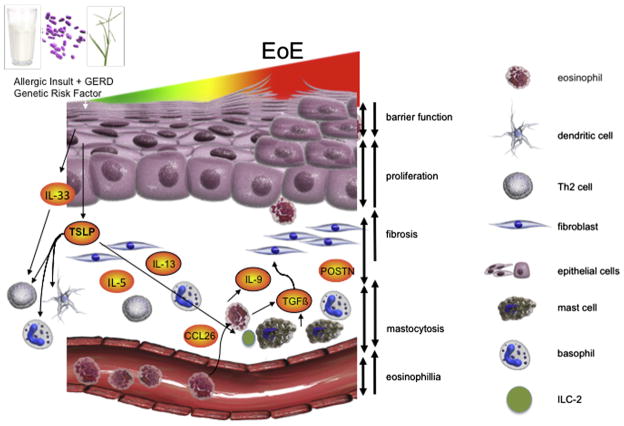
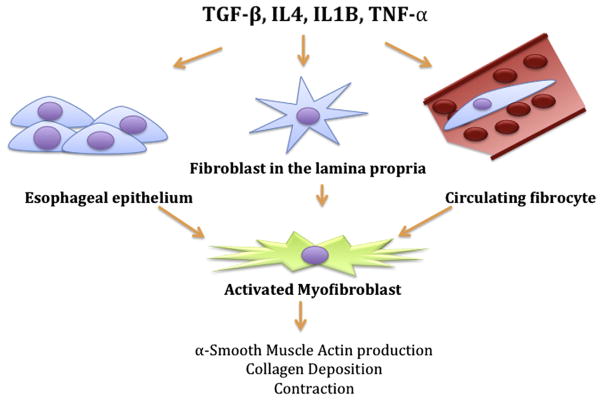
Results: Recent work has revealed that thymic stromal lymphopoietin and basophil have an increased role in the pathogenesis of disease. Additional understanding on the role of fibrosis in EoE is emerging.
Conclusion: The incidence of EoE is increasing like most atopic disease. Similar to other allergic diseases, EoE is treated with topical steroids and/or allergen avoidance.
Copyright © 2014 American College of Allergy, Asthma & Immunology. Published by Elsevier Inc. All rights reserved.
Figures
References
-
- Liacouras CA, Furuta GT, Hirano I, et al. Eosinophilic esophagitis: updated consensus recommendations for children and adults. J Allergy Clin Immunol. 2011;128:3–20. - PubMed
-
- Prasad GA, Talley NJ, Romero Y, et al. Prevalence and predictive factors of eosinophilic esophagitis in patients presenting with dysphagia: a prospective study. Am J Gastroenterol. 2007;102:2627–2632. - PubMed
-
- Mackenzie SH, Go M, Chadwick B, et al. Eosinophilic oesophagitis in patients presenting with dysphagia: a prospective analysis. Aliment Pharmacol Ther. 2008;28:1140–1146. - PubMed
-
- Schoepfer AM, Safroneeva E, Bussmann C, et al. Delay in diagnosis of eosinophilic esophagitis increases risk for stricture formation in a time-dependent manner. Gastroenterology. 2013;145:1230–1236. - PubMed
Publication types
MeSH terms
Substances
Grants and funding
LinkOut - more resources
Full Text Sources
Other Literature Sources
Medical
