Correlation between presence of Trypanosoma cruzi DNA in heart tissue of baboons and cynomolgus monkeys, and lymphocytic myocarditis
- PMID: 24567317
- PMCID: PMC3973505
- DOI: 10.4269/ajtmh.13-0448
Correlation between presence of Trypanosoma cruzi DNA in heart tissue of baboons and cynomolgus monkeys, and lymphocytic myocarditis
Abstract
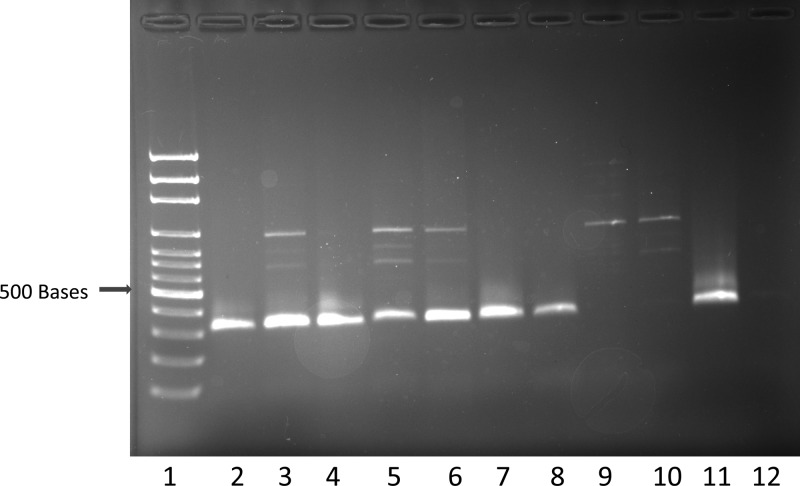
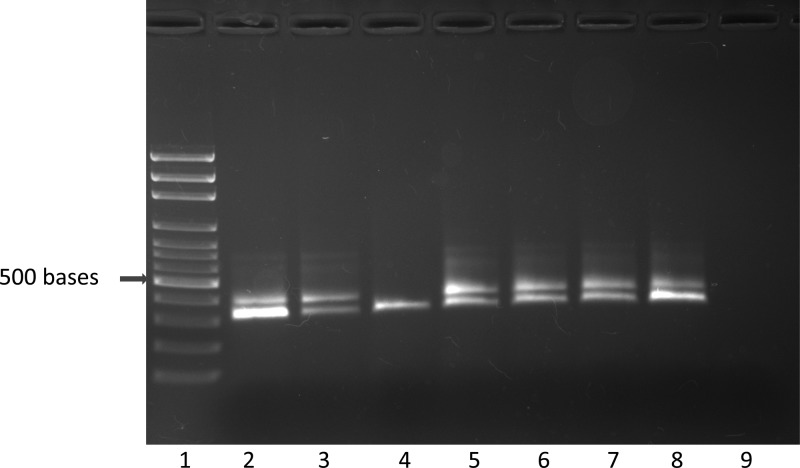
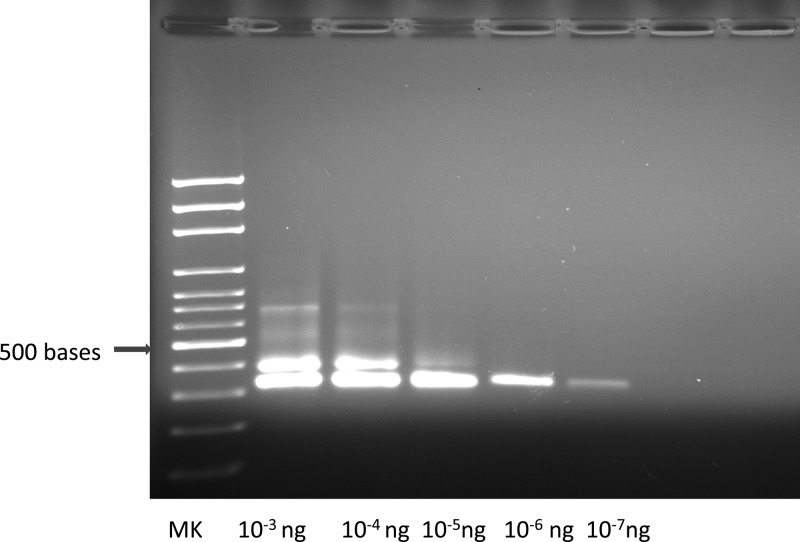
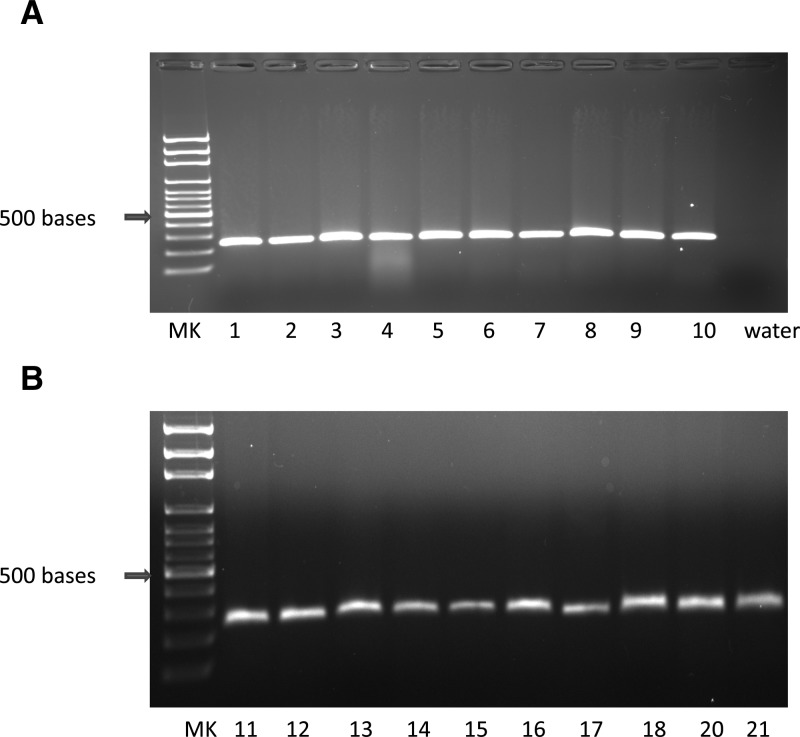
Trypanosoma cruzi, the causative agent of Chagas' disease, preferentially infects cardiac and digestive tissues. Baboons living in Texas (Papio hamadryas) and cynomolgus monkeys (Macaca fascicularis) have been reported to be infected naturally with T. cruzi. In this study, we retrospectively reviewed cases of animals that were diagnosed with lymphocytic myocarditis and used a polymerase chain reaction (PCR)-based method (S36/S35 primer set) to amplify T. cruzi DNA from archived frozen and formalin-fixed paraffin-embedded (FFPE) cardiac tissues. We show that the PCR method is applicable in archived frozen and FFPE tissues and the sensitivity is in the femtogram range. A positive correlation between PCR positivity and lymphocytic myocarditis in both baboons and cynomolgus monkeys is shown. We also show epicarditis as a common finding in animals infected with T. cruzi.
Figures
References
-
- Bittencourt AL. Congenital Chagas disease. Am J Dis Child. 1976;130:97–103. - PubMed
-
- Bern C, Montgomery SP, Herwaldt BL, Rassi A, Jr, Marin-Neto JA, Dantas RO, Maguire JH, Acquatella H, Morillo C, Kirchhoff LV, Gilman RH, Reyes PA, Salvatella R, Moore AC. Evaluation and treatment of Chagas disease in the United States: a systematic review. JAMA. 2007;298:2171–2181. - PubMed
-
- Rassi A, Jr, Rassi A, Marin-Neto JA. Chagas disease. Lancet. 2010;375:1388–1402. - PubMed
-
- Noya BA, Díaz-Bello Z, Colmenares C, Zavala-Jaspe R, Abate T, Contreras R, Losada S, Artigas D, Mauriello L, Ruiz-Guevara R, Noya O. The performance of laboratory tests in the management of a large outbreak of orally transmitted Chagas disease. Mem Inst Oswaldo Cruz. 2012;107:893–898. - PubMed
-
- Grant IH, Gold JW, Wittner M, Tanowitz HB, Nathan C, Mayer K, Reich L, Wollner N, Steinherz L, Ghavimi F, O'Reilly RJ, Armstrong D. Transfusion-associated acute Chagas disease acquired in the United States. Ann Intern Med. 1989;111:849–851. - PubMed
Publication types
MeSH terms
Substances
Grants and funding
LinkOut - more resources
Full Text Sources
Other Literature Sources