Interaction between postoperative shivering and hyperalgesia caused by high-dose remifentanil
- PMID: 24567813
- PMCID: PMC3927001
- DOI: 10.4097/kjae.2014.66.1.44
Interaction between postoperative shivering and hyperalgesia caused by high-dose remifentanil
Abstract
Background: High-dose remifentanil-based anesthesia is associated with opioid-induced hyperalgesia (OIH) and postanesthetic shivering (PAS). These effects can be prevented by N-methyl-d-aspartate (NMDA) receptor antagonists. This study aimed to investigate correlations between OIH and PAS caused by high-dose remifentanil and the effects of low-dose ketamine on OIH and PAS.
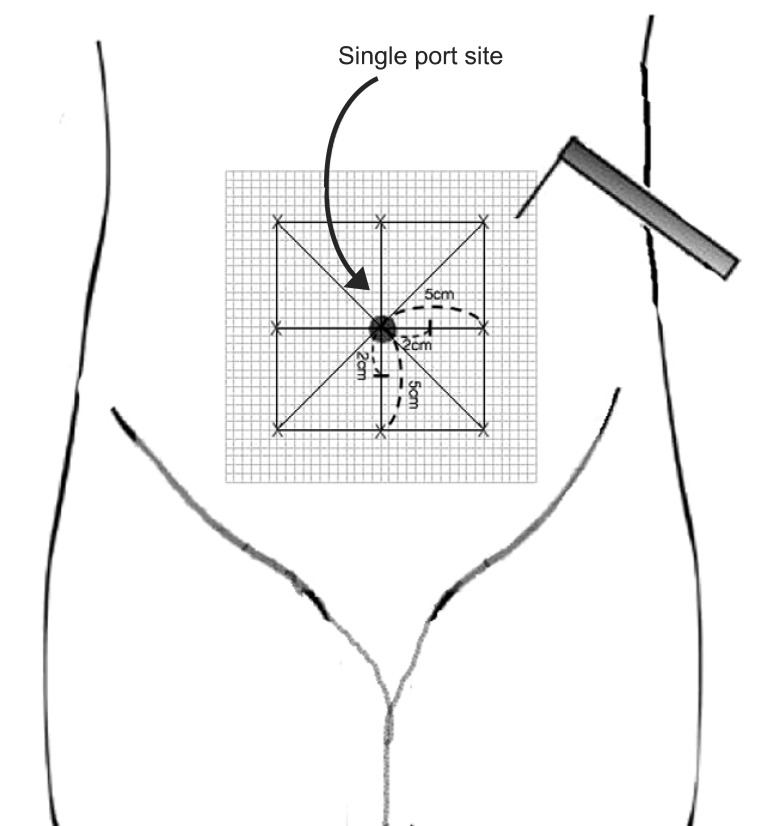
Methods: Seventy-five patients scheduled for single-port laparoscopic gynecologic surgery were randomly allocated into three groups, each of which received intraoperative remifentanil: group L at 0.1 µg/kg/min; group H at 0.3 µg/kg/min; and group HK at 0.3 µg/kg/min plus 0.25 mg/kg ketamine just before incision, followed by a continuous infusion of 5 µg/kg/min ketamine until skin closure.
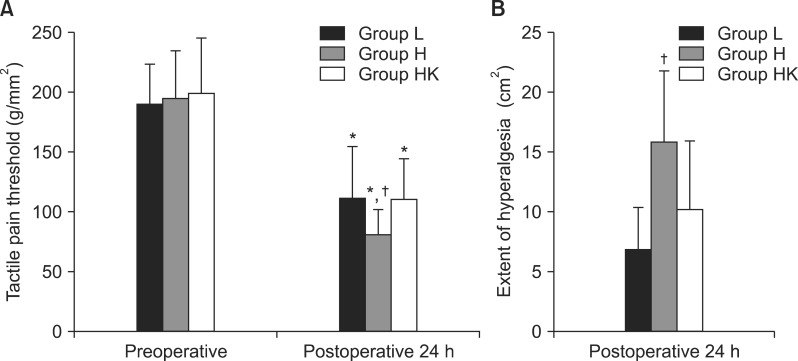
Results: PAS, postoperative tactile pain threshold, and the extent of hyperalgesia in group H were significantly different (P < 0.05) than in the other two groups. PAS was significantly correlated with OIH, including mechanically evoked pain such as postoperative tactile pain threshold (r = -0.529, P = 0.01) (r = -0.458, P = 0.021) and the extent of hyperalgesia (r = 0.537, P = 0.002) (r = 0.384, P = 0.031), respectively, in group H and group HK. Notably, both groups were treated with high-dose remifentanil. Tympanic membrane temperature, time to first postoperative analgesic requirement, postoperative pain scores, analgesic consumption, and cumulative patient-controlled analgesia volume containing morphine were comparable in all three groups.
Conclusions: OIH, including the enhanced perception of pain, and PAS were both associated with high-dose remifentanil, were significantly correlated and were attenuated by a low dose of ketamine. This suggests that a common mechanism in part mediated through activation of the central glutamatergic system (e.g., NMDA receptors), underlies the two effects caused by high doses of remifentanil.
Keywords: Ketamine; Opioid-induced hyperalgesia; Postanesthetic shivering; Remifentanil.
Figures
References
-
- Bürkle H, Dunbar S, Van Aken H. Remifentanil: a novel, short-acting, mu-opioid. Anesth Analg. 1996;83:646–651. - PubMed
-
- Song JW, Lee YW, Yoon KB, Park SJ, Shim YH. Magnesium sulfate prevents remifentanil-induced postoperative hyperalgesia in patients undergoing thyroidectomy. Anesth Analg. 2011;113:390–397. - PubMed
-
- Joly V, Richebe P, Guignard B, Fletcher D, Maurette P, Sessler DI, et al. Remifentanil-induced postoperative hyperalgesia and its prevention with small-dose ketamine. Anesthesiology. 2005;103:147–155. - PubMed
-
- Guignard B, Coste C, Costes H, Sessler DI, Lebrault C, Morris W, et al. Supplementing desflurane-remifentanil anesthesia with small-dose ketamine reduces perioperative opioid analgesic requirements. Anesth Analg. 2002;95:103–108. - PubMed
-
- Ganne O, Abisseror M, Menault P, Malhière S, Chambost V, Charpiat B, et al. Low-dose ketamine failed to spare morphine after a remifentanil-based anaesthesia for ear, nose and throat surgery. Eur J Anaesthesiol. 2005;22:426–430. - PubMed
LinkOut - more resources
Full Text Sources
Other Literature Sources