


Breathing pattern disorders and functional movement
- PMID: 24567853
- PMCID: PMC3924606
Breathing pattern disorders and functional movement
Abstract
Study design: Experimental design.
Background: Normal breathing mechanics play a key role in posture and spinal stabilization. Breathing Pattern Disorders (BPD) have been shown to contribute to pain and motor control deficits, which can result in dysfunctional movement patterns. The Functional Movement Screen™ (FMS™) has been shown to accurately predict injury in individuals who demonstrate poor movement patterns. The role BPD play on functional movement is not well established. Furthermore, there is currently no single test to clinically diagnose BPD. A variety of methods are used, but correlations between them are poor.
Purpose: To examine the relationship between BPD and functional movement and identify correlations between different measures of BPD.
Methods: Breathing was assessed in 34 healthy individuals using a multi-dimensional approach that included biomechanical, biochemical, breathing related symptoms, and breathing functionality measures. Movement was assessed using the FMS™. Analysis, involving independent t-tests and Pearson correlation were performed to identify associations between measures.
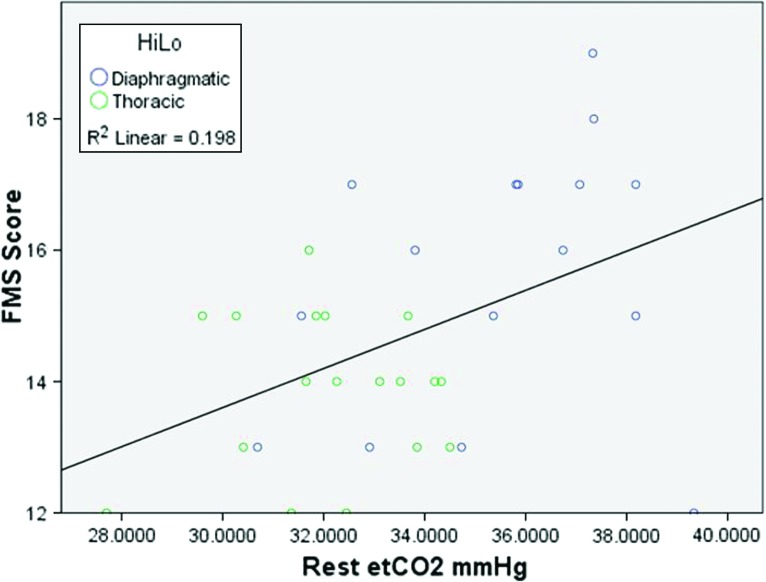
Results: Individuals who exhibited biochemical and biomechanical signs of BPD were significantly more likely to score poorly on the FMS™. These studied measures of BPD correlated highly with each other.
Conclusion: These results demonstrate the importance of diaphragmatic breathing on functional movement. Inefficient breathing could result in muscular imbalance, motor control alterations, and physiological adaptations that are capable of modifying movement. These findings provide evidence for improved breathing evaluations by clinicians.
Level of evidence: 2B.
Keywords: Capnography; FMS™; diaphragm; motor control.
References
-
- Mills JD, Taunton JE, Mills WA. The effect of a 10‐week training regimen on lumbo‐pelvic stability and athletic performance in female athletes: a randomized‐controlled trial. Phys Ther Sport. 2005; 6: 60–66
-
- Cook G. Movement. Functional Movement Systems: Screening, Assessment and Corrective Strategies. Santa Cruz, CA: On Target Publications; 2010
-
- Kaminoff L. What yoga therapists should know about the anatomy of breathing. Int J Yoga Therap. (2006); 16: 67–77
-
- Pryor JA, Prasad SA. Physiotherapy for Respiratory and Cardiac Problems. Edinburgh, UK: Churchill Livingstone; 2002
LinkOut - more resources
Full Text Sources
Miscellaneous