


Long-term catheterization: current approaches in the diagnosis and treatment of port-related infections
- PMID: 24570595
- PMCID: PMC3933716
- DOI: 10.2147/IDR.S37773
Long-term catheterization: current approaches in the diagnosis and treatment of port-related infections
Abstract
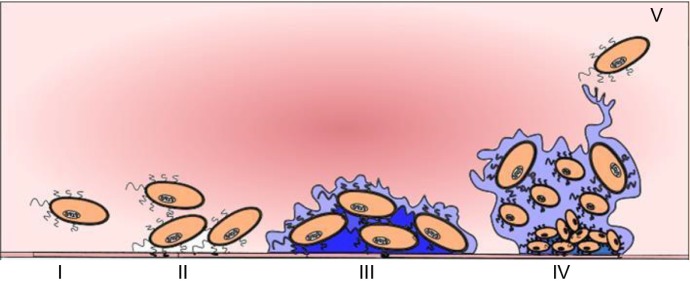
Since the first description in 1982, totally implanted venous access ports have progressively improved patients' quality of life and medical assistance when a medical condition requires the use of long-term venous access. Currently, they are part of the standard medical care for oncohematologic patients. However, apart from mechanical and thrombotic complications, there are also complications associated with biofilm development inside the catheters. These biofilms increase the cost of medical assistance and extend hospitalization. The most frequently involved micro-organisms in these infections are gram-positive cocci. Many efforts have been made to understand biofilm formation within the lumen catheters, and to resolve catheter-related infection once it has been established. Apart from systemic antibiotic treatment, the use of local catheter treatment (ie, antibiotic lock technique) is widely employed. Many different antimicrobial options have been tested, with different outcomes, in clinical and in in vitro assays. The stability of antibiotic concentration in the lock solution once instilled inside the catheter lumen remains unresolved. To prevent infection, it is mandatory to perform hand hygiene before catheter insertion and manipulation, and to disinfect catheter hubs, connectors, and injection ports before accessing the catheter. At present, there are still unresolved questions regarding the best antimicrobial agent for catheter-related bloodstream infection treatment and the duration of concentration stability of the antibiotic solution within the lumen of the port.
Keywords: bacteremia; biofilm; catheter-related infection.
Figures
References
-
- Niederhuber JE, Ensminger W, Gyves JW, Liepman M, Doan K, Cozzi E. Totally implanted venous and arterial access system to replace external catheters in cancer treatment. Surgery. 1982;92(4):706–712. - PubMed
-
- Kock HJ, Pietsch M, Krause U, Wilke H, Eigler FW. Implantable vascular access systems: experience in 1500 patients with totally implanted central venous port systems. World J Surg. 1998;22(1):12–16. - PubMed
-
- Maki DG, Kluger DM, Crnich CJ. The risk of bloodstream infection in adults with different intravascular devices: a systematic review of 200 published prospective studies. Mayo Clin Proc. 2006;81(9):1159–1171. - PubMed
-
- Chitnis AS, Edwards JR, Ricks PM, Sievert DM, Fridkin SK, Gould CV. Device-associated infection rates, device utilization, and antimicrobial resistance in long-term acute care hospitals reporting to the National Healthcare Safety Network, 2010. Infect Control Hosp Epidemiol. 2012;33(10):993–1000. - PubMed
Publication types
LinkOut - more resources
Full Text Sources
Other Literature Sources
