


Genome-wide DNA methylation patterns in naive CD4+ T cells from patients with primary Sjögren's syndrome
- PMID: 24574234
- PMCID: PMC4009982
- DOI: 10.1002/art.38264
Genome-wide DNA methylation patterns in naive CD4+ T cells from patients with primary Sjögren's syndrome
Abstract
Objective: Primary Sjögren's syndrome (SS) is a systemic autoimmune disease with incompletely understood etiology. This study was undertaken to investigate the role of epigenetic dysregulation in the pathogenesis of primary SS.
Methods: A genome-wide DNA methylation study was performed in naive CD4+ T cells from 11 patients with primary SS compared to age-, sex-, and ethnicity-matched healthy controls. Cytosine methylation was quantified using the Illumina Infinium HumanMethylation450 BeadChip array, and the data were validated using bisulfite sequencing.
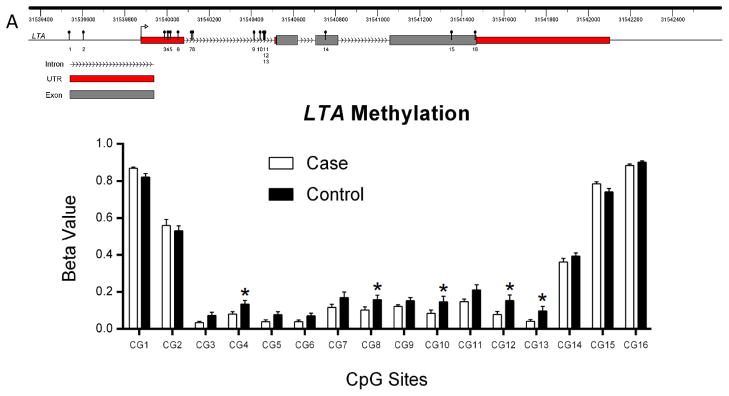
Results: Genome-wide analyses identified 553 hypomethylated CpG sites and 200 hypermethylated CpG sites in naive CD4+ T cells from patients with primary SS as compared to healthy controls, representing 311 hypomethylated and 115 hypermethylated gene regions. The hypomethylated genes in patients with primary SS included LTA (encoding lymphotoxin α). Other relevant genes, such as CD247, TNFRSF25, PTPRC, GSTM1, and PDCD1, were also hypomethylated. The interferon signature pathway was represented by hypomethylation of STAT1, IFI44L, USP18, and IFITM1. A group of genes encoding members of the solute carrier proteins were differentially methylated. In addition, the transcription factor gene RUNX1 was hypermethylated in patients with primary SS, suggesting a possible connection to lymphoma predisposition. Gene ontology (GO) analysis of hypomethylated genes demonstrated enrichment of genes involved in lymphocyte activation and immune response. GO terms for hypermethylated genes included antigen processing and presentation.
Conclusion: This is the first epigenome-wide DNA methylation study in patients with primary SS. These findings highlight a role for DNA methylation in primary SS and identify disease-associated DNA methylation changes in several genes and pathways in naive CD4+ T cells from patients with primary SS that may be involved in the pathogenesis of this disease.
Copyright © 2014 by the American College of Rheumatology.
Conflict of interest statement
Figures
References
-
- Fox RI. Sjogren’s syndrome. Lancet. 2005;366(9482):321–31. - PubMed
-
- Delaleu N, Jonsson R, Koller MM. Sjogren’s syndrome. European journal of oral sciences. 2005;113(2):101–13. - PubMed
-
- Kassan SS, Thomas TL, Moutsopoulos HM, Hoover R, Kimberly RP, Budman DR, et al. Increased risk of lymphoma in sicca syndrome. Annals of internal medicine. 1978;89(6):888–92. - PubMed
-
- Kassan SS, Moutsopoulos HM. Clinical manifestations and early diagnosis of Sjogren syndrome. Archives of internal medicine. 2004;164(12):1275–84. - PubMed
Publication types
MeSH terms
Grants and funding
LinkOut - more resources
Full Text Sources
Other Literature Sources
Medical
Research Materials
Miscellaneous
