


Effects of moderate-to-vigorous intensity physical activity on overnight and next-day hypoglycemia in active adolescents with type 1 diabetes
- PMID: 24574352
- PMCID: PMC3994939
- DOI: 10.2337/dc13-1973
Effects of moderate-to-vigorous intensity physical activity on overnight and next-day hypoglycemia in active adolescents with type 1 diabetes
Abstract
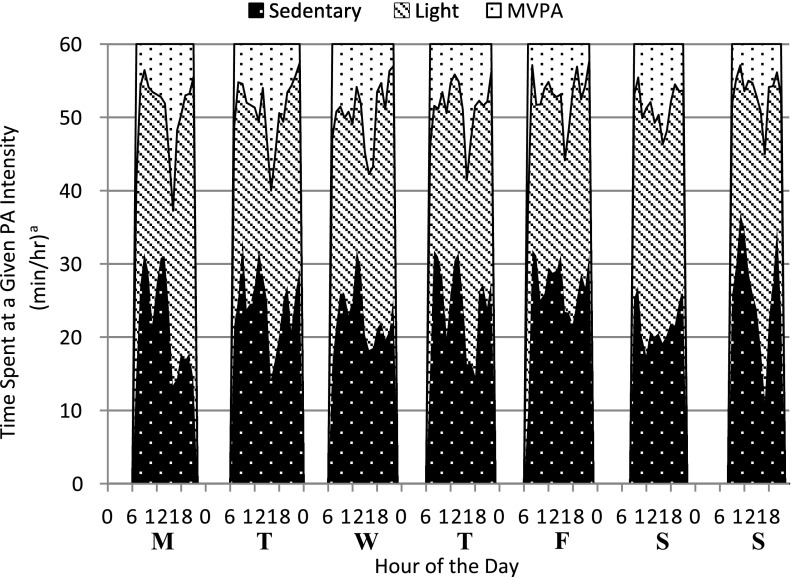
Objective: Physical activity (PA) provides many benefits to adolescents with type 1 diabetes; however, these individuals tend to have lower fitness and PA levels than their disease-free counterparts. The purpose of this study was to examine the acute temporal associations between moderate-to-vigorous intensity PA (MVPA) and hypoglycemia (continuous glucose monitor [CGM] reading ≤70 mg/dL).
Research design and methods: Nineteen participants (53% females) 14-20 years old with type 1 diabetes were recruited. Participant fitness was evaluated via indirect calorimetry using a maximal exercise test; body composition was measured using air displacement plethysmography. An accelerometer was worn continuously (3-5 days) and acceleration data used to estimate MVPA (minutes per day). Blood glucose values were simultaneously tracked using CGM. Controlling for sex, percent body fat (%BF), fitness, and concurrent MVPA, the likelihood of nighttime and next-day hypoglycemia due to MVPA was examined using logistic regression.
Results: Participants were of average fitness (females: 43.9 mL/kg/min; males: 49.8 mL/kg/min) and adiposity (females: 26.2%; males: 19.2%); 63.2% met the U.S. federal guideline of accumulating 60 min/day of MVPA. Hypoglycemia was 31% more likely in those who accumulated 30 min/day more MVPA in the previous afternoon than those with less (95% CI 1.05-1.63; P = 0.017).
Conclusions: The results suggest that participating in afternoon MVPA increases the risk of overnight and next-day hypoglycemia, independent of sex, %BF, fitness, and concurrent MVPA. While promoting PA as a healthy behavior, it is important to educate adolescents with type 1 diabetes on prevention of hypoglycemia following PA.
Figures
References
-
- Loprinzi PD, Cardinal BJ, Loprinzi KL, Lee H. Benefits and environmental determinants of physical activity in children and adolescents. Obes Facts 2012;5:597–610 - PubMed
-
- U.S. Department of Health and Human Services 2008 Physical Activity Guidelines for Americans. Washington, D.C., U.S. Govt Printing Office, 2008
-
- Centers for Disease Control and Prevention Youth risk behavior surveillance -United States, 2011. MMWR Surveill Summ 2012;61:1–162 - PubMed
-
- Maggio ABR, Hofer MF, Martin XE, Marchand LM, Beghetti M, Farpour-Lambert NJ. Reduced physical activity level and cardiorespiratory fitness in children with chronic diseases. Eur J Pediatr 2010;169:1187–1193 - PubMed
-
- Lukács A, Mayer K, Juhász E, Varga B, Fodor B, Barkai L. Reduced physical fitness in children and adolescents with type 1 diabetes. Pediatr Diabetes 2012;13:432–437 - PubMed
Publication types
MeSH terms
Substances
Grants and funding
LinkOut - more resources
Full Text Sources
Other Literature Sources
Medical
Miscellaneous
