


Cell-mediated immune responses in paraneoplastic neurological syndromes
- PMID: 24575143
- PMCID: PMC3932176
- DOI: 10.1155/2013/630602
Cell-mediated immune responses in paraneoplastic neurological syndromes
Abstract
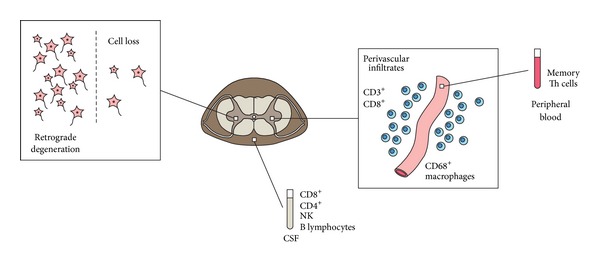
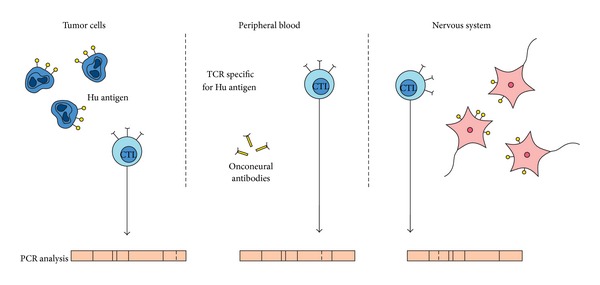
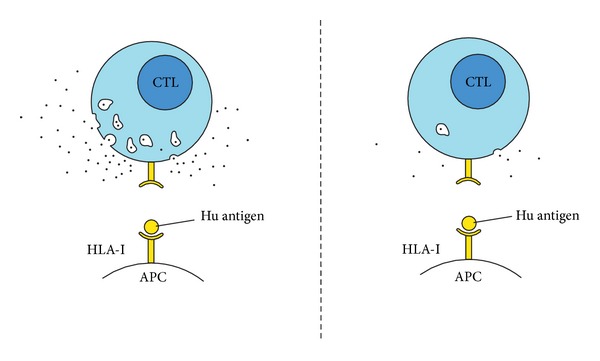
Paraneoplastic neurological syndromes (PNS) are disorders of the nervous system that are associated with remote effects of malignancy. PNS are considered to have an autoimmune pathology. It has been suggested that immune antitumor responses are the origin of improved outcome in PNS. We describe cell-mediated immune responses in PNS and their potential contributions to antitumor reactions. Experimental and neuropathological studies have revealed infiltrates in nervous tissue and disturbances in lymphocyte populations in both cerebrospinal fluid and peripheral blood. A predominance of cytotoxic T lymphocytes (CTLs) over T helper cells has been observed. CTLs can be specifically aggressive against antigens shared by tumors and nervous tissue. Based on genetic studies, a common clonal origin of lymphocytes from blood, tumor, and nervous tissue is suggested. Suppressive regulatory T (Treg) lymphocytes are dysfunctional. Simultaneously, in tumor tissue, more intense cell-mediated immune responses are observed, which often coincide with a less aggressive course of neoplastic disease. An increased titer of onconeural antibodies is also related to better prognoses in patients without PNS. The evaluation of onconeural and neuronal surface antibodies was recommended in current guidelines. The link between PNS emergence and antitumor responses may result from more active CTLs and less functional Treg lymphocytes.
Figures
References
-
- Vincent A, Bien CG, Irani SR, Waters P. Autoantibodies associated with diseases of the CNS: new developments and future challenges. The Lancet Neurology. 2011;10(8):759–772. - PubMed
-
- Dalmau J, Graus F, Rosenblum MK, Posner JB. Anti-Hu-associated paraneoplastic encephalomyelitis/sensory neuronopathy. A clinical study of 71 patients. Medicine. 1992;71(2):59–72. - PubMed
-
- Maddison P, Newsom-Davis J, Mills KR, Souhami RL. Favourable prognosis in Lambert-Eaton myasthenic syndrome and small-cell lung carcinoma. Lancet. 1999;353(9147):117–118. - PubMed
-
- Maddison P, Lang B. Paraneoplastic neurological autoimmunity and survival in small-cell lung cancer. Journal of Neuroimmunology. 2008;201-202:159–162. - PubMed
Publication types
MeSH terms
LinkOut - more resources
Full Text Sources
Other Literature Sources
