


More novel hantaviruses and diversifying reservoir hosts--time for development of reservoir-derived cell culture models?
- PMID: 24576845
- PMCID: PMC3970132
- DOI: 10.3390/v6030951
More novel hantaviruses and diversifying reservoir hosts--time for development of reservoir-derived cell culture models?
Abstract
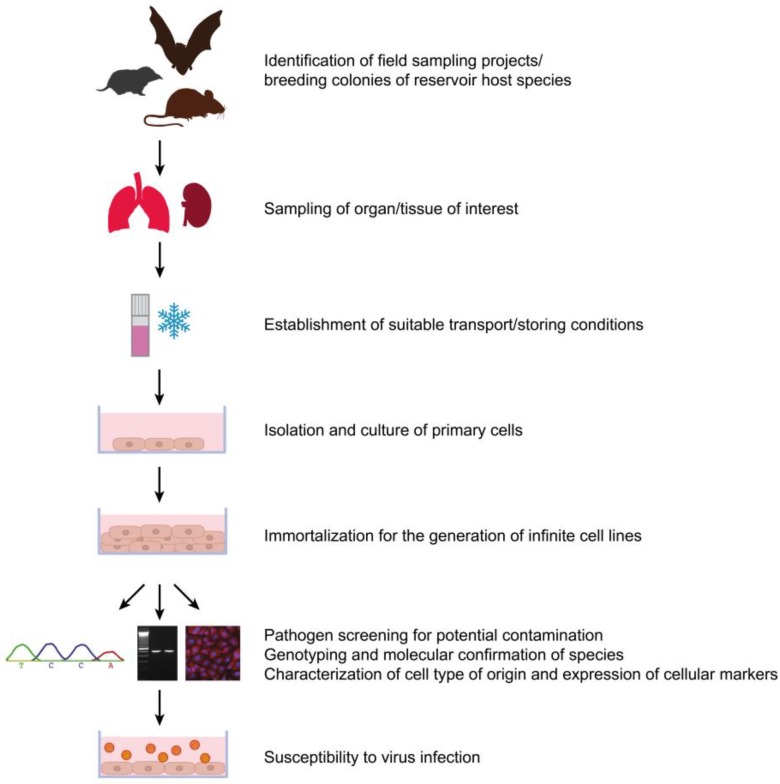
Due to novel, improved and high-throughput detection methods, there is a plethora of newly identified viruses within the genus Hantavirus. Furthermore, reservoir host species are increasingly recognized besides representatives of the order Rodentia, now including members of the mammalian orders Soricomorpha/Eulipotyphla and Chiroptera. Despite the great interest created by emerging zoonotic viruses, there is still a gross lack of in vitro models, which reflect the exclusive host adaptation of most zoonotic viruses. The usually narrow host range and genetic diversity of hantaviruses make them an exciting candidate for studying virus-host interactions on a cellular level. To do so, well-characterized reservoir cell lines covering a wide range of bat, insectivore and rodent species are essential. Most currently available cell culture models display a heterologous virus-host relationship and are therefore only of limited value. Here, we review the recently established approaches to generate reservoir-derived cell culture models for the in vitro study of virus-host interactions. These successfully used model systems almost exclusively originate from bats and bat-borne viruses other than hantaviruses. Therefore we propose a parallel approach for research on rodent- and insectivore-borne hantaviruses, taking the generation of novel rodent and insectivore cell lines from wildlife species into account. These cell lines would be also valuable for studies on further rodent-borne viruses, such as orthopox- and arenaviruses.
Figures
References
-
- Johnson N. A short introduction to disease emergence. In: Johnson N., editor. The Role of Animals in Emerging Viral Diseases. Academic Press; Boston, MA, USA: 2014. pp. 1–19. Chapter 1.
-
- Drosten C., Gunther S., Preiser W., van der Werf S., Brodt H.R., Becker S., Rabenau H., Panning M., Kolesnikova L., Fouchier R.A., et al. Identification of a novel coronavirus in patients with severe acute respiratory syndrome. N. Engl. J. Med. 2003;348:1967–1976. doi: 10.1056/NEJMoa030747. - DOI - PubMed
Publication types
MeSH terms
LinkOut - more resources
Full Text Sources
Other Literature Sources
