


Hormonal signaling in the gut
- PMID: 24577102
- PMCID: PMC4002074
- DOI: 10.1074/jbc.O114.556068
Hormonal signaling in the gut
Abstract
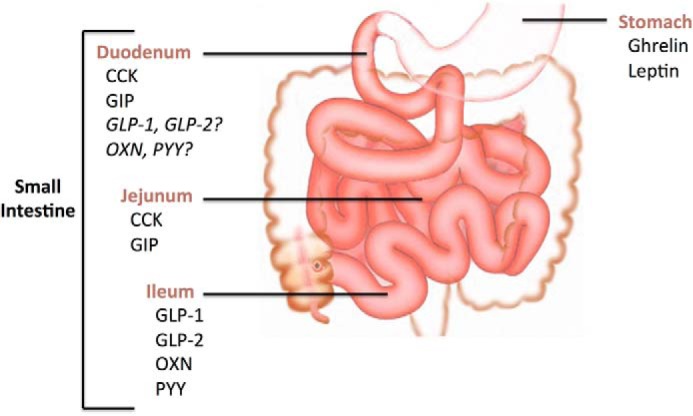
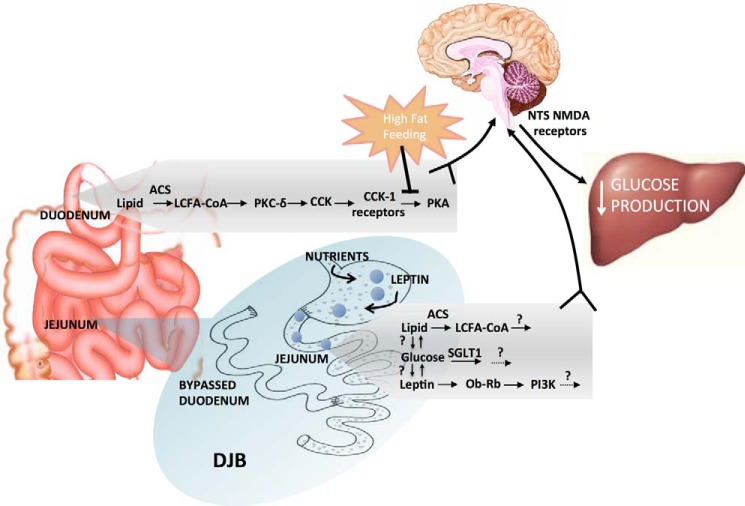
The gut is anatomically positioned to play a critical role in the regulation of metabolic homeostasis, providing negative feedback via nutrient sensing and local hormonal signaling. Gut hormones, such as cholecystokinin (CCK) and glucagon-like peptide-1 (GLP-1), are released following a meal and act on local receptors to regulate glycemia via a neuronal gut-brain axis. Additionally, jejunal nutrient sensing and leptin action are demonstrated to suppress glucose production, and both are required for the rapid antidiabetic effect of duodenal jejunal bypass surgery. Strategies aimed at targeting local gut hormonal signaling pathways may prove to be efficacious therapeutic options to improve glucose control in diabetes.
Keywords: Bariatric Surgery; Diabetes; Fatty Acid; Food Intake; Glucose Metabolism; Hormones; Intestine.
Figures
References
-
- Scully T. (2012) Diabetes in numbers. Nature 485, S2–S3 - PubMed
-
- Stagnitti M. N. (2001) Statistical Brief # 34 The Prevalence of Obesity and Other Chronic Health Conditions among Diabetic Adults in the U. S. Community Population, 2001, Medical Expenditure Panel Survey (MEPS), pp. 5–9, Agency for Healthcare Research and Quality, U.S. Department of Health and Human Services, Rockville, MD
-
- Clark C. M., Jr. (1998) The burden of chronic hyperglycemia. Diabetes Care 21, Suppl. 3, C32–C34 - PubMed
Publication types
MeSH terms
Substances
Grants and funding
LinkOut - more resources
Full Text Sources
Other Literature Sources
