Randomized Controlled Trial
. 2014 Aug;8(8):1621-33.
doi: 10.1038/ismej.2014.13. Epub 2014 Feb 27.

Reset of a critically disturbed microbial ecosystem: faecal transplant in recurrent Clostridium difficile infection

Affiliations
Randomized Controlled Trial

Reset of a critically disturbed microbial ecosystem: faecal transplant in recurrent Clostridium difficile infection

Susana Fuentes et al. ISME J. 2014 Aug.

Abstract

Recurrent Clostridium difficile infection (CDI) can be effectively treated by infusion of a healthy donor faeces suspension. However, it is unclear what factors determine treatment efficacy. By using a phylogenetic microarray platform, we assessed composition, diversity and dynamics of faecal microbiota before, after and during follow-up of the transplantation from a healthy donor to different patients, to elucidate the mechanism of action of faecal infusion. Global composition and network analysis of the microbiota was performed in faecal samples from nine patients with recurrent CDI. Analyses were performed before and after duodenal donor faeces infusion, and during a follow-up of 10 weeks. The microbiota data were compared with that of the healthy donors. All patients successfully recovered. Their intestinal microbiota changed from a low-diversity diseased state, dominated by Proteobacteria and Bacilli, to a more diverse ecosystem resembling that of healthy donors, dominated by Bacteroidetes and Clostridium groups, including butyrate-producing bacteria. We identified specific multi-species networks and signature microbial groups that were either depleted or restored as a result of the treatment. The changes persisted over time. Comprehensive and deep analyses of the microbiota of patients before and after treatment exposed a therapeutic reset from a diseased state towards a healthy profile. The identification of microbial groups that constitute a niche for C. difficile overgrowth, as well as those driving the reinstallation of a healthy intestinal microbiota, could contribute to the development of biomarkers predicting recurrence and treatment outcome, identifying an optimal microbiota composition that could lead to targeted treatment strategies.


Figures
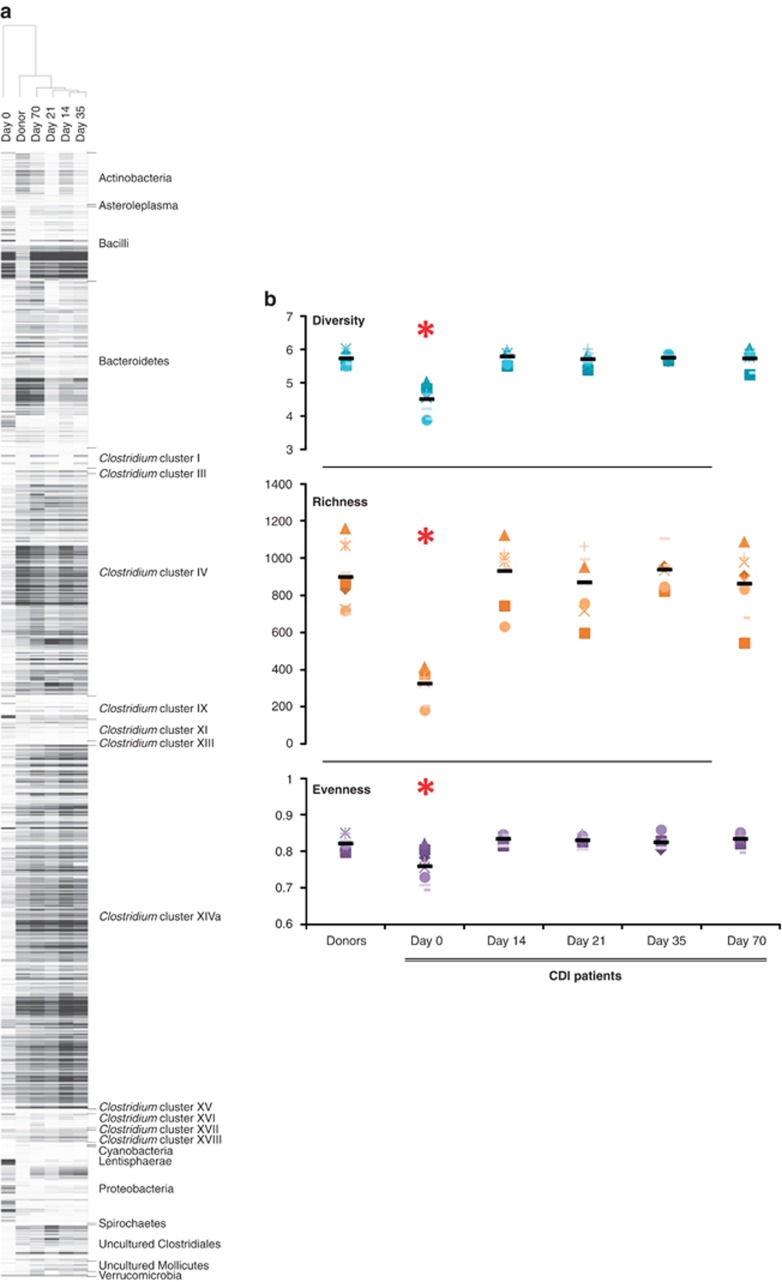
Figure 1
Figure 1
(a) Hierarchical cluster with a heatmap of samples from patient P4 and its corresponding donor (D4). (b) Diversity, richness and evenness scores for healthy donors and CDI patients before and after faecal transplantation. Symbols correspond to individual patients, and average values are shown with black lines. Day 0 averages for diversity, richness and evenness are significantly different to donors and the rest of the time points (P<0.003).
Figure 2
Figure 2
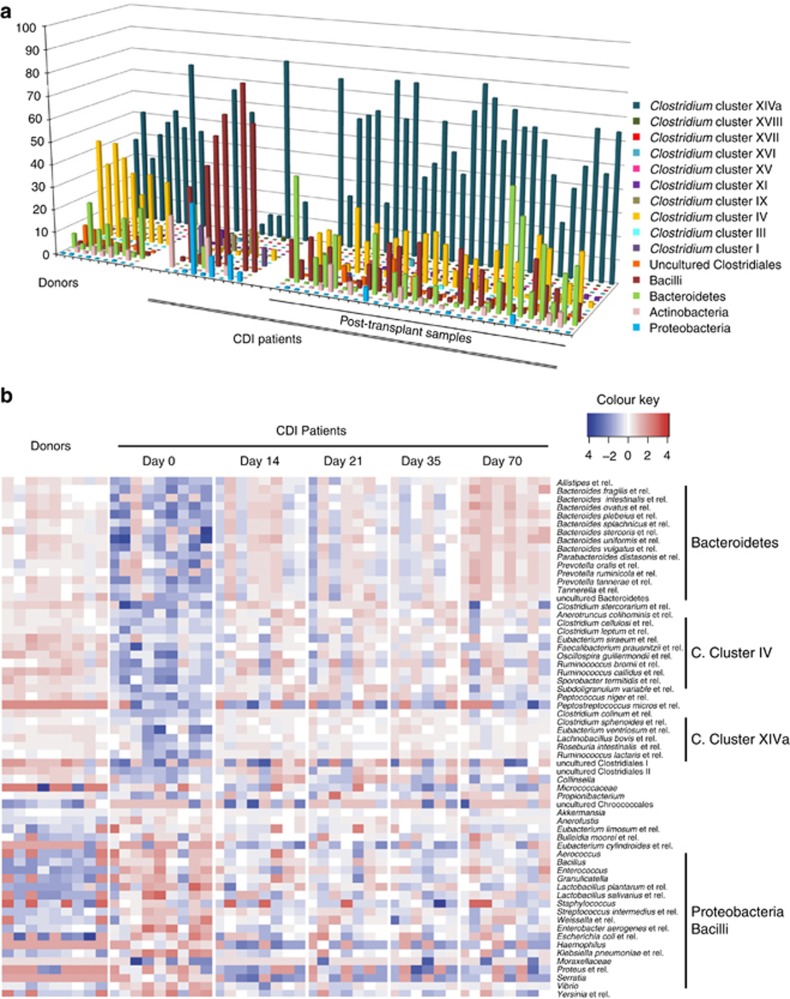
(a) Faecal microbiota composition at the phylum level (class level for the Firmicutes) of healthy donors and CDI patients before and after faecal transplant (shown are groups with relative abundance >0.5%). (b) Heatmap of relative abundances of bacterial groups (approximate genus level) that differ significantly between donors and CDI patients before faecal transplant and at the end of the study (P<0.05).
Figure 3
Figure 3
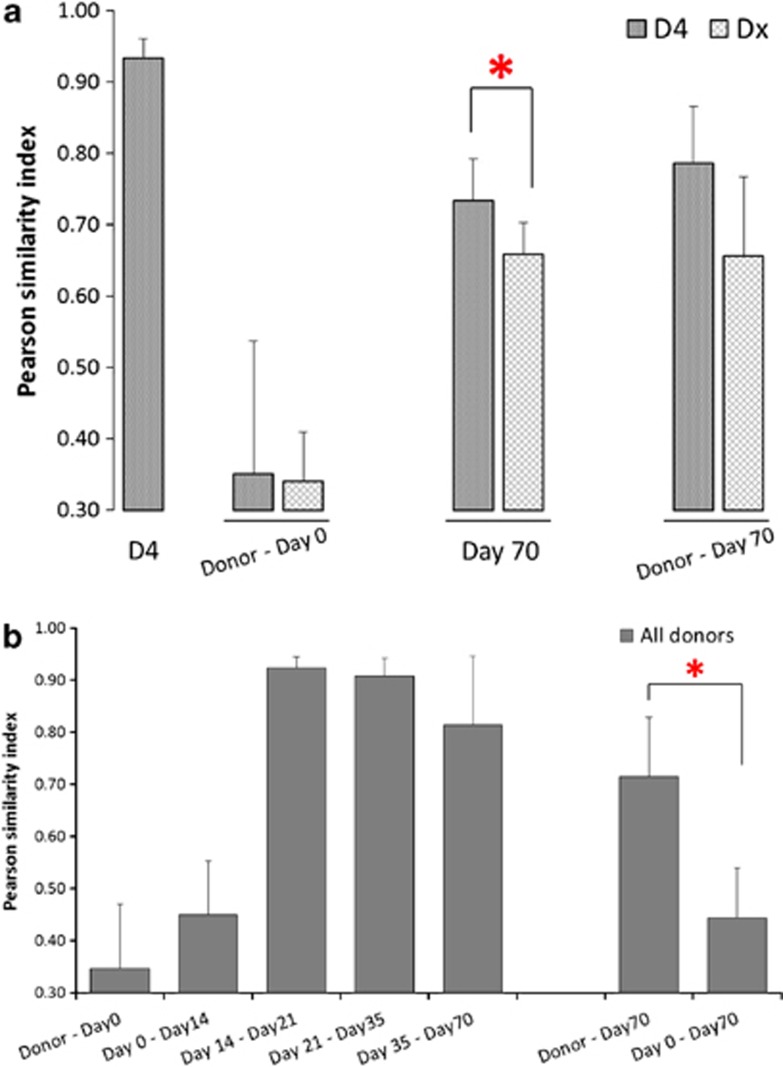
Pearson's similarity indices at the probe level of the HITChip microarray. (a) Similarity of microbiota composition of samples of donor D4 (four different FMT samples); donor D4 and other donors and CDI patients at day 0; CDI patients receiving from donor D4 and other donors at the end of the trial (*P=0.01); donor D4 and other donors and CDI patients at day 70. (b) Similarity of microbiota composition of all donors and CDI patients over time; similarity of samples from CDI patients at day 70 compared with their own day 0 and their corresponding donor (*P=0.0001).
Figure 4
Figure 4
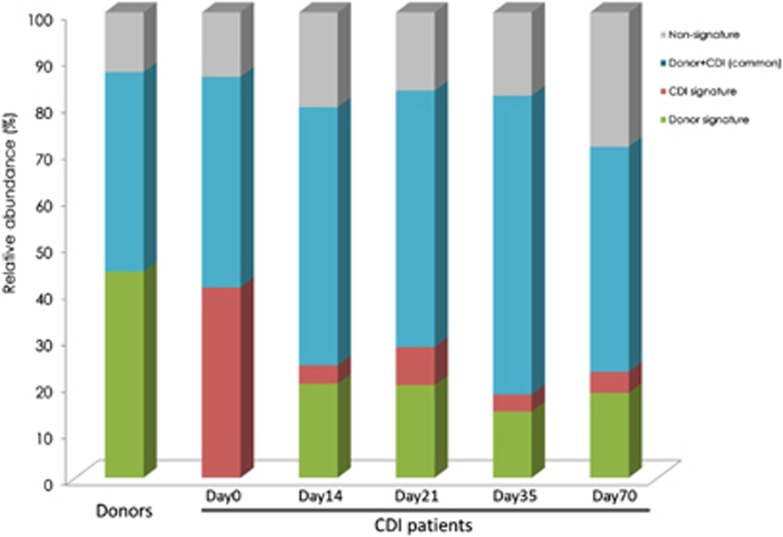
Reshape of the intestinal microbial environment as a result of faecal transplantation. Bacterial signature groups (relative abundance >1%) were followed up for a period of 10 weeks after FMT. Changes in ‘donor signature', ‘CDI signature', ‘donor+CDI (common)' and ‘non-signature' phylotypes over time.
Figure 5
Figure 5
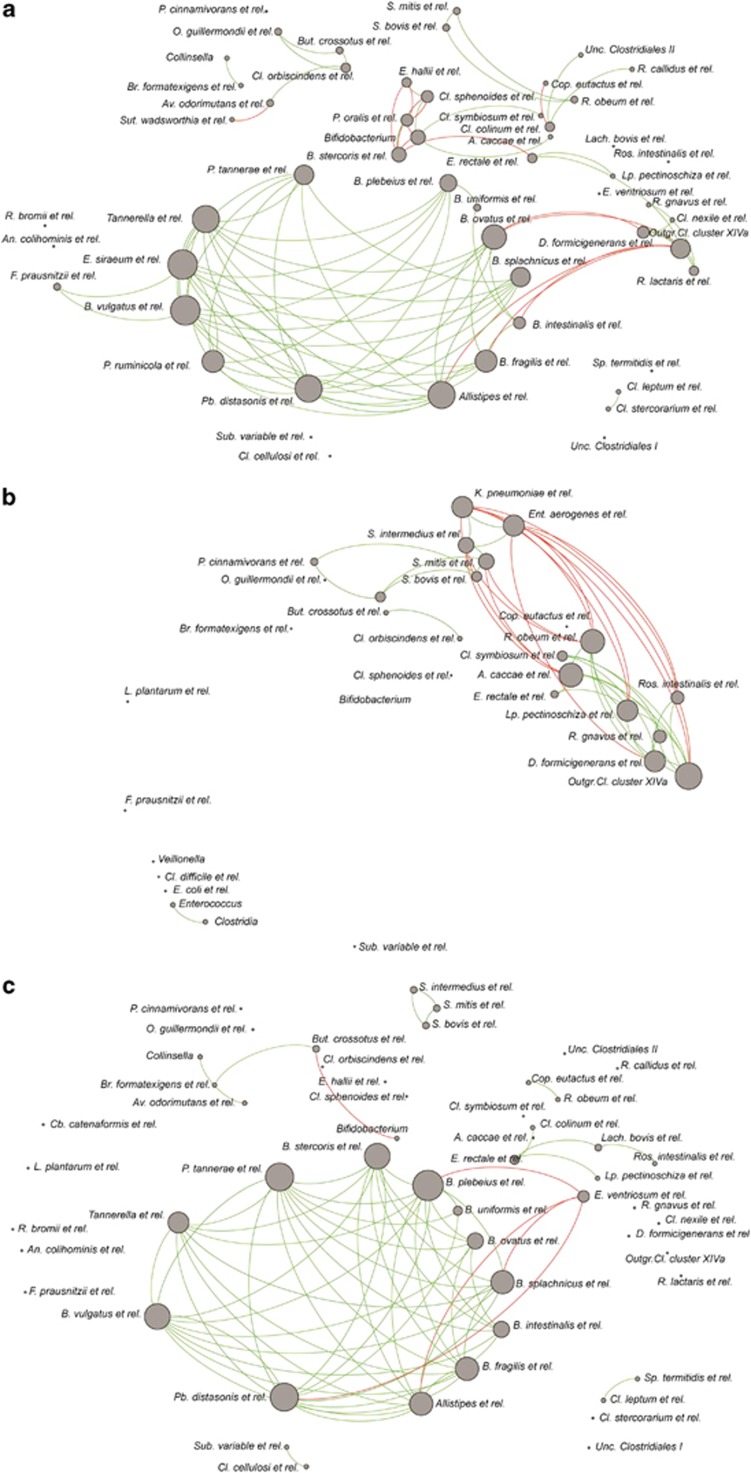
Bacterial networks of (a) donors, (b) patients before FMT and (c) patients for 5 weeks after treatment. Shown groups with Spearman correlations >|0.8| and relative abundance >0.1% in at least 50% of the samples. Green lines and red lines indicate co- and anti-occurrence respectively (that is, positive and negative correlations).
Figure 6
Figure 6
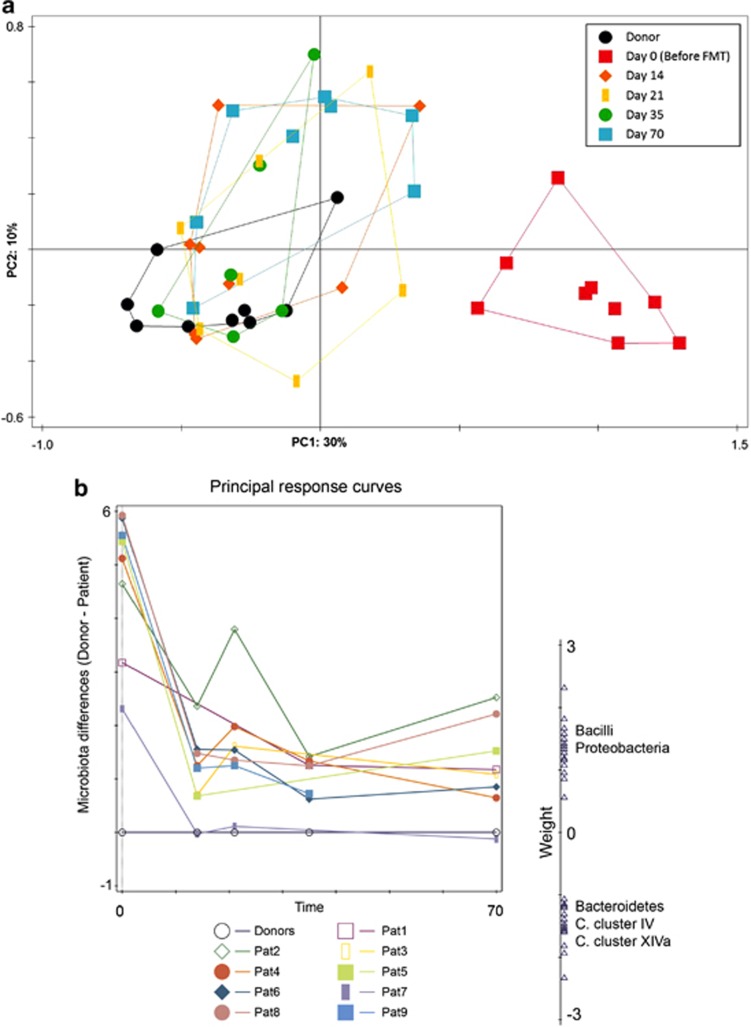
(a) Principal component analysis of CDI patients over time based on their microbiota composition. First and second ordination axes are plotted, explaining 30 and 10% of the variability in the data set, respectively. (b) Principal response curve analysis summarizing the differences in total microbiota composition between patients and their respective donors over time. The graph shows 35% of all time-dependent differences in microbiota composition between patients and their donors. Bacterial groups shown are the main drivers of the differences between patients and donors: groups that have a positive weight on the response curve follow the observed curves, whereas those with negative weights follow the opposite pattern.

References

    1. Ananthakrishnan AN, Issa M, Binion DG. (2009). Clostridium difficile and inflammatory bowel disease. Gastroenterol Clin North Am 38: 711–728. - PubMed
    1. Antharam VC, Li EC, Ishmael A, Sharma A, Mai V, Rand KH et al. (2013). Intestinal dysbiosis and depletion of butyrogenic bacteria in Clostridium difficile infection and nosocomial diarrhea. J Clin Microbiol 51: 2884–2892. - PMC - PubMed
    1. Arumugam M, Raes J, Pelletier E, Le Paslier D, Yamada T, Mende DR et al. (2011). Enterotypes of the human gut microbiome. Nature 473: 174–180. - PMC - PubMed
    1. Aziz Q, Doré J, Emmanuel A, Guarner F, Quigley EMM. (2013). Gut microbiota and gastrointestinal health: current concepts and future directions. Neurogastroenterol Motil 25: 4–15. - PubMed
    1. Bakken JS, Borody T, Brandt LJ, Brill JV, Demarco DC, Franzos MA et al. (2011). Treating Clostridium difficile infection with fecal microbiota transplantation. Clin Gastroenterol Hepatol 9: 1044–1049. - PMC - PubMed

Publication types