The SmartCAT: an m-health platform for ecological momentary intervention in child anxiety treatment
- PMID: 24579913
- PMCID: PMC4011472
- DOI: 10.1089/tmj.2013.0214
The SmartCAT: an m-health platform for ecological momentary intervention in child anxiety treatment
Abstract
Introduction: Cognitive behavioral therapy (CBT) for child anxiety, although efficacious, typically requires 16-20 weekly sessions with a therapist. Brief CBT (BCBT; eight sessions) for child anxiety is promising but may have less favorable outcomes owing to reduced session time. Mobile health (m-health) has the potential to improve BCBT efficacy by delivering ecological momentary intervention to engage youth in learning and practicing CBT skills in their everyday lives (in vivo).
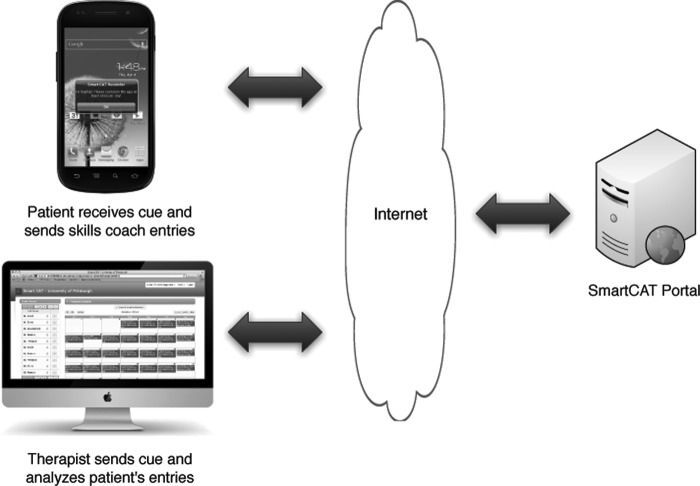
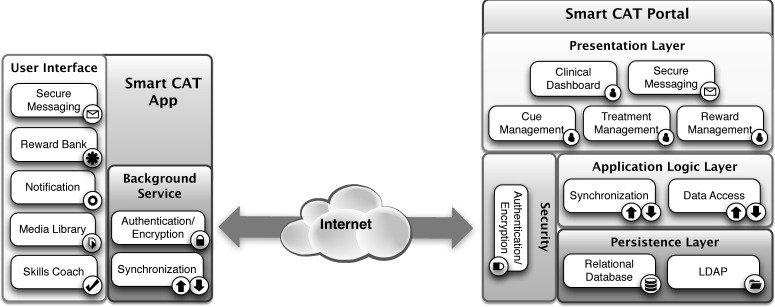
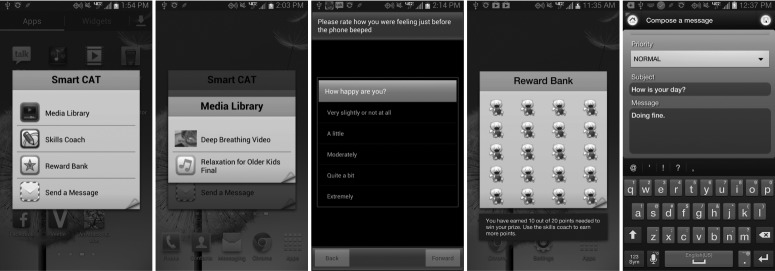
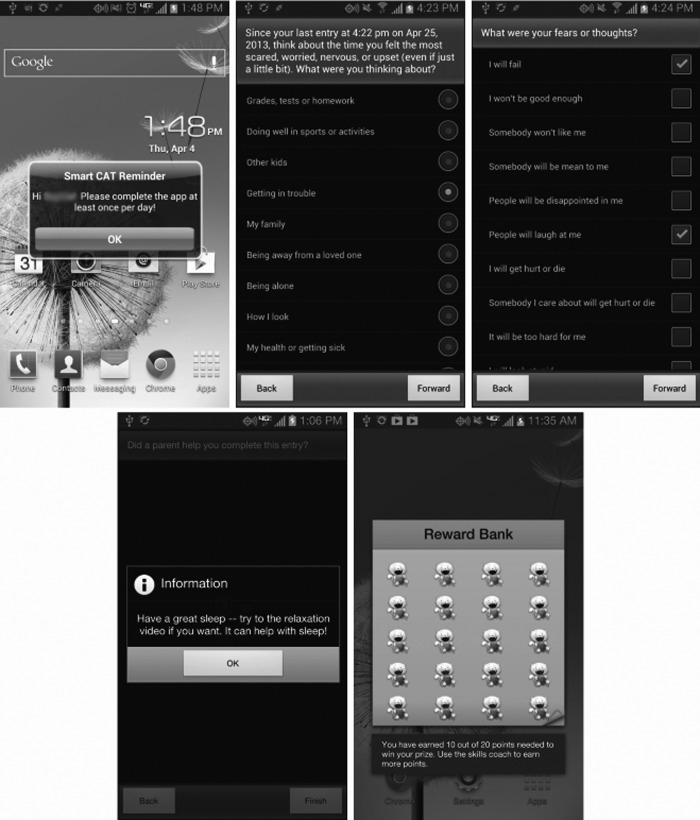
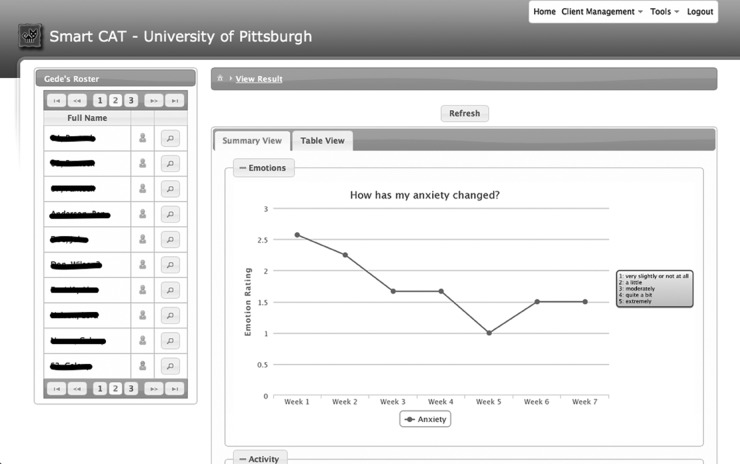
Materials and methods: We developed an m-health platform entitled SmartCAT (Smartphone-enhanced Child Anxiety Treatment). SmartCAT consists of (1) a smartphone application (app) that cues youth to use the CBT skills taught in sessions, (2) an online portal that allows therapists to monitor skill use, to send cues and treatment-related materials, to engage youth in real-time via secure messages, and to manage rewards, and (3) a communication protocol that allows real-time bidirectional exchange between the app and the portal. A pilot study with nine youth (9-14 years old) examined the platform's feasibility as an adjunct to BCBT.
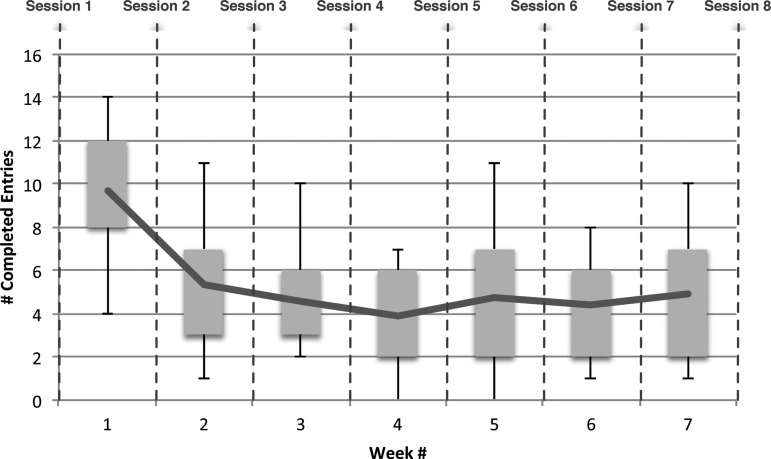
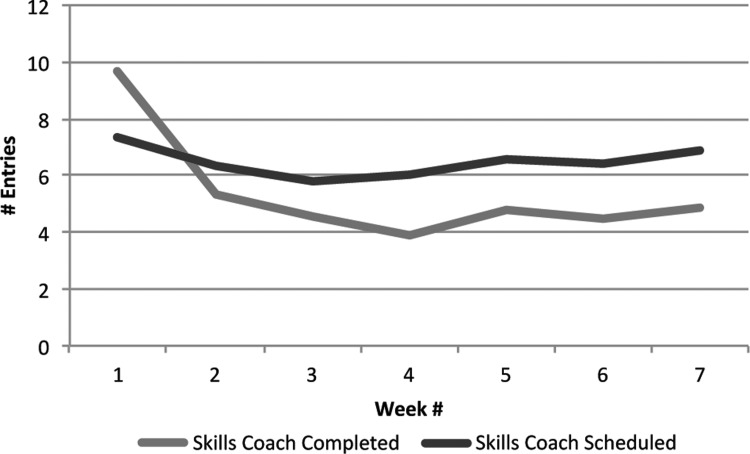
Results: SmartCAT was found to be capable of supporting BCBT for child anxiety and received positive feedback from both therapists and youth patients. Patients rated the app as highly usable (mean=1.7 on a 1-7 scale, with 1="easy"). Patients completed 5.36 skills coach entries per session (standard deviation=1.95) and took an average of 3.14 min (standard deviation=0.98 min) to complete the entries.
Conclusions: A smartphone app is feasible within CBT for child anxiety. Users found SmartCAT both acceptable and easy to use. Integrating an m-health platform within BCBT for anxious children may facilitate involvement in treatment and dissemination of effective procedures.
Figures

References
-
- Costello EJ, Mustillo S, Erkanli A, Keeler G, Angold A. Prevalence and development of psychiatric disorders in childhood and adolescence. Arch Gen Psychiatry 2003;60:837–844 - PubMed
-
- Gurley D, Cohen P, Pine DS, Brook J. Discriminating depression and anxiety in youth: A role for diagnostic criteria. J Affect Disord 1996;39:191–200 - PubMed
-
- Shaffer D, Fisher P, Dulcan MK, et al. . The NIMH Diagnostic Interview Schedule for Children Version 2.3 (DISC-2.3): Description, acceptability, prevalence rates, and performance in the MECA Study. Methods for the Epidemiology of Child and Adolescent Mental Disorders Study. J Am Acad Child Adolesc Psychiatry 1996;35:865–877 - PubMed
-
- Costello EJ, Angold A. Epidemiology. In: March JS, ed. Anxiety disorders in children and adolescents. New York: Guilford Press, 1995:109–124
Publication types
MeSH terms
Grants and funding
LinkOut - more resources
Full Text Sources
Other Literature Sources
Medical