


Genetic causes of proteinuria and nephrotic syndrome: impact on podocyte pathobiology
- PMID: 24584664
- PMCID: PMC4262721
- DOI: 10.1007/s00467-014-2753-3
Genetic causes of proteinuria and nephrotic syndrome: impact on podocyte pathobiology
Abstract
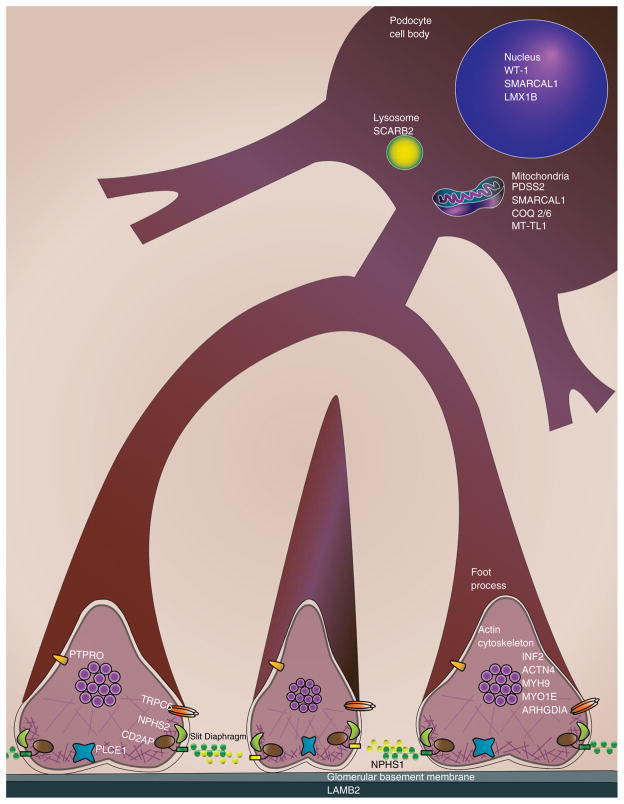
In the past 20 years, multiple genetic mutations have been identified in patients with congenital nephrotic syndrome (CNS) and both familial and sporadic focal segmental glomerulosclerosis (FSGS). Characterization of the genetic basis of CNS and FSGS has led to the recognition of the importance of podocyte injury to the development of glomerulosclerosis. Genetic mutations induce injury due to effects on the podocyte's structure, actin cytoskeleton, calcium signaling, and lysosomal and mitochondrial function. Transgenic animal studies have contributed to our understanding of podocyte pathobiology. Podocyte endoplasmic reticulum stress response, cell polarity, and autophagy play a role in maintenance of podocyte health. Further investigations related to the effects of genetic mutations on podocytes may identify new pathways for targeting therapeutics for nephrotic syndrome.
Figures
References
-
- Ichimura K, Kurihara H, Sakai T. Actin filament organization of foot processes in vertebrate glomerular podocytes. Cell Tissue Res. 2007;329:541–557. - PubMed
-
- Neal CR, Muston PR, Njegovan D, Verrill R, Harper SJ, Deen WM, Bates DO. Glomerular filtration into the subpodocyte space is highly restricted under physiological perfusion conditions. Am J Renal Physiol. 2007;293:F1787–F1798. - PubMed
-
- Lasagni L, Ballerini L, Angelotti ML, Parente E, Sagrinati C, Mazzinghi B, Peired A, Ronconi E, Becherucci F, Bani D, Gacci M, Carini M, Lazzeri E, Romagnani P. Notch activation differentially regulates renal progenitors proliferation and differentiation toward the podocyte lineage in glomerular disorders. Stem Cells. 2010;28:1674–1685. - PMC - PubMed
Publication types
MeSH terms
Grants and funding
LinkOut - more resources
Full Text Sources
Other Literature Sources
Miscellaneous
