


Biomarker prediction of chemotherapy-related amenorrhea in premenopausal women with breast cancer participating in E5103
- PMID: 24584876
- PMCID: PMC4334112
- DOI: 10.1007/s10549-014-2891-0
Biomarker prediction of chemotherapy-related amenorrhea in premenopausal women with breast cancer participating in E5103
Abstract
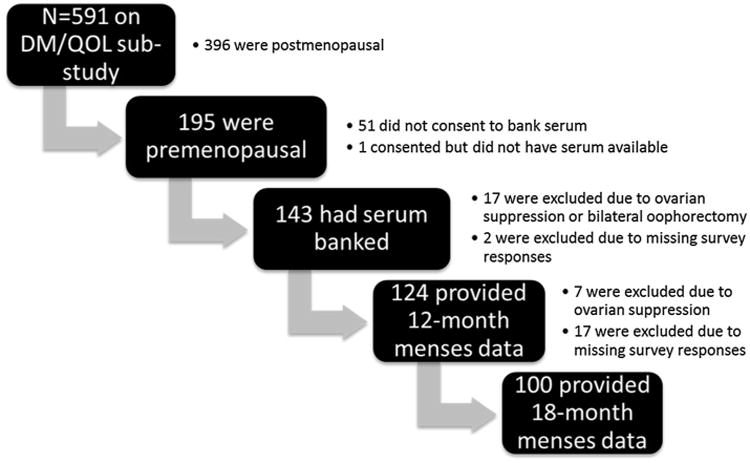
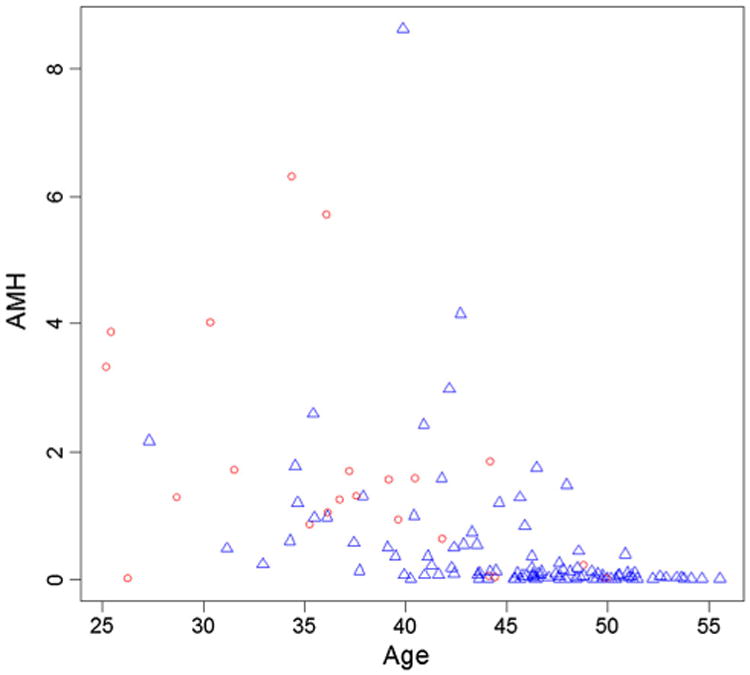
This study aimed to investigate whether pre-chemotherapy anti-mullerian hormone (AMH) is a biomarker for chemotherapy-related amenorrhea (CRA) in breast cancer patients. A multicenter randomized controlled trial, ECOG5103, assigned patients with early stage breast cancer to standard doxorubicin-cyclophosphamide followed by paclitaxel with either placebo or one of two durations of bevacizumab therapy. Five hundred ninety-one patients were part of the decision-making/quality of life substudy, in which there were surveys from baseline through 18-month follow-up. One hundred twenty-four women were included in this analysis of menses data because they were premenopausal at enrollment, responded to the 12-month survey, had not undergone bilateral oophorectomy or ovarian function suppression before that survey, and had serum banked for research before chemotherapy. One hundred of the 124 also responded to the 18-month survey. Median age was 45 years (range 25-55), and median serum AMH level was 0.11 ng/mL (range 0.01-8.63) prior to treatment. Eighty-two percent had CRA at 12 months, and 81 % at 18 months. In multivariate analyses, older age (p = 0.0003) was the only statistically significant predictor of 12-month CRA, but at 18-months, lower pre-chemotherapy AMH (p = 0.04) and older age (p = 0.008) were both statistically significant predictors of CRA. Race, bevacizumab therapy, and tamoxifen use were not statistically significantly associated with CRA after adjustment for AMH and age. Pre-chemotherapy AMH level is a potential novel biomarker for CRA in premenopausal women with early stage breast cancer. Further research to evaluate the clinical utility of AMH testing is warranted.
Figures
References
-
- Zec I, Tislaric-Medenjak D, Megla ZB, Kucak I. Anti-Mullerian hormone: a unique biochemical marker of gonadal development and fertility in humans. Biochem Med (Zagreb) 2011;21(3):219–230. - PubMed
-
- Celik E, Bastu E, Dural O, Yasa C, Buyru F. Relevance of anti-Mullerian hormone on in vitro fertilization outcome. Clin Exp Obstet Gynecol. 2013;40(1):66–69. - PubMed
Publication types
MeSH terms
Substances
Grants and funding
- U10 CA032291/CA/NCI NIH HHS/United States
- CA14958/CA/NCI NIH HHS/United States
- CA32291/CA/NCI NIH HHS/United States
- U10 CA021115/CA/NCI NIH HHS/United States
- U10 CA049883/CA/NCI NIH HHS/United States
- P30 CA082709/CA/NCI NIH HHS/United States
- U10 CA180795/CA/NCI NIH HHS/United States
- U10 CA066636/CA/NCI NIH HHS/United States
- U10 CA037403/CA/NCI NIH HHS/United States
- UG1 CA189828/CA/NCI NIH HHS/United States
- CA77651,/CA/NCI NIH HHS/United States
- U10 CA180794/CA/NCI NIH HHS/United States
- U10 CA180867/CA/NCI NIH HHS/United States
- U10 CA014958/CA/NCI NIH HHS/United States
- CA66636/CA/NCI NIH HHS/United States
- U10 CA077651/CA/NCI NIH HHS/United States
- UG1 CA233180/CA/NCI NIH HHS/United States
- U10 CA180820/CA/NCI NIH HHS/United States
- CA25224/CA/NCI NIH HHS/United States
- U10 CA023318/CA/NCI NIH HHS/United States
- U10 CA025224/CA/NCI NIH HHS/United States
- U24 CA114737/CA/NCI NIH HHS/United States
- CA23318/CA/NCI NIH HHS/United States
- CA49883/CA/NCI NIH HHS/United States
- CA21115/CA/NCI NIH HHS/United States
LinkOut - more resources
Full Text Sources
Other Literature Sources
Medical
