Review
. 2014 Feb 20;10(2):e1003905.
doi: 10.1371/journal.ppat.1003905. eCollection 2014 Feb.

Tailored immune responses: novel effector helper T cell subsets in protective immunity

Affiliations
Review

Tailored immune responses: novel effector helper T cell subsets in protective immunity

Ervin E Kara et al. PLoS Pathog. .

Abstract

Differentiation of naïve CD4⁺ cells into functionally distinct effector helper T cell subsets, characterised by distinct "cytokine signatures," is a cardinal strategy employed by the mammalian immune system to efficiently deal with the rapidly evolving array of pathogenic microorganisms encountered by the host. Since the T(H)1/T(H)2 paradigm was first described by Mosmann and Coffman, research in the field of helper T cell biology has grown exponentially with seven functionally unique subsets having now been described. In this review, recent insights into the molecular mechanisms that govern differentiation and function of effector helper T cell subsets will be discussed in the context of microbial infections, with a focus on how these different helper T cell subsets orchestrate immune responses tailored to combat the nature of the pathogenic threat encountered.


Conflict of interest statement

The authors have declared that no competing interests exist.

Figures
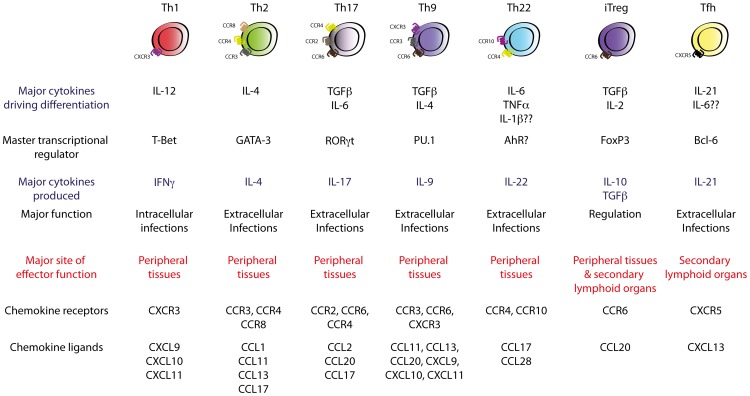
Figure 1
Figure 1. Currently known TH cell subsets.
Polarising cytokines encountered during TH cell differentiation drive the expression of subset-specific transcription factors, which imprint subset-specific transcriptomes in the TH cell. These transcription factors define the effector function and migratory capability of the TH cell via regulation of subset-specific cytokines and chemokine receptors.
Figure 2
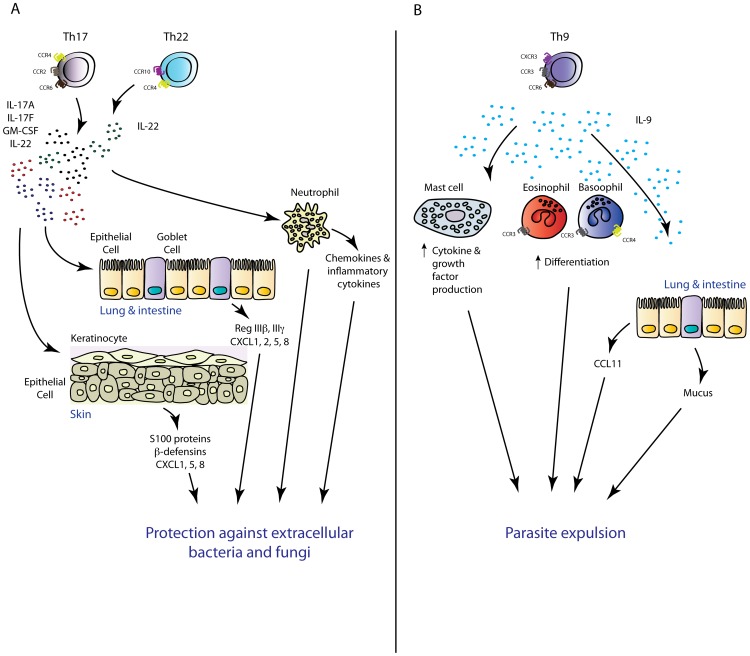
Figure 2. Novel TH subsets in inflammation.
(A) TH17 and TH22 cells have overlapping functions in the mouse. Via production of the inflammatory mediators IL-17A, IL-17F, GMCSF (TH17), and IL-22 (TH22), these TH subsets mediate protective immunity against extracellular pathogens intimately associated with mucosal barriers. (B) TH9-cell-derived IL-9 may play an important role in antiparasitic immunity via mediating mast cell activation and mastocytosis, increasing the chemotactic potential of an inflammatory site via regulation of inflammatory chemokine production, and promote basophil and eosinophil function.
Figure 3
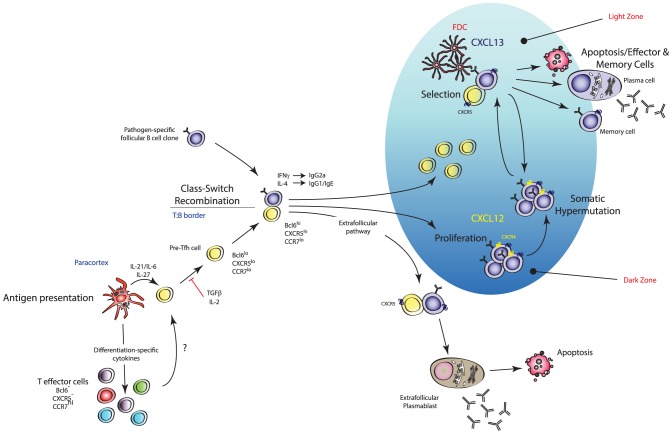
Figure 3. Mechanism of action of TFH cells.
TFH cells are effector TH cells that govern the quality and magnitude of an antibody response via regulation of B cell selection, differentiation, proliferation, and class switch recombination. TFH cells execute these effector functions via expression of various cell surface proteins and cytokines (including IL-21). They are generated during antigen presentation in the T cell areas of secondary lymphoid organs in the presence of IL-21 and IL-6, which is thought to upregulate their master transcription factor Bcl6 (pre-TFH), after which they migrate to the T∶B border where interaction with cognate B cells regulates a number of processes including promoting survival of recently activated B cells, regulating the fate decision of a B cell down extrafollicular plasmablast or germinal center (GC) B cell differentiation pathways, and induction of class switch recombination in GC B cells. Stable interactions with cognate B cells at this border also consolidate the TFH cell programme (pre-TFH to TFH cell differentiation) with further upregulation of Bcl6 and entry into developing GCs. Within GCs, TFH cells are crucial for the regulation of affinity maturation, development of memory B cell populations, and high-affinity antibody responses via regulation of long-lived plasma cell differentiation.

References

    1. Zhu J, Paul WE (2010) Peripheral CD4+ T-cell differentiation regulated by networks of cytokines and transcription factors. Immunol Rev 238: 247–262. - PMC - PubMed
    1. Joffre O, Nolte MA, Sporri R, Reis e Sousa C (2009) Inflammatory signals in dendritic cell activation and the induction of adaptive immunity. Immunol Rev 227: 234–247. - PubMed
    1. Mosmann TR, Cherwinski H, Bond MW, Giedlin MA, Coffman RL (1986) Two types of murine helper T cell clone. I. Definition according to profiles of lymphokine activities and secreted proteins. J Immunol 136: 2348–2357. - PubMed
    1. Okoye IS, Wilson MS (2011) CD4+ T helper 2 cells–microbial triggers, differentiation requirements and effector functions. Immunology 134: 368–377. - PMC - PubMed
    1. Rowe JH, Ertelt JM, Way SS (2012) Foxp3(+) regulatory T cells, immune stimulation and host defence against infection. Immunology 136: 1–10. - PMC - PubMed

Publication types

MeSH terms