


The clinical features of infantile hypertrophic pyloric stenosis in Chinese Han population: analysis from 1998 to 2010
- PMID: 24586444
- PMCID: PMC3929628
- DOI: 10.1371/journal.pone.0088925
The clinical features of infantile hypertrophic pyloric stenosis in Chinese Han population: analysis from 1998 to 2010
Abstract
Objective: To investigate clinical features of infantile hypertrophic pyloric stenosis (IHPS) in Chinese Han population.
Methods: Three hundred and sixteen hospitalized patients with IHPS from January 1998 to February 2010 were retrospectively reviewed, and data including patient's sex, onset age, other coexisting congenital defects, pyloric circular muscle thickness evaluated by ultrasonograph, serum electrolytes concentration, and results of arterial blood gas analysis on admission were collected. The patients were divided into two groups: the duration between first onset and admission less than or equal to 10 days (early onset group), and more than 10 days (late onset group). The results of arterial blood gas and serum electrolyte concentration were compared between the two groups.
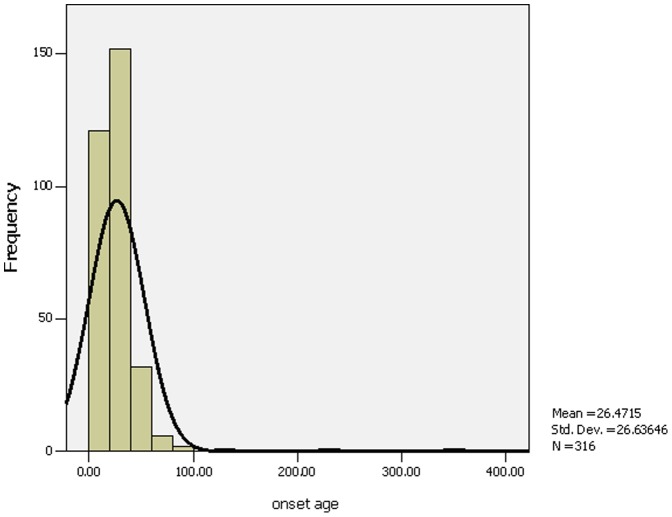
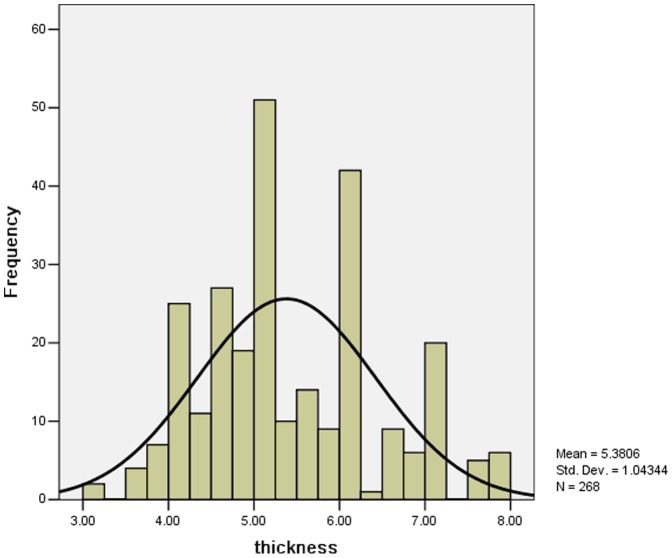
Results: There were 271 males and 45 females in 316 patients; the onset age ranged between 1 and 351 (26.5±26.6) days. The birth weight ranged between 1.6 and 4.5 (3.23±0.44) kilograms; coexisting congenital defects were found in 65 cases (20.6%). Pyloric circular muscle thickness was 4-8 (5.4±1.0) millimetres (mm). For the early onset group, the rates of hypokalemia, hypochloraemia and hypercapnia were significantly lower than those in the late onset group (18.67% VS 50%, P<0.0001; 46.03% VS 71.01%, P = 0.003; 56.58% VS 83.44%, P = 2.17×10(-5); respectively).
Conclusions: The symptom duration in Chinese Han population was longer than that in other populations. And as the prolongation of symptom duration, the incidence of acid-base imbalance increased significantly. Infants with persistent vomiting at the age of 3∼5 weeks after birth should be considered IHPS, and go to hospital as soon as possible in order to reduce the incidence of hypokalemia, hypochloraemia and hypercapnia, and avoid deterioration.
Conflict of interest statement
Figures
References
-
- Applegate MS, Druschel CM (1995) The epidemiology of infantile hypertrophic pyloric stenosis in New York State, 1983 to 1990. Arch Pediatr Adolesc Med 149: 1123–1129. - PubMed
-
- To T, Wajja A, Wales PW, Langer JC (2005) Population demographic indicators associated with incidence of pyloric stenosis. Arch Pediatr Adolesc Med 159: 520–525. - PubMed
-
- Saula PW, Hadley GP (2011) Hypertrophic pyloric stenosis in the Third World. Trop Doct 41: 204–210. - PubMed
Publication types
MeSH terms
LinkOut - more resources
Full Text Sources
Other Literature Sources
