. 2014 Feb 25;9(2):e88951.
doi: 10.1371/journal.pone.0088951. eCollection 2014.

The activated SA and JA signaling pathways have an influence on flg22-triggered oxidative burst and callose deposition

Affiliations

The activated SA and JA signaling pathways have an influence on flg22-triggered oxidative burst and callose deposition

So Young Yi et al. PLoS One. .

Abstract

The first line of defense in plants against pathogens is induced by the recognition of microbe-associated molecular patterns (MAMP). Perception of bacterial flagellin (flg22) by the pattern recognition receptor flagellin-sensing 2 (FLS2) is the best characterized MAMP response, although the underlying molecular mechanisms are not fully understood. Here we studied the relationship between salicylic acid (SA) or jasmonic acid (JA) signaling and FLS2-mediated signaling by monitoring flg22-triggered responses in known SA or JA related mutants of Arabidopsis thaliana (L.) Heynh. The sid2 mutant, impaired in SA biosynthesis, had less basal FLS2 mRNA accumulation than the wild type, which correlated with suppression of early flg22 responses such as ROS production and induction of marker genes, WRKY29 and FRK1. The JA-signaling mutants, jar1 and coi1, exhibited an enhanced flg22-triggered oxidative burst and more callose accumulation than the wild type, and pretreatment with SA or coronatine (COR), a structural mimic of JA-isoleucine, altered these flg22-induced responses. Nonexpressor of pathogenesis-related genes 1 (NPR1) acted downstream of SID2 and required SA-dependent priming for the enhanced flg22-triggered oxidative burst and callose deposition. Activation of JA signaling by COR pretreatment suppressed the flg22-triggered oxidative burst and callose accumulation in a coronatine insensitive 1 (COI1) dependent manner. COR had a negative effect on flg22 responses but only the flg22-triggered oxidative burst depended on SA-JA/COR signaling antagonism. Thus the activated SA and JA signaling pathways have an influence on flg22-triggered oxidative burst and callose deposition. These results may explain how SA and JA signaling are cross talked for regulation of flg22-triggered responses.


Conflict of interest statement

Competing Interests: The authors have declared that no competing interests exist.

Figures

Figure 1
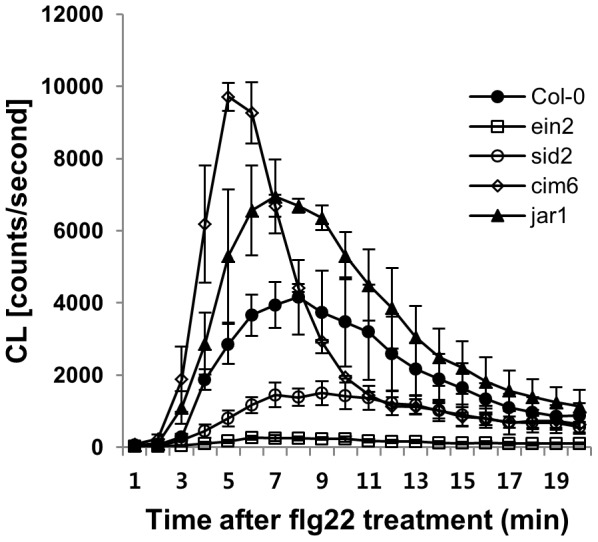
Figure 1. SA and JA signaling are required for flg22-triggered oxidative burst.
Flg22-induced ROS generation was monitored in liquid-grown intact seedlings of indicated Arabidopsis genotypes after treatment with 1 µM flg22. Error bars represent the SD of five independent samples (n = 10) and similar results were obtained in multiple independent experiments.
Figure 2
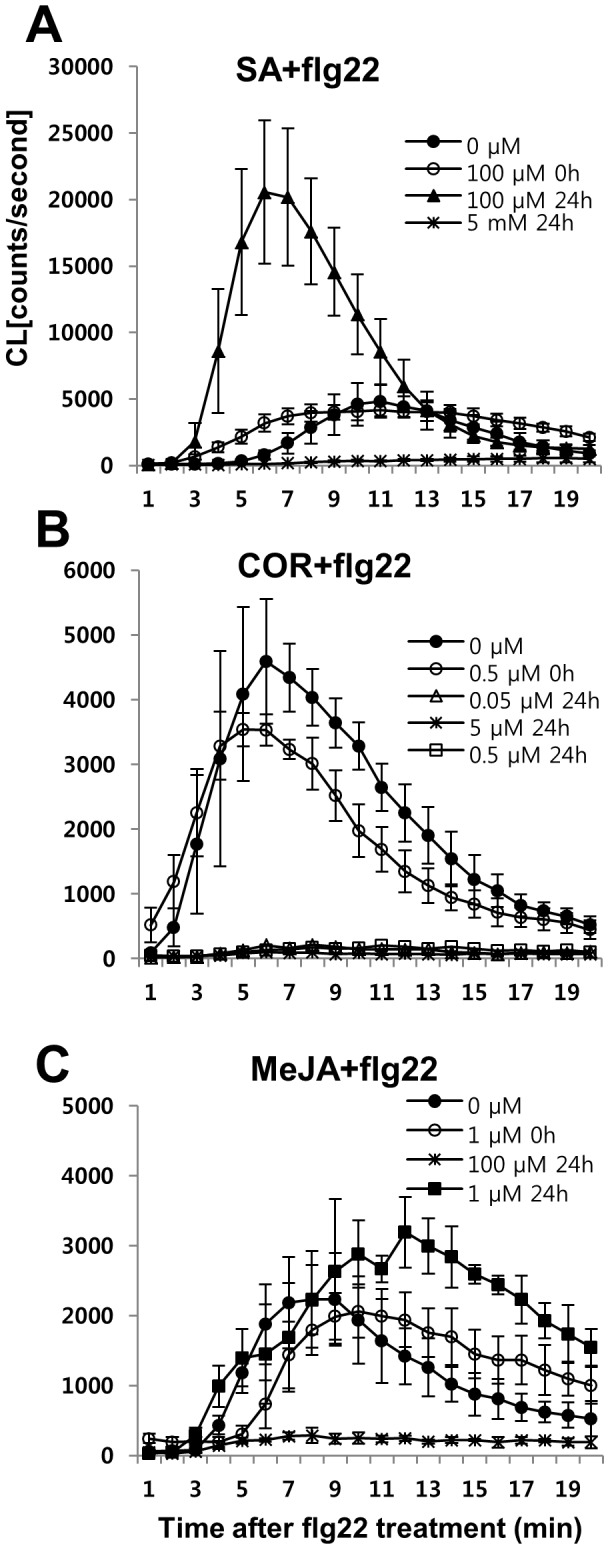
Figure 2. Effect of exogenous chemical treatments (SA, MeJA, or COR) on the flg22-triggered oxidative burst.
(A-C) Arabidopsis seedlings were pre-incubated with various concentrations of chemicals for the indicated time periods (0 and 24 h) before the start of ROS measurements. Flg22 (1 µM) was added at zero time. Error bars represent the SD of five independent samples (n = 10) and similar results were obtained in three independent experiments.
Figure 3
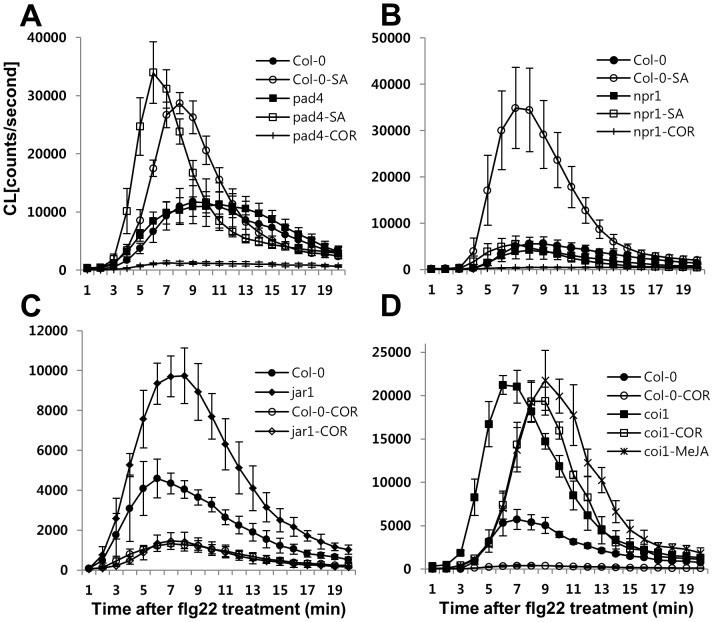
Figure 3. The effect of SA and COR in the flg22-triggered oxidative burst is dependent on NPR1 and COI1, respectively.
(A–D) Effect of pretreatment with SA (100 µM) or COR (0.5 µM) for 24 h on the flg22-triggered oxidative burst in mutant [pad4 (A), npr1 (B), jar1 (C), coi1 (D)] and wild-type Columbia seedlings. Flg22 (1 µM) was added at zero time. Error bars represent the SD of five independent samples (n = 10) and similar results were obtained in three independent experiments.
Figure 4
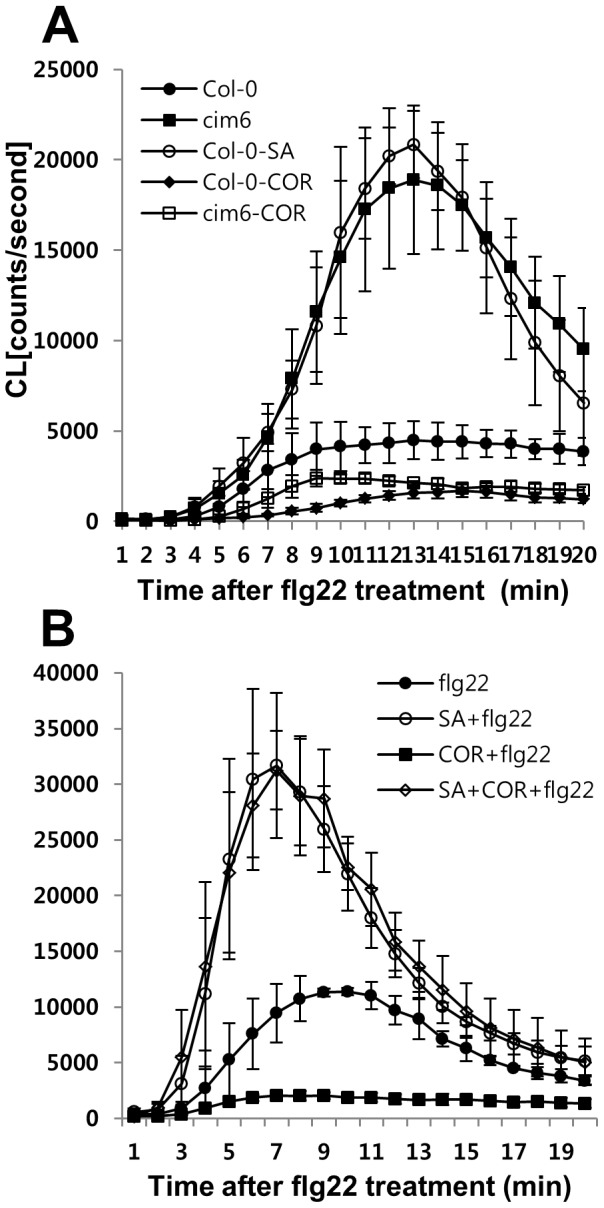
Figure 4. COR is required to overcome the SA effect during the flg22-triggered oxidative burst.
(A) Effect of pretreatment with SA (100 µM) or COR (0.5 µM) for 24 h on the flg22- triggered oxidative burst in cim6 and wild-type Columbia seedlings. Flg22 (1 µM) was added at zero time. (B) COR did not suppress flg22-induced ROS generation when applied simultaneously with SA. Eight-day-old seedlings were pre incubated with SA (100 µM), COR (0.5 µM), or SA plus COR for 24 h. Flg22 (1 µM) was added at zero time. Error bars represent the SD of five independent samples (n = 10) and similar results were obtained in at least two independent experiments.
Figure 5
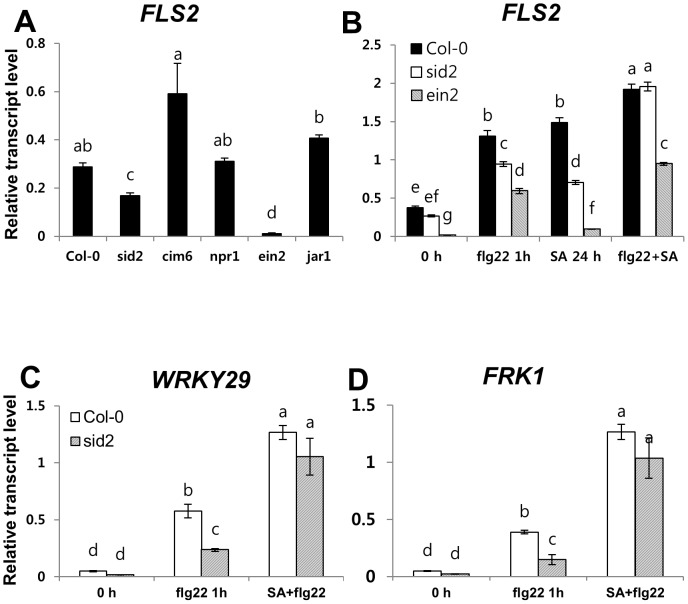
Figure 5. Down regulation of the flg22 response genes in sid2 plants.
For Quantitative RT-PCR analysis, 8-day-old seedlings were pre-treated with 100 µM of salicylic acid for 24 h and then incubated in 1 µM flg22 solution for 1 h. ACT2 was used as a control. Data represent SD. All quantitative gene expression measurements were performed using technical triplicate and biological duplicates. Differential letter types indicated significant differences (α = 0.05) by one-way ANOVA and Tukey HSD test of comparisons between plant genotypes with individual treatment.
Figure 6
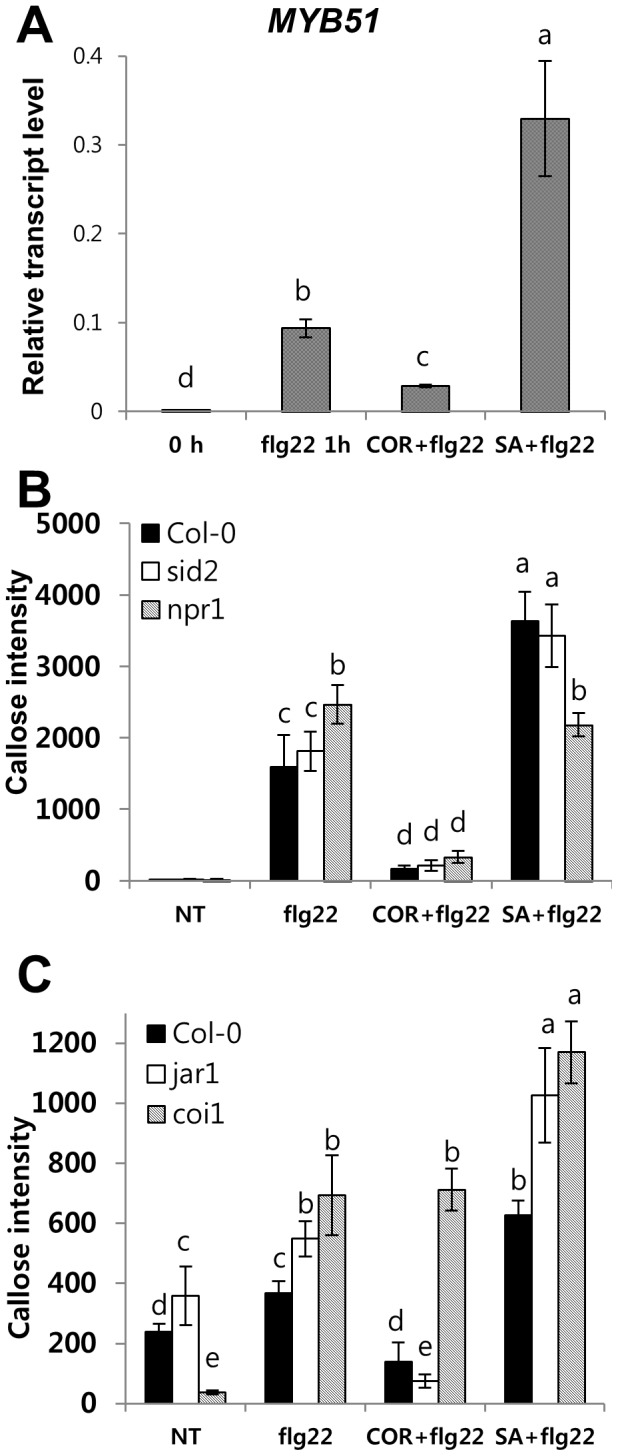
Figure 6. Effect of SA or COR pretreatment on flg22-induced MYB51 transcript accumulation and callose deposition of Arabidopsis seedlings.
(A) MYB51 transcripts were measured in 8-day-old seedlings 1 h after treatment with 1 µM flg22. Data represent SD. All quantitative gene expression measurements were performed using technical triplicates and biological duplicates. (B–C) Eight-day-old seedlings were pre-incubated with SA (100 µM) or COR (0.5 µM) for 24 h, after which the seedlings treated with flg22 for 1 h were stained with aniline blue. Relative callose intensities were quantified as the number of fluorescent callose-corresponding pixels relative to the total number of pixels covering plant material. Values represent SE, n>6. Differential letter types indicated significant differences (α = 0.05) by one-way ANOVA and Tukey HSD test of comparisons between plant genotypes with individual treatment.

References

    1. Jones JD, Dangl JL (2006) The plant immune system. Nature 444: 323–329. - PubMed
    1. Felix G, Duran JD, Volko S, Boller T (1999) Plants have a sensitive perception system for the most conserved domain of bacterial flagellin. Plant J 18: 265–276. - PubMed
    1. Gomez-Gomez L, Boller T (2002) Flagellin perception: a paradigm for innate immunity. Trends Plant Sci 7: 251–256. - PubMed
    1. Gomez-Gomez L, Boller T (2000) FLS2: an LRR receptor-like kinase involved in the perception of the bacterial elicitor flagellin in Arabidopsis. Mol Cell 5: 1003–1011. - PubMed
    1. Gomez-Gomez L, Felix G, Boller T (1999) A single locus determines sensitivity to bacterial flagellin in Arabidopsis thaliana. Plant J 18: 277–284. - PubMed

Publication types

MeSH terms

LinkOut - more resources