


Non-adherence in patients on peritoneal dialysis: a systematic review
- PMID: 24586478
- PMCID: PMC3934877
- DOI: 10.1371/journal.pone.0089001
Non-adherence in patients on peritoneal dialysis: a systematic review
Abstract
Background: It has been increasingly recognized that non-adherence is an important factor that determines the outcome of peritoneal dialysis (PD) therapy. There is therefore a need to establish the levels of non-adherence to different aspects of the PD regimen (dialysis procedures, medications, and dietary/fluid restrictions).
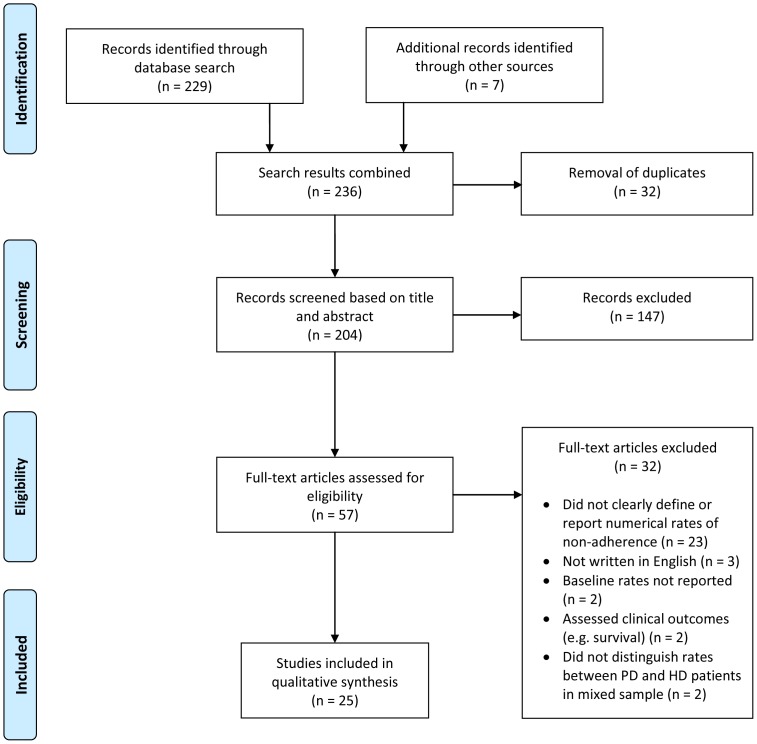
Methods: A systematic review of peer-reviewed literature was performed in PubMed, PsycINFO and CINAHL databases using PRISMA guidelines in May 2013. Publications on non-adherence in PD were selected by two reviewers independently according to predefined inclusion and exclusion criteria. Relevant data on patient characteristics, measures, rates and factors associated with non-adherence were extracted. The quality of studies was also evaluated independently by two reviewers according to a revised version of the Effective Public Health Practice Project assessment tool.
Results: The search retrieved 204 studies, of which a total of 25 studies met inclusion criteria. Reported rates of non-adherence varied across studies: 2.6-53% for dialysis exchanges, 3.9-85% for medication, and 14.4-67% for diet/fluid restrictions. Methodological differences in measurement and definition of non-adherence underlie the observed variation. Factors associated with non-adherence that showed a degree of consistency were mostly socio-demographical, such as age, employment status, ethnicity, sex, and time period on PD treatment.
Conclusion: Non-adherence to different dimensions of the dialysis regimen appears to be prevalent in PD patients. There is a need for further, high-quality research to explore these factors in more detail, with the aim of informing intervention designs to facilitate adherence in this patient population.
Conflict of interest statement
References
-
- Denhaerynck K, Manhaeve D, Dobbels F, Garzoni D, Nolte C, et al. (2007) Prevalence and consequences of nonadherence to hemodialysis regimens. Am J Crit Care 16: 222–235. - PubMed
-
- Bernardini J, Piraino B (1998) Compliance in CAPD and CCPD patients as measured by supply inventories during home visits. Am J Kidney Dis 31: 101–107. - PubMed
-
- Bernardini J, Nagy M, Piraino B (2000) Pattern of noncompliance with dialysis exchanges in peritoneal dialysis patients. Am J Kidney Dis 35: 1104–1110. - PubMed
-
- Bender B, Rand C (2004) Medication non-adherence and asthma treatment cost. Current Opinion in Allergy & Clinical Immunology 4: 191–195. - PubMed
Publication types
MeSH terms
LinkOut - more resources
Full Text Sources
Other Literature Sources
Miscellaneous
