


A single-step method for rapid extraction of total lipids from green microalgae
- PMID: 24586930
- PMCID: PMC3933640
- DOI: 10.1371/journal.pone.0089643
A single-step method for rapid extraction of total lipids from green microalgae
Abstract
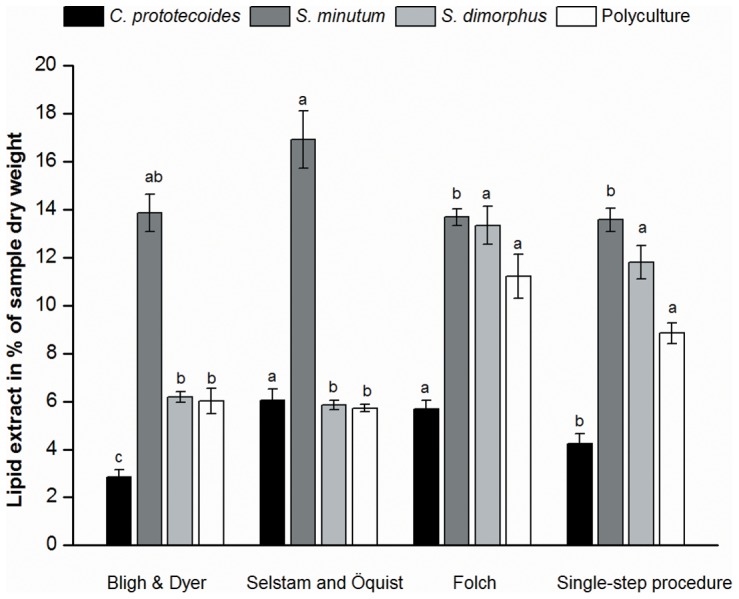
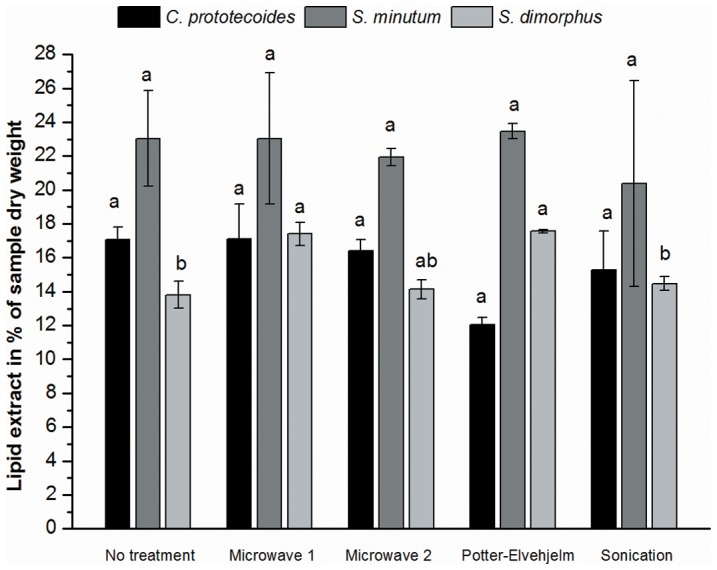
Microalgae produce a wide range of lipid compounds of potential commercial interest. Total lipid extraction performed by conventional extraction methods, relying on the chloroform-methanol solvent system are too laborious and time consuming for screening large numbers of samples. In this study, three previous extraction methods devised by Folch et al. (1957), Bligh and Dyer (1959) and Selstam and Öquist (1985) were compared and a faster single-step procedure was developed for extraction of total lipids from green microalgae. In the single-step procedure, 8 ml of a 2∶1 chloroform-methanol (v/v) mixture was added to fresh or frozen microalgal paste or pulverized dry algal biomass contained in a glass centrifuge tube. The biomass was manually suspended by vigorously shaking the tube for a few seconds and 2 ml of a 0.73% NaCl water solution was added. Phase separation was facilitated by 2 min of centrifugation at 350 g and the lower phase was recovered for analysis. An uncharacterized microalgal polyculture and the green microalgae Scenedesmus dimorphus, Selenastrum minutum, and Chlorella protothecoides were subjected to the different extraction methods and various techniques of biomass homogenization. The less labour intensive single-step procedure presented here allowed simultaneous recovery of total lipid extracts from multiple samples of green microalgae with quantitative yields and fatty acid profiles comparable to those of the previous methods. While the single-step procedure is highly correlated in lipid extractability (r² = 0.985) to the previous method of Folch et al. (1957), it allowed at least five times higher sample throughput.
Conflict of interest statement
Figures
References
-
- Chisti Y (2007) Biodiesel from microalgae. Biotechnology Advances 25: 294–306. - PubMed
-
- Benemann JR (1992) Microalgae aquaculture feeds. Journal of Applied Phycology 4: 233–245.
-
- Brown MR, Jeffrey SW, Volkman JK, Dunstan GA (1997) Nutritional properties of microalgae for mariculture. Aquaculture 151: 315–331.
-
- Khozin-Goldberg I, Iskandarov U, Cohen Z (2011) LC-PUFA from photosynthetic microalgae: occurrence, biosynthesis, and prospects in biotechnology. Applied Microbiology and Biotechnology 91: 905–915. - PubMed
Publication types
MeSH terms
Substances
LinkOut - more resources
Full Text Sources
Other Literature Sources
