


Negative mood state enhances the susceptibility to unpleasant events: neural correlates from a music-primed emotion classification task
- PMID: 24587070
- PMCID: PMC3938531
- DOI: 10.1371/journal.pone.0089844
Negative mood state enhances the susceptibility to unpleasant events: neural correlates from a music-primed emotion classification task
Abstract
Background: Various affective disorders are linked with enhanced processing of unpleasant stimuli. However, this link is likely a result of the dominant negative mood derived from the disorder, rather than a result of the disorder itself. Additionally, little is currently known about the influence of mood on the susceptibility to emotional events in healthy populations.
Method: Event-Related Potentials (ERP) were recorded for pleasant, neutral and unpleasant pictures while subjects performed an emotional/neutral picture classification task during positive, neutral, or negative mood induced by instrumental Chinese music.
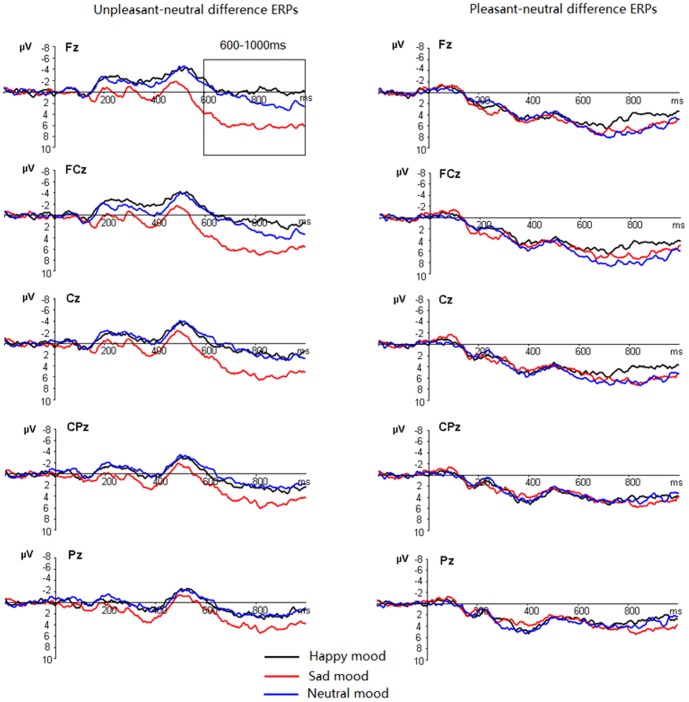
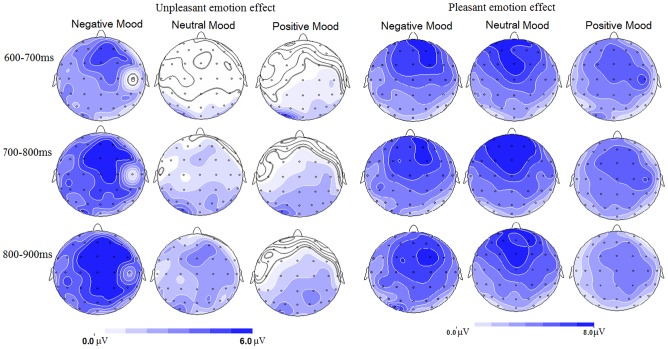
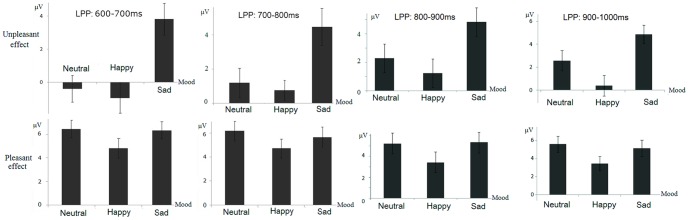
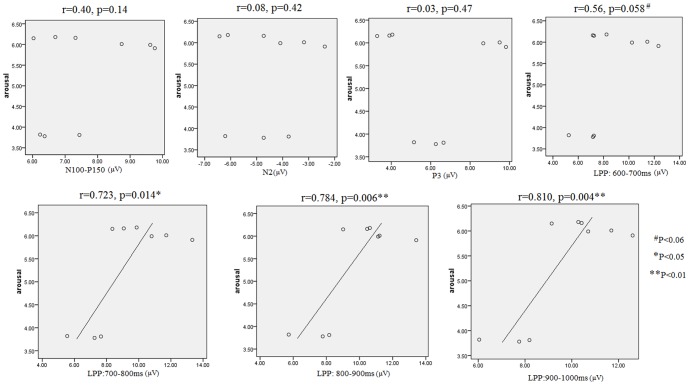
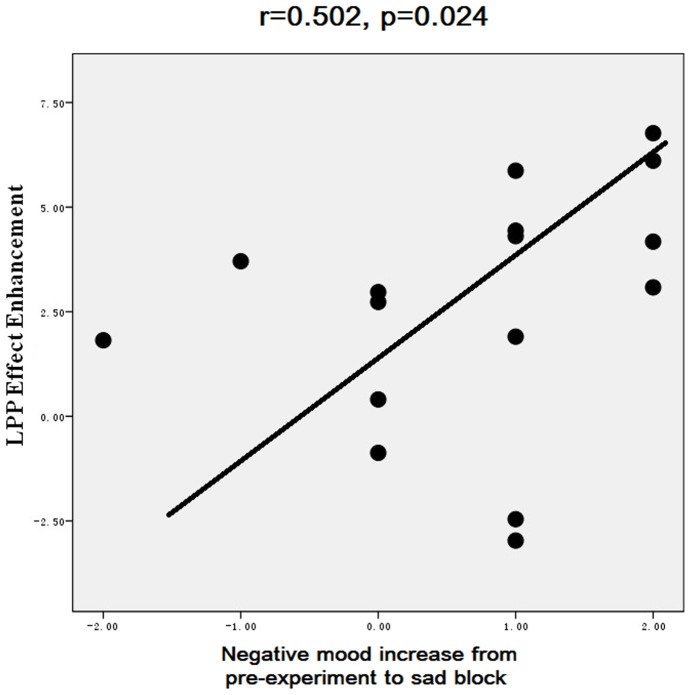
Results: Late Positive Potential (LPP) amplitudes were positively related to the affective arousal of pictures. The emotional responding to unpleasant pictures, indicated by the unpleasant-neutral differences in LPPs, was enhanced during negative compared to neutral and positive moods in the entire LPP time window (600-1000 ms). The magnitude of this enhancement was larger with increasing self-reported negative mood. In contrast, this responding was reduced during positive compared to neutral mood in the 800-1000 ms interval. Additionally, LPP reactions to pleasant stimuli were similar across positive, neutral and negative moods except those in the 800-900 ms interval.
Implications: Negative mood intensifies the humans' susceptibility to unpleasant events in healthy individuals. In contrast, music-induced happy mood is effective in reducing the susceptibility to these events. Practical implications of these findings were discussed.
Conflict of interest statement
Figures
References
-
- Krompinger JW, Simons RF (2009) Electrophysiological indicators of emotion processing biases in depressed undergraduates. Biol psychol 81 (3) 153–163. - PubMed
-
- Gotlib IH, Krasnoperova E, Yue DN, Joormann J (2004) Attentional biases for negative interpersonal stimuli in clinical depression. J abnorm psychol 113 (1) 127. - PubMed
-
- Mathews A, Mogg K, Kentish J, Eysenck M (1995) Effect of psychological treatment on cognitive bias in generalized anxiety disorder. Behav Res Ther 33 (3) 293–303. - PubMed
-
- Mercado F, Carretié L, Tapia M, Gómez-Jarabo G (2006) The influence of emotional context on attention in anxious subjects: neurophysiological correlates. J anxiety disord 20 (1) 72–84. - PubMed
-
- Williams LM, Kemp AH, Felmingham K, Liddell BJ, Palmer DM, et al. (2007) Neural biases to covert and overt signals of fear: dissociation by trait anxiety and depression. J Cogn Neurosci 19 (10) 1595–1608. - PubMed
Publication types
MeSH terms
LinkOut - more resources
Full Text Sources
Other Literature Sources
