


Transcriptomic analysis of (group I) Clostridium botulinum ATCC 3502 cold shock response
- PMID: 24587151
- PMCID: PMC3933689
- DOI: 10.1371/journal.pone.0089958
Transcriptomic analysis of (group I) Clostridium botulinum ATCC 3502 cold shock response
Abstract
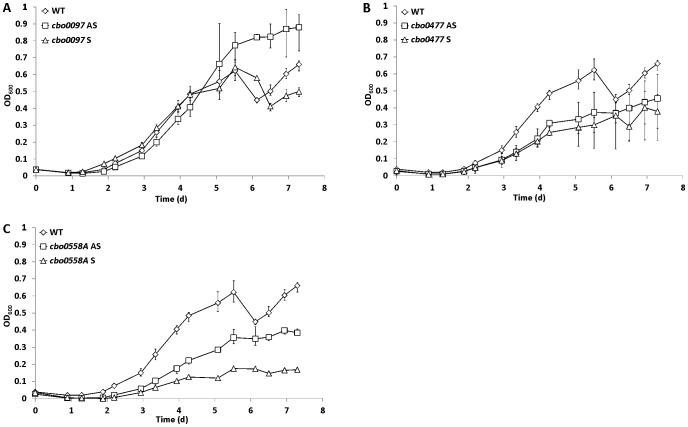
Profound understanding of the mechanisms foodborne pathogenic bacteria utilize in adaptation to the environmental stress they encounter during food processing and storage is of paramount importance in design of control measures. Chill temperature is a central control measure applied in minimally processed foods; however, data on the mechanisms the foodborne pathogen Clostridium botulinum activates upon cold stress are scarce. Transcriptomic analysis on the C. botulinum ATCC 3502 strain upon temperature downshift from 37°C to 15°C was performed to identify the cold-responsive gene set of this organism. Significant up- or down-regulation of 16 and 11 genes, respectively, was observed 1 h after the cold shock. At 5 h after the temperature downshift, 199 and 210 genes were up- or down-regulated, respectively. Thus, the relatively small gene set affected initially indicated a targeted acute response to cold shock, whereas extensive metabolic remodeling appeared to take place after prolonged exposure to cold. Genes related to fatty acid biosynthesis, oxidative stress response, and iron uptake and storage were induced, in addition to mechanisms previously characterized as cold-tolerance related in bacteria. Furthermore, several uncharacterized DNA-binding transcriptional regulator-encoding genes were induced, suggesting involvement of novel regulatory mechanisms in the cold shock response of C. botulinum. The role of such regulators, CBO0477 and CBO0558A, in cold tolerance of C. botulinum ATCC 3502 was demonstrated by deteriorated growth of related mutants at 17°C.
Conflict of interest statement
Figures
References
-
- Peck MW (1997) Clostridium botulinum and the safety of refrigerated processed foods of extended durability. Trends Food Sci Technol 8: 186–192.
-
- Lindström M, Kiviniemi K, Korkeala H (2006) Hazard and control of group II (non-proteolytic) Clostridium botulinum in modern food processing. Int J Food Microbiol 108: 92–104. - PubMed
-
- Phadtare S (2004) Recent developments in bacterial cold-shock response. Curr Issues Mol Biol 6: 125–136. - PubMed
Publication types
MeSH terms
Substances
LinkOut - more resources
Full Text Sources
Other Literature Sources
Molecular Biology Databases
