


Antibody-mediated inhibition of TNFR1 attenuates disease in a mouse model of multiple sclerosis
- PMID: 24587232
- PMCID: PMC3938650
- DOI: 10.1371/journal.pone.0090117
Antibody-mediated inhibition of TNFR1 attenuates disease in a mouse model of multiple sclerosis
Abstract
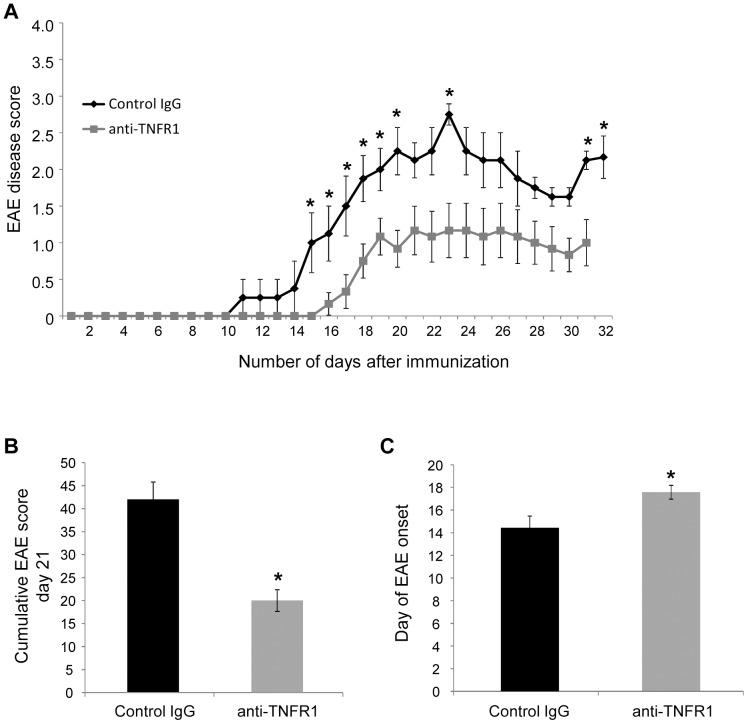
Tumour necrosis factor (TNF) is a proinflammatory cytokine that is known to regulate inflammation in a number of autoimmune diseases, including multiple sclerosis (MS). Although targeting of TNF in models of MS has been successful, the pathological role of TNF in MS remains unclear due to clinical trials where the non-selective inhibition of TNF resulted in exacerbated disease. Subsequent experiments have indicated that this may have resulted from the divergent effects of the two TNF receptors, TNFR1 and TNFR2. Here we show that the selective targeting of TNFR1 with an antagonistic antibody ameliorates symptoms of the most common animal model of MS, experimental autoimmune encephalomyelitis (EAE), when given following both a prophylactic and therapeutic treatment regime. Our results demonstrate that antagonistic TNFR1-specific antibodies may represent a therapeutic approach for the treatment of MS in the future.
Conflict of interest statement
Figures
References
-
- Davie CA, Barker GJ, Webb S, Tofts PS, Thompson AJ, et al. (1995) Persistent functional deficit in multiple sclerosis and autosomal dominant cerebellar ataxia is associated with axon loss. Brain 118: 1583–1592. - PubMed
-
- Losseff NA, Wang L, Lai HM, Yoo DS, Gawne-Cain ML, et al. (1996) Progressive cerebral atrophy in multiple sclerosis. A serial MRI study. Brain 119: 2009–2019. - PubMed
-
- Trapp BD, Ransohoff R, Rudick R (1999) Axonal pathology in multiple sclerosis: relationship to neurologic disability. Curr Opin Neurol 12: 295–302. - PubMed
-
- Wajant H, Pfizenmaier K, Scheurich P (2003) Tumor necrosis factor signaling. Cell Death Diff 10: 45–65. - PubMed
-
- Kontermann RE, Scheurich P, Pfizenmaier K (2009) Antagonists of TNF action: clinical experience and new developments. Expert Opin. Drug Discov 4: 279–292. - PubMed
Publication types
MeSH terms
Substances
LinkOut - more resources
Full Text Sources
Other Literature Sources
Molecular Biology Databases
