. 2014 Feb 28;9(2):e90247.
doi: 10.1371/journal.pone.0090247. eCollection 2014.

High expression of protein tyrosine kinase 7 significantly associates with invasiveness and poor prognosis in intrahepatic cholangiocarcinoma

Affiliations

High expression of protein tyrosine kinase 7 significantly associates with invasiveness and poor prognosis in intrahepatic cholangiocarcinoma

Jing Jin et al. PLoS One. .

Abstract

Background: The incidence, prevalence, and mortality of intrahepatic cholangiocarcinoma (ICC) are increasing worldwide. Protein tyrosine kinase-7 (PTK7) is upregulated in many common human cancers. However, its expression in ICC has not been studied. The present study aimed to explore the underlying mechanism of PTK7 in ICC.

Materials and methods: The role of PTK7 was studied in vitro by suppressing PTK7 expression in ICC cell lines. The in vivo effect of PTK7 was evaluated using a nude mouse model inoculated with a human ICC cell line. We also examined the role of PTK7 in human ICC samples.

Results: Cells with high PTK7 expression exhibited higher proliferation, DNA synthesis, invasion, and migration abilities than did cells with low PTK7 expression. The knockdown of PTK7 with small interfering RNA (siRNA) in high PTK7 expressing cells resulted in impairment of invasion, migration, and DNA synthesis through the regulation of several cell-cycle-related proteins. It also induced cell apoptosis and decreased phospho-RhoA expression. In a xenograft nude mouse model, PTK7 siRNA resulted in a reduction of the tumor size, compared with scrambled siRNA injection. PTK7 expression was higher in human ICC than in the normal bile duct. Patients with low expression of PTK7 had a longer disease-free survival and overall survival than those with high expression.

Conclusions: PTK7 expression plays an important role in the invasiveness of ICC cells and leads to a poor prognosis in ICC patients. Thus, PTK7 can be used as a prognostic indicator, and the inhibition of PTK7 expression could be a new therapeutic target for ICC.


Conflict of interest statement

Competing Interests: The authors have declared that no competing interests exist.

Figures

Figure 1
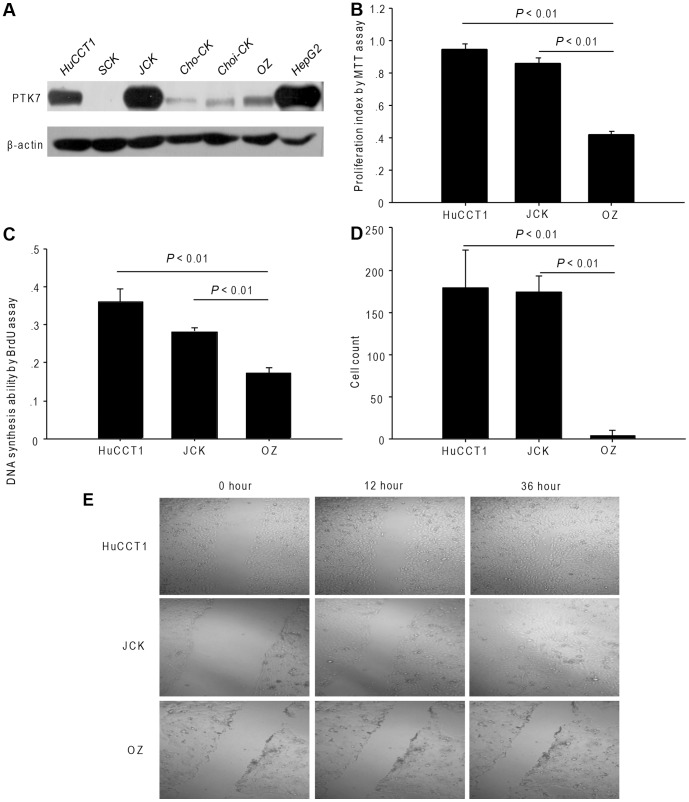
Figure 1. Different characteristics of cholangiocarcinoma cells lines.
(A) PTK7 expression in six cholangiocarcinoma cell lines. (B) Proliferation ability, (C) DNA synthesis ability and (D) invasion ability of the HuCCT1, JCK and OZ cell lines. (E) Migration ability assessed by the migration assay (original magnification, 100×). P<0.01, comparing HuCCT1 or JCK cells with OZ cells. All experiments were replicated thrice with triplicate repeated measures within each replication for each time point. Data represent the mean ± SD.
Figure 2
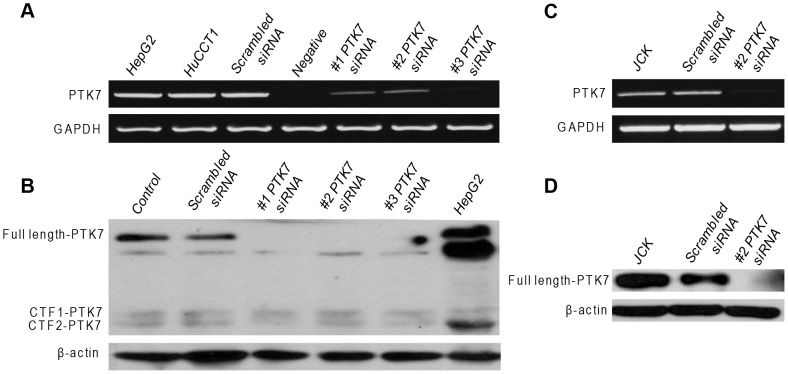
Figure 2. PTK7-specific siRNA silencing in HuCCT1 and JCK cells.
(A) PTK7 mRNA and (B) protein levels after transfection of PTK7 siRNAs in HuCCT1 cells. (C) PTK7 mRNA and (D) protein levels after transfection of PTK7 siRNAs in JCK cells.
Figure 3
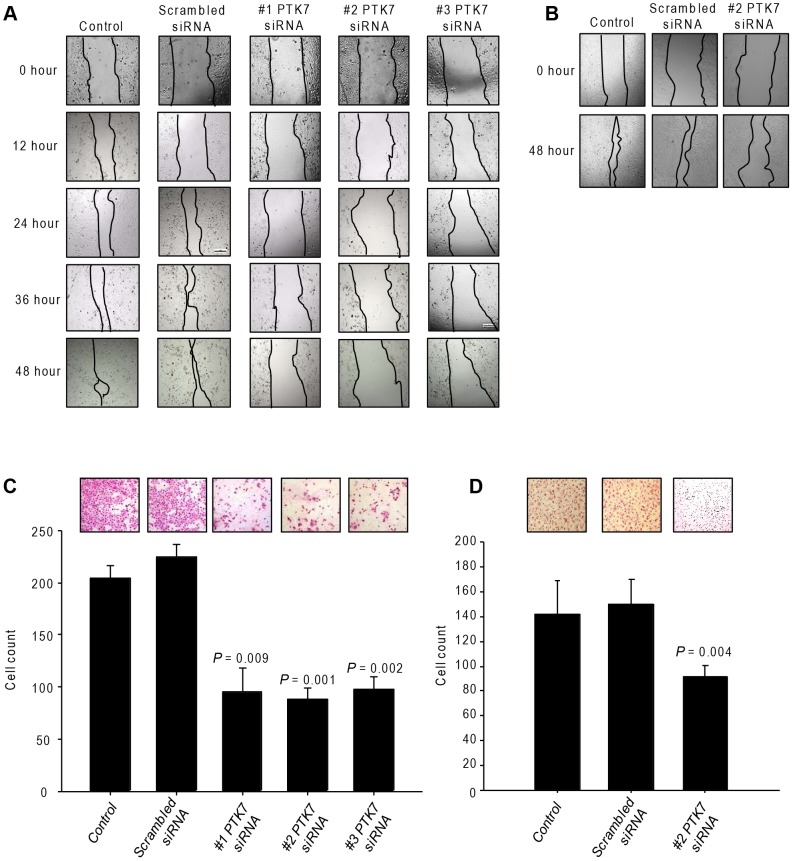
Figure 3. Effect of PTK7-specific siRNA on HuCCT1 and JCK cells.
(A) Migration and (C) invasion ability with siRNA treatment in HuCCT1 cells. (B) Migration and (D) invasion ability with siRNA treatment in JCK cells. All experiments were replicated thrice with triplicate repeated measures within each replication for each time point.
Figure 4
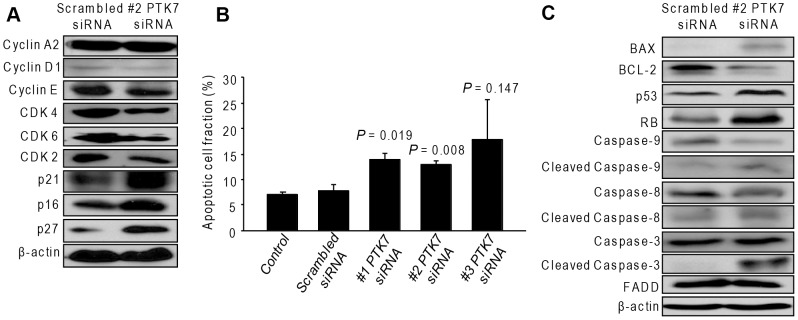
Figure 4. Effect of PTK7-specific siRNA on cell cycle and apoptosis in HuCCT1 cells.
(A) Cell-cycle-related protein expressions with siRNA treatment. (B) The percentage of apoptotic cells with siRNA treatment. (C) Effect of siRNA on the apoptosis-related proteins. P values are presented for comparison with scrambled siRNA group. All experiments were replicated thrice with triplicate repeated measures within each replication for each time point. Data represent the mean ± SD.
Figure 5
Figure 5. Effect of PTK7-specific siRNA on Wnt pathway in HuCCT1 cells.
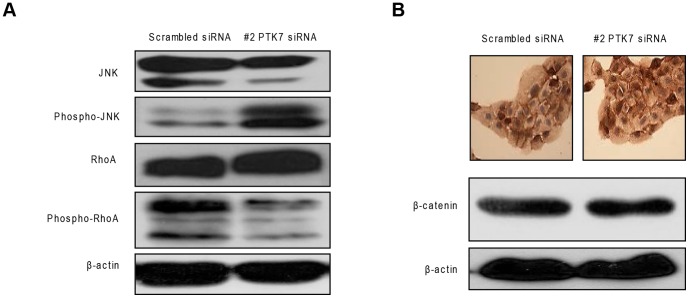
(A) Results of the PTK7 silencing on the non-canonical Wnt pathway (PCP)-related proteins. (B) Western blotting (lower panel) and immunohistochemistry staining (upper panel) of β-catenin on HuCCT1 cells with siRNA treatment (original magnification, 400×).
Figure 6
Figure 6. Effect of PTK7 silencing in a xenograft nude mouse model.
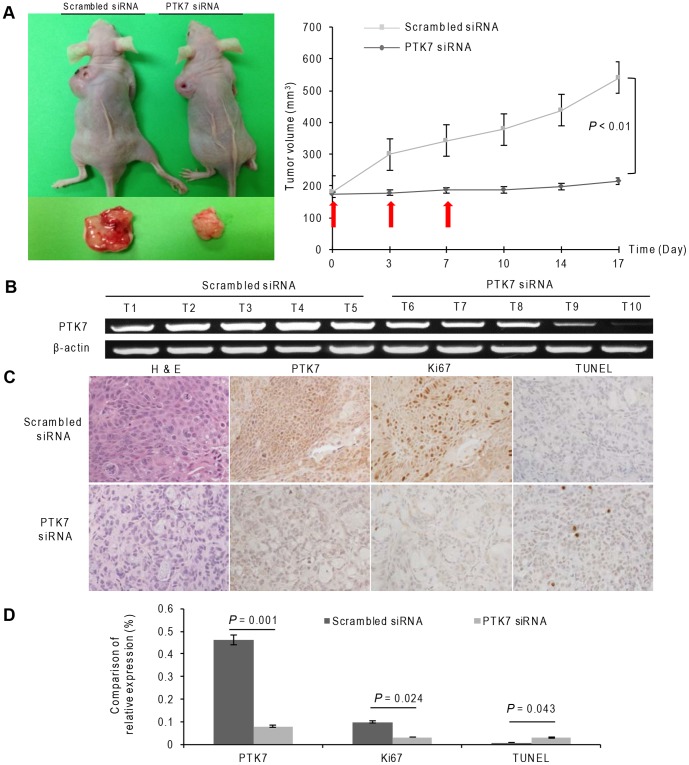
(A) Representative nude mice in the PTK7-specific siRNA group and scrambled siRNA group (left panel). Tumor volume of the PTK7-specific siRNA-treated and the scrambled group (right panel). (B) PTK7 mRNA expression in each tumor. (C) Representative H&E, PTK7, Ki67, and TUNEL staining in the PTK7-specific siRNA and scrambled siRNA treated groups (original magnification, 200×). (D) Comparison of relative PTK7, Ki67, and TUNEL staining. P values are presented for comparison with the scrambled siRNA group. Data represent the mean ± SD.
Figure 7
Figure 7. PTK7 expression in human ICC and normal bile duct tissue.
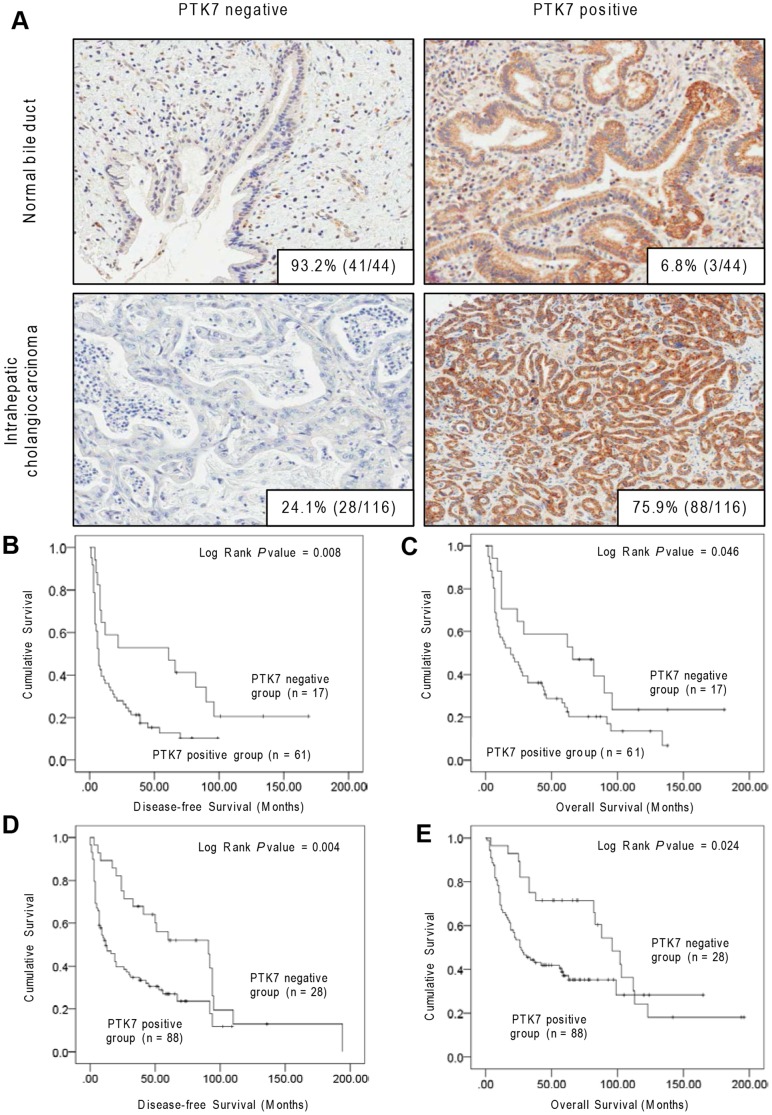
(A) PTK7 immunohistochemistry staining for ICC and normal bile duct tissue. In normal bile duct, 93.2% (41/44) of cases stained negatively for PTK7 (upper left), 6.8% (3/44) of cases stained positively for PTK7 (upper right). In ICC, 24.1% (28/116) of cases stained negatively for PTK7 (lower left), 75.9% (88/116) of cases stained positively for PTK7 (lower right) (original magnification, 200×). Kaplan–Meier curves for (B) DFS and (C) OS of patients with positive or negative PTK7 expression in test set, and (D) DFS and (E) OS of validation cohort.

References

    1. Fava G, Marzioni M, Benedetti A, Glaser S, DeMorrow S, et al. (2007) Molecular pathology of biliary tract cancers. Cancer Lett 250: 155–167. - PubMed
    1. Palmer WC, Patel T (2012) Are common factors involved in the pathogenesis of primary liver cancers? A meta-analysis of risk factors for intrahepatic cholangiocarcinoma. J Hepatol 57: 69–76. - PMC - PubMed
    1. Mossie K, Jallal B, Alves F, Sures I, Plowman GD, et al. (1995) Colon carcinoma kinase-4 defines a new subclass of the receptor tyrosine kinase family. Oncogene 11: 2179–2184. - PubMed
    1. Endoh H, Tomida S, Yatabe Y, Konishi H, Osada H, et al. (2004) Prognostic model of pulmonary adenocarcinoma by expression profiling of eight genes as determined by quantitative real-time reverse transcriptase polymerase chain reaction. J Clin Oncol 22: 811–819. - PubMed
    1. Muller-Tidow C, Schwable J, Steffen B, Tidow N, Brandt B, et al. (2004) High-throughput analysis of genome-wide receptor tyrosine kinase expression in human cancers identifies potential novel drug targets. Clin Cancer Res 10: 1241–1249. - PubMed

Publication types

MeSH terms