


Sulforaphane inhibits invasion via activating ERK1/2 signaling in human glioblastoma U87MG and U373MG cells
- PMID: 24587385
- PMCID: PMC3938755
- DOI: 10.1371/journal.pone.0090520
Sulforaphane inhibits invasion via activating ERK1/2 signaling in human glioblastoma U87MG and U373MG cells
Abstract
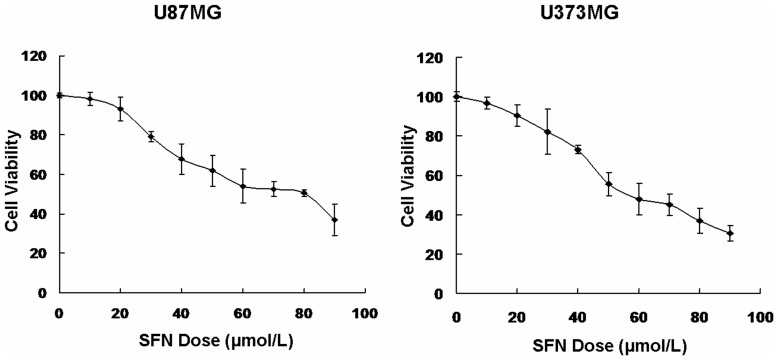
Background: Glioblastoma has highly invasive potential, which might result in poor prognosis and therapeutic failure. Hence, the key we study is to find effective therapies to repress migration and invasion. Sulforaphane (SFN) was demonstrated to inhibit cell growth in a variety of tumors. Here, we will further investigate whether SFN inhibits migration and invasion and find the possible mechanisms in human glioblastoma U87MG and U373MG cells.
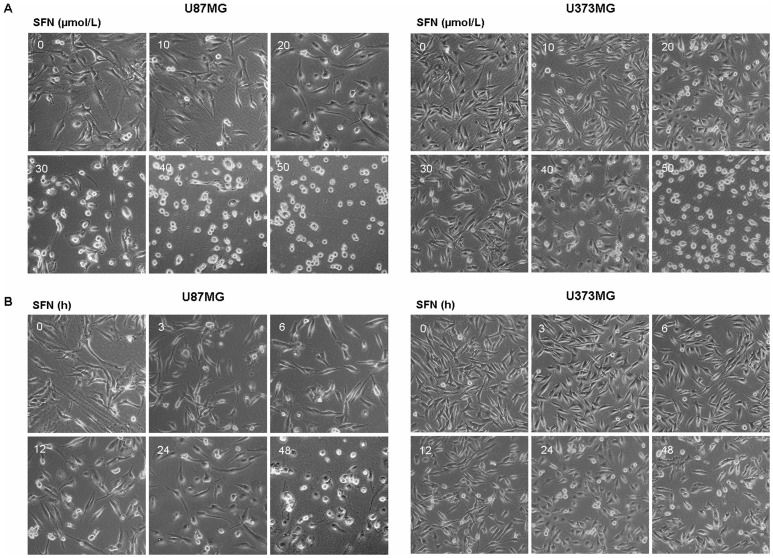
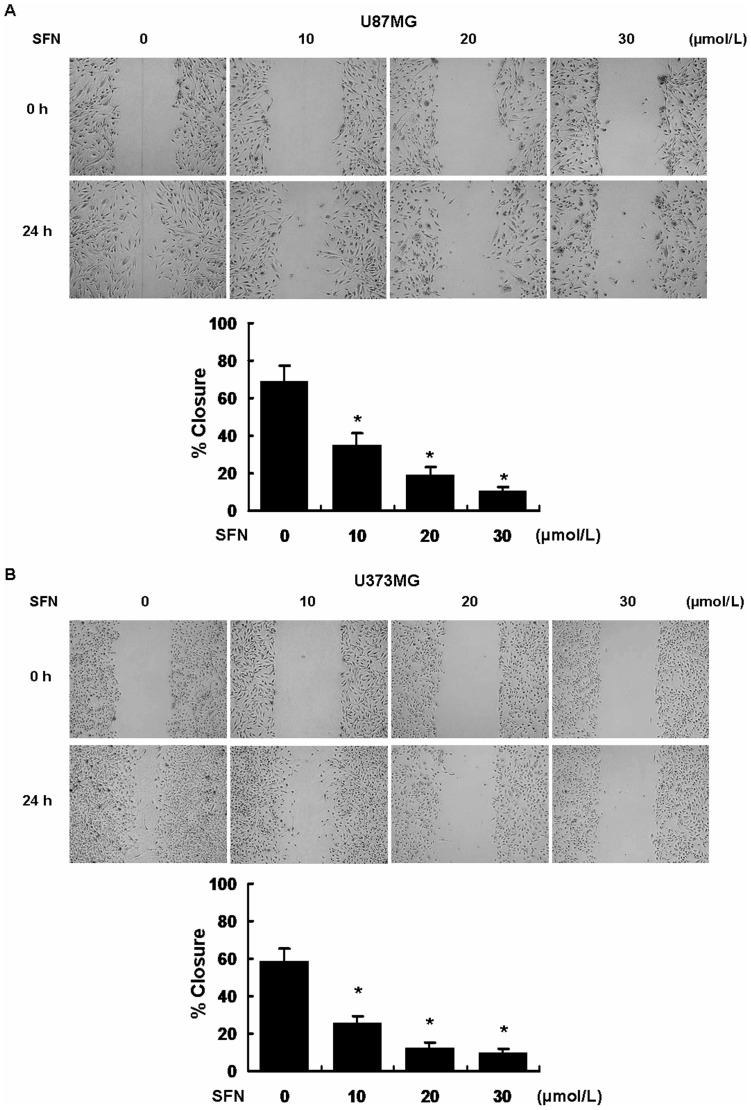
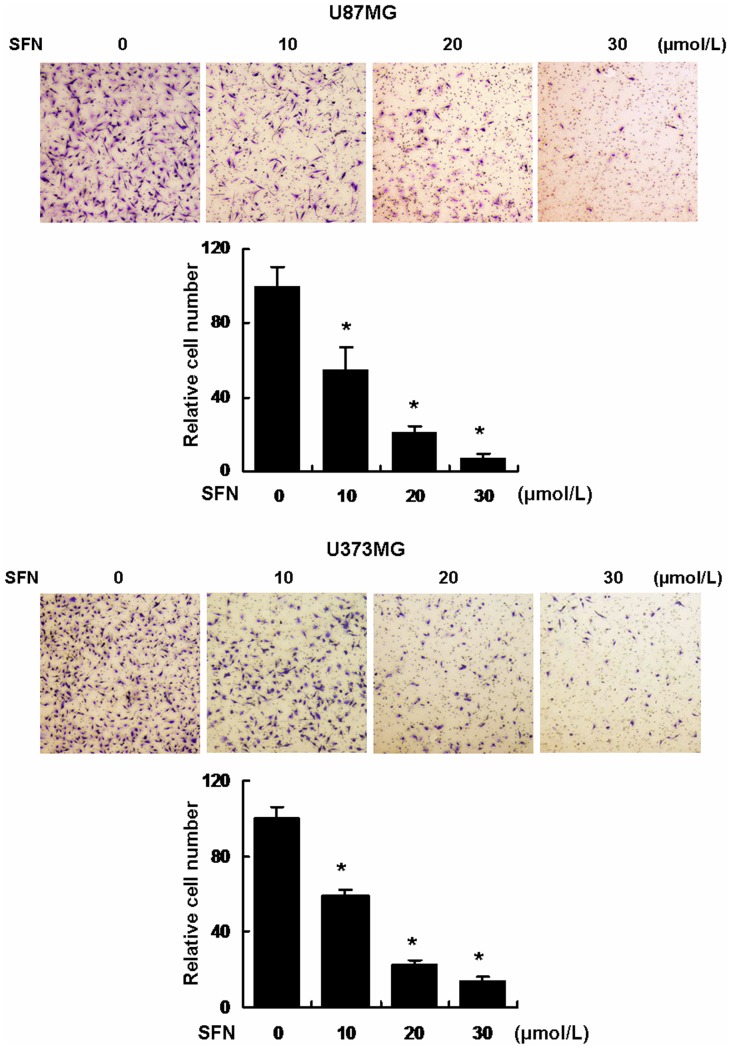
Methods: First, the optimal time and dose of SFN for migration and invasion study were determined via cell viability and cell morphological assay. Further, scratch assay and transwell invasion assay were employed to investigate the effect of SFN on migration and invasion. Meanwhile, Western blots were used to detect the molecular linkage among invasion related proteins phosphorylated ERK1/2, matrix metalloproteinase-2 (MMP-2) and CD44v6. Furthermore, Gelatin zymography was performed to detect the inhibition of MMP-2 activation. In addition, ERK1/2 blocker PD98059 (25 µM) was integrated to find the link between activated ERK1/2 and invasion, MMP-2 and CD44v6.
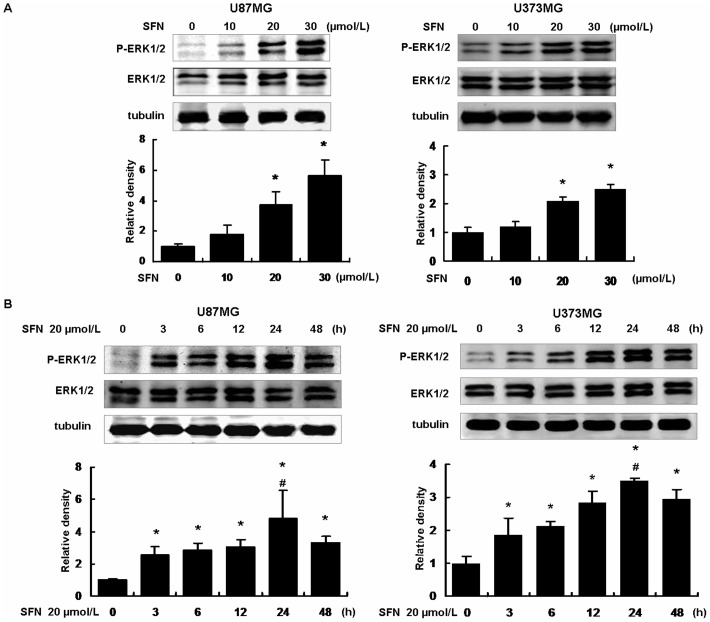
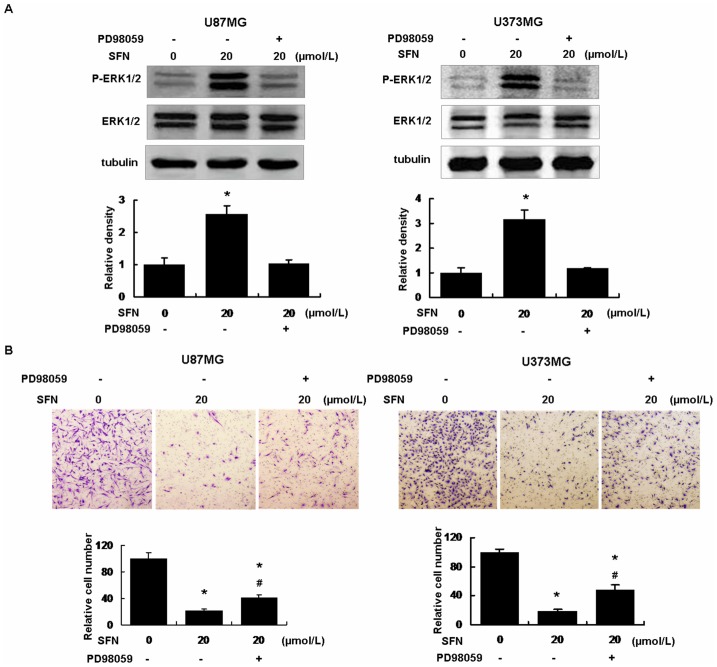
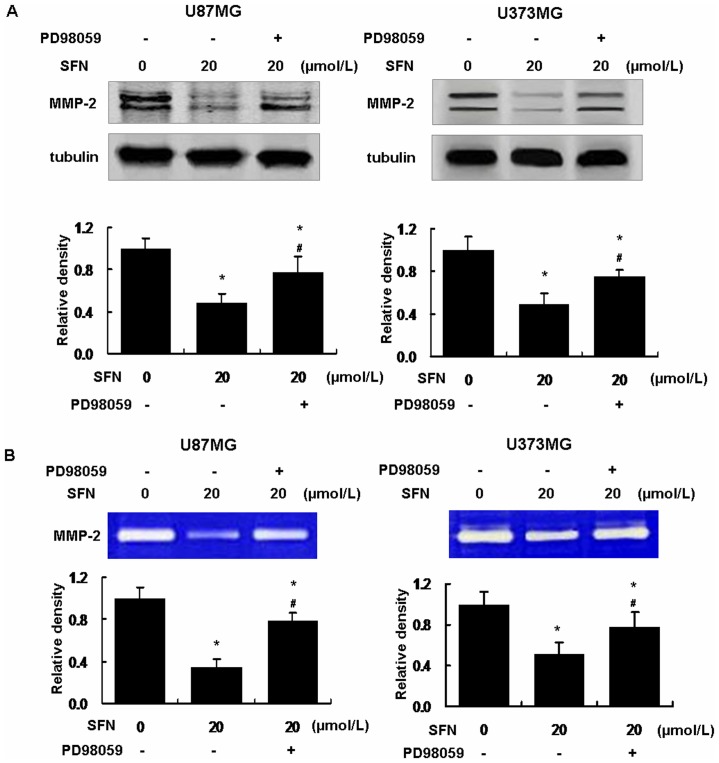
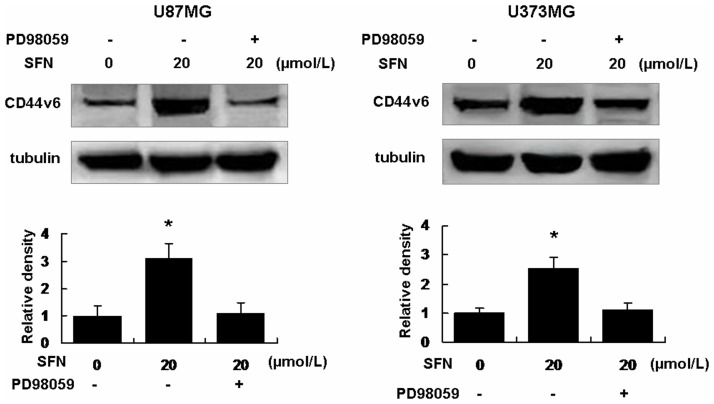
Results: The results showed that SFN (20 µM) remarkably reduced the formation of cell pseudopodia, indicating that SFN might inhibit cell motility. As expected, scratch assay and transwell invasion assay showed that SFN inhibited glioblastoma cell migration and invasion. Western blot and Gelatin zymography showed that SFN phosphorylated ERK1/2 in a sustained way, which contributed to the downregulated MMP-2 expression and activity, and the upregulated CD44v6 expression. These molecular interactions resulted in the inhibition of cell invasion.
Conclusions: SFN inhibited migration and invasion processes. Furthermore, SFN inhibited invasion via activating ERK1/2 in a sustained way. The accumulated ERK1/2 activation downregulated MMP-2 expression and decreased its activity and upregulated CD44v6. SFN might be a potential therapeutic agent by activating ERK1/2 signaling against human glioblastoma.
Conflict of interest statement
Figures
References
-
- Stewart LA (2002) Chemotherapy in adult high-grade glioma: a systematic review and meta-analysis of individual patient data from 12 randomised trials. Lancet 359: 1011–1018. - PubMed
-
- Stupp R, Roila F (2009) Malignant glioma: ESMO clinical recommendations for diagnosis, treatment and follow-up. Ann Oncol 20 Suppl 4126–128. - PubMed
-
- Gielen PR, Aftab Q, Ma N, Chen VC, Hong X, et al. (2013) Connexin43 confers Temozolomide resistance in human glioma cells by modulating the mitochondrial apoptosis pathway. Neuropharmacology 75: 539–48. - PubMed
-
- Chamberlain MC (2010) Temozolomide: therapeutic limitations in the treatment of adult high-grade gliomas. Expert Rev Neurother 10: 1537–1544. - PubMed
Publication types
MeSH terms
Substances
LinkOut - more resources
Full Text Sources
Other Literature Sources
Research Materials
Miscellaneous
