


HIV-1 entry and trans-infection of astrocytes involves CD81 vesicles
- PMID: 24587404
- PMCID: PMC3938779
- DOI: 10.1371/journal.pone.0090620
HIV-1 entry and trans-infection of astrocytes involves CD81 vesicles
Abstract
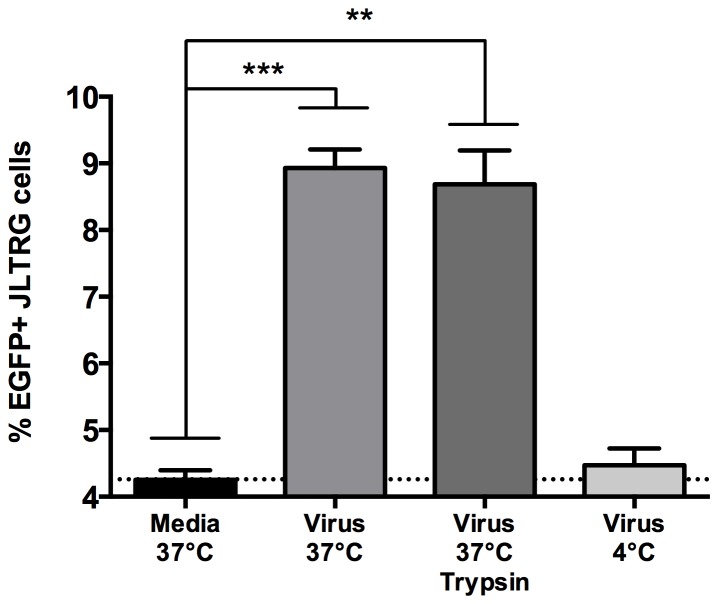
Astrocytes are extensively infected with HIV-1 in vivo and play a significant role in the development of HIV-1-associated neurocognitive disorders. Despite their extensive infection, little is known about how astrocytes become infected, since they lack cell surface CD4 expression. In the present study, we investigated the fate of HIV-1 upon infection of astrocytes. Astrocytes were found to bind and harbor virus followed by biphasic decay, with HIV-1 detectable out to 72 hours. HIV-1 was observed to associate with CD81-lined vesicle structures. shRNA silencing of CD81 resulted in less cell-associated virus but no loss of co-localization between HIV-1 and CD81. Astrocytes supported trans-infection of HIV-1 to T-cells without de novo virus production, and the virus-containing compartment required 37°C to form, and was trypsin-resistant. The CD81 compartment observed herein, has been shown in other cell types to be a relatively protective compartment. Within astrocytes, this compartment may be actively involved in virus entry and/or spread. The ability of astrocytes to transfer virus, without de novo viral synthesis suggests they are capable of sequestering and protecting virus and thus, they could potentially facilitate viral dissemination in the CNS.
Conflict of interest statement
Figures


References
-
- Gonzalez-Scarano F, Martin-Garcia J (2005) The neuropathogenesis of AIDS. Nat Rev Immunol 5: 69–81. - PubMed
-
- Brew BJ, Gray L, Lewin S, Churchill M (2013) Is specific HIV eradication from the brain possible or needed? Expert Opin Biol Ther 13: 403–409. - PubMed
-
- Takahashi K, Wesselingh SL, Griffin DE, McArthur JC, Johnson RT, et al. (1996) Localization of HIV-1 in human brain using polymerase chain reaction/in situ hybridization and immunocytochemistry. Ann Neurol 39: 705–711. - PubMed
Publication types
MeSH terms
Substances
LinkOut - more resources
Full Text Sources
Other Literature Sources
Research Materials
