Effects of fungi and eosinophils on mucin gene expression in rhinovirus-infected nasal epithelial cells
- PMID: 24587952
- PMCID: PMC3936044
- DOI: 10.4168/aair.2014.6.2.149
Effects of fungi and eosinophils on mucin gene expression in rhinovirus-infected nasal epithelial cells
Abstract
Purpose: Fungi, rhinoviruses (RVs), and eosinophils are associated with upper respiratory diseases. We evaluated the effects of fungal stimulation and eosinophil co-culture on the expression of mucin genes in RV-infected nasal polyp epithelial cells.
Methods: Nasal polyp epithelial cells were obtained from chronic rhinosinusitis patients. Cultured epithelial cells were stimulated with Alternaria and Aspergillus with or without RV-16 infection. The epithelial cells were co-cultured with eosinophils for 16 h. MUC4, MUC5AC, MUC5B, and MUC8 mRNA expressions in the epithelial cells were quantified using real-time RT-PCR. To determine the underlying mechanism, nuclear factor-κB (NF-κB), activator protein-1 (AP-1), and mitogen-activated protein kinase (MAPK) inhibitors were used to inhibit mucin gene expression.
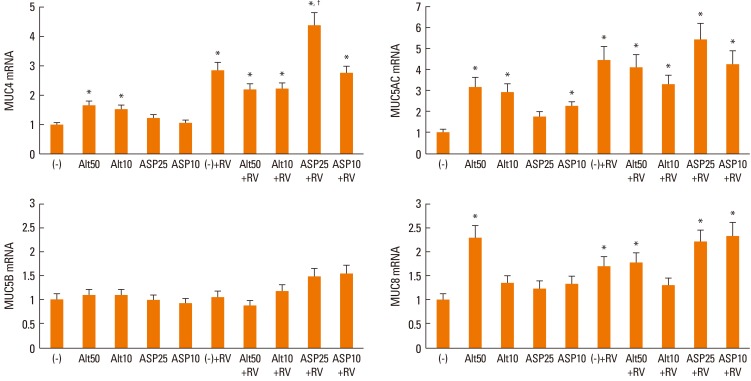
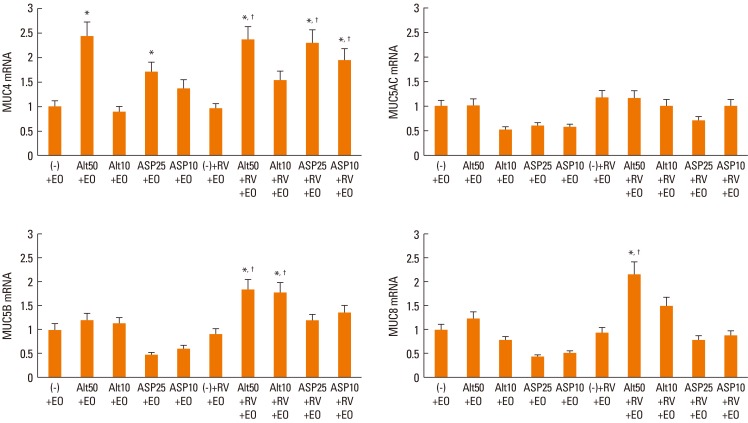
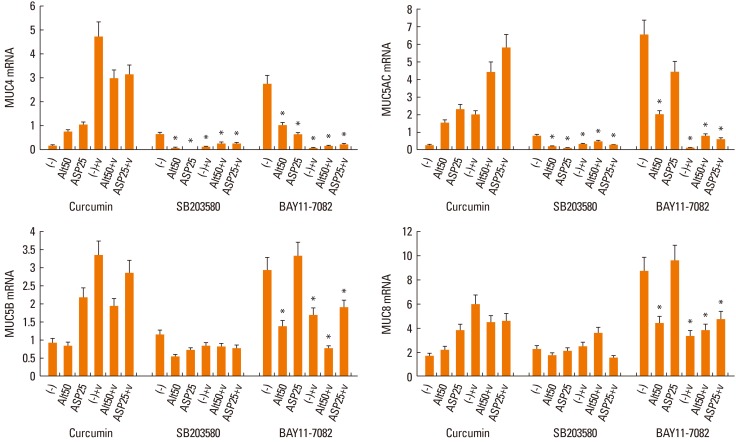
Results: Fungi and RV-16 induced mucin gene expression in nasal polyp epithelial cells. However, there was no synergistic increase in mucin gene expression, with the exception of MUC4 mRNA expression stimulated by 25 µg/mL Aspergillus. When RV-16-infected epithelial cells were stimulated with fungi and then co-cultured with eosinophils, MUC4, MUC5B, and MUC8 mRNA expressions increased. Mucin gene expression was inhibited by NF-κB inhibitors.
Conclusions: RV-16, airborne fungi, and eosinophils may exacerbate the inflammatory process in nasal mucosal diseases by enhancing mucin gene expression.
Keywords: Rhinovirus; eosinophil; fungus; mucin gene; nasal epithelial cell; nuclear factor-κB.
Conflict of interest statement
There are no financial or other issues that might lead to conflict of interest.
Figures
References
-
- Andersson M, Downs S, Mitakakis T, Leuppi J, Marks G. Natural exposure to Alternaria spores induces allergic rhinitis symptoms in sensitized children. Pediatr Allergy Immunol. 2003;14:100–105. - PubMed
-
- Shin SH, Lee YH, Jeon CH. Protease-dependent activation of nasal polyp epithelial cells by airborne fungi leads to migration of eosinophils and neutrophils. Acta Otolaryngol. 2006;126:1286–1294. - PubMed
-
- Igarashi Y, Skoner DP, Doyle WJ, White MV, Fireman P, Kaliner MA. Analysis of nasal secretions during experimental rhinovirus upper respiratory infections. J Allergy Clin Immunol. 1993;92:722–731. - PubMed
-
- Johnston SL, Papi A, Bates PJ, Mastronarde JG, Monick MM, Hunninghake GW. Low grade rhinovirus infection induces a prolonged release of IL-8 in pulmonary epithelium. J Immunol. 1998;160:6172–6181. - PubMed
-
- Jang YJ, Kwon HJ, Park HW, Lee BJ. Detection of rhinovirus in turbinate epithelial cells of chronic sinusitis. Am J Rhinol. 2006;20:634–636. - PubMed
LinkOut - more resources
Full Text Sources
Other Literature Sources
Research Materials