


On the need and speed of regulating triclosan and triclocarban in the United States
- PMID: 24588513
- PMCID: PMC3974611
- DOI: 10.1021/es500495p
On the need and speed of regulating triclosan and triclocarban in the United States
Abstract
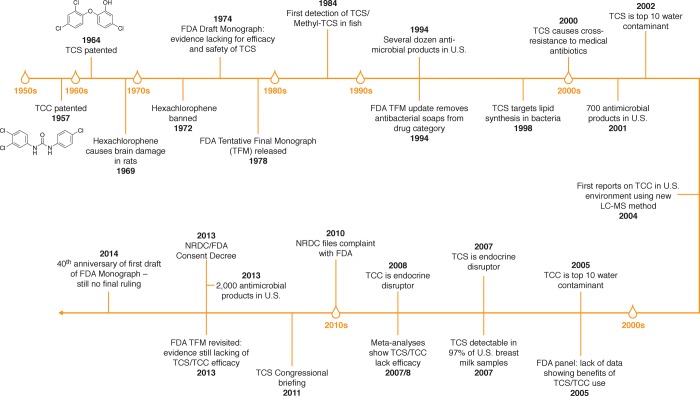
The polychlorinated aromatic antimicrobials triclosan and triclocarban are in widespread use for killing microorganisms indiscriminately, rapidly, and by nonspecific action. While their utility in healthcare settings is undisputed, benefits to users of antimicrobial personal care products are few to none. Yet, these latter, high-volume uses have caused widespread contamination of the environment, wildlife, and human populations. This feature article presents a timeline of scientific evidence and regulatory actions in the U.S. concerning persistent polychlorinated biocides, showing a potential path forward to judicious and sustainable uses of synthetic antimicrobials, including the design of greener and safer next-generation alternatives.
Figures
Comment in
-
Comment on "On the need and speed of regulating triclosan and triclocarban in the United States".Environ Sci Technol. 2014 Oct 7;48(19):11021-2. doi: 10.1021/es503494j. Epub 2014 Sep 9. Environ Sci Technol. 2014. PMID: 25202823 No abstract available.
-
Response to Comment on "On the need and speed of regulating triclosan and triclocarban in the United States".Environ Sci Technol. 2014 Oct 7;48(19):11023-4. doi: 10.1021/es5041333. Epub 2014 Sep 9. Environ Sci Technol. 2014. PMID: 25203123 No abstract available.
References
-
- Manahan S. E.Green Chemistry and the Ten Commandments of Sustainability; ChemChar Research, Inc. Publishers: Columbia, MO, 2005. International Standard Book Number: 0-9749522-4-9.
-
- EuroChlor, Risk Assessment and the Cycle of Natural Organochlorines—Part A. In Euro Chlor Focus on Chlorine Science. 2013; 03A, 1–4.
-
- Adams D. E. C.; Halden R. U., Fluorinated Chemicals and the Impacts of Anthropogenic Use. In Contaminants of Emerging Concern in the Environment: Ecological and Human Health Considerations, Halden R. U., Ed. 2010; Vol. 1048, pp 539–560.
-
- Rodricks J. V. In pursuit of safety: One-hundred years of toxicological risk assessment. Hum Ecol Risk Assess 2014, 2013–28.
Publication types
MeSH terms
Substances
Grants and funding
LinkOut - more resources
Full Text Sources
Other Literature Sources
