


Defining normoxia, physoxia and hypoxia in tumours-implications for treatment response
- PMID: 24588669
- PMCID: PMC4064601
- DOI: 10.1259/bjr.20130676
Defining normoxia, physoxia and hypoxia in tumours-implications for treatment response
Abstract
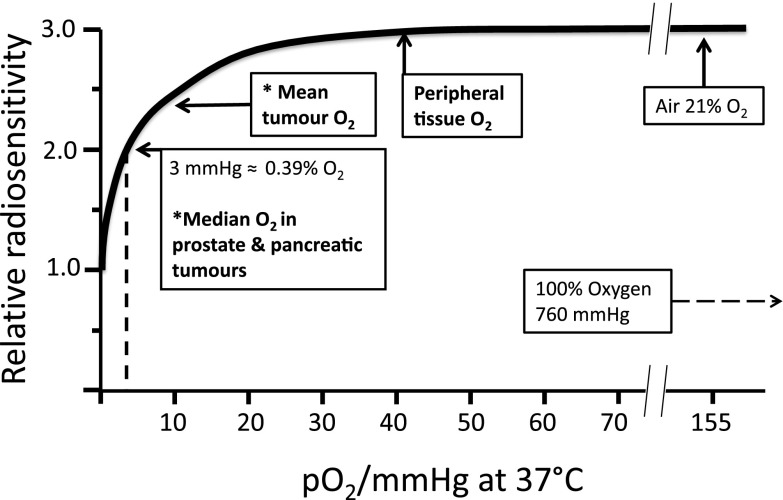
Tumour hypoxia is increasingly recognized as a major deleterious factor in cancer therapies, as it compromises treatment and drives malignant progression. This review seeks to clarify the oxygen levels that are pertinent to this issue. It is argued that normoxia (20% oxygen) is an extremely poor comparator for "physoxia", i.e. the much lower levels of oxygen universally found in normal tissues, which averages about 5% oxygen, and ranges from about 3% to 7.4%. Importantly, it should be recognized that the median oxygenation in untreated tumours is significantly much lower, falling between approximately 0.3% and 4.2% oxygen, with most tumours exhibiting median oxygen levels <2%. This is partially dependent on the tissue of origin, and it is notable that many prostate and pancreatic tumours are profoundly hypoxic. In addition, therapy can induce even further, often unrecognized, changes in tumour oxygenation that may vary longitudinally, increasing or decreasing during treatment in ways that are not always predictable. Studies that fail to take cognizance of the actual physiological levels of oxygen in tissues (approximately 5%) and tumours (approximately 1%) may fail to identify the real circumstances driving tumour response to treatment and/or malignant progression. This can be of particular importance in genetic studies in vitro when comparison to human tumours is required.
Figures
References
-
- Gray LH, Conger AD, Ebert M, Hornsey S, Scott OC. Concentration of oxygen dissolved in tissues at the time of irradiation as a factor in radiotherapy. Br J Radiol 1953; 26: 638–48. - PubMed
-
- Hall EJ, Giaccia A. Radiobiology for the radiologist. Philadelphia, PA: Wolters Kluwer Health/Lippincott Williams & Wilkins; 2012.
Publication types
MeSH terms
Substances
LinkOut - more resources
Full Text Sources
Other Literature Sources
