


Apoptosis induced by islet amyloid polypeptide soluble oligomers is neutralized by diabetes-associated specific antibodies
- PMID: 24589570
- PMCID: PMC3940978
- DOI: 10.1038/srep04267
Apoptosis induced by islet amyloid polypeptide soluble oligomers is neutralized by diabetes-associated specific antibodies
Abstract
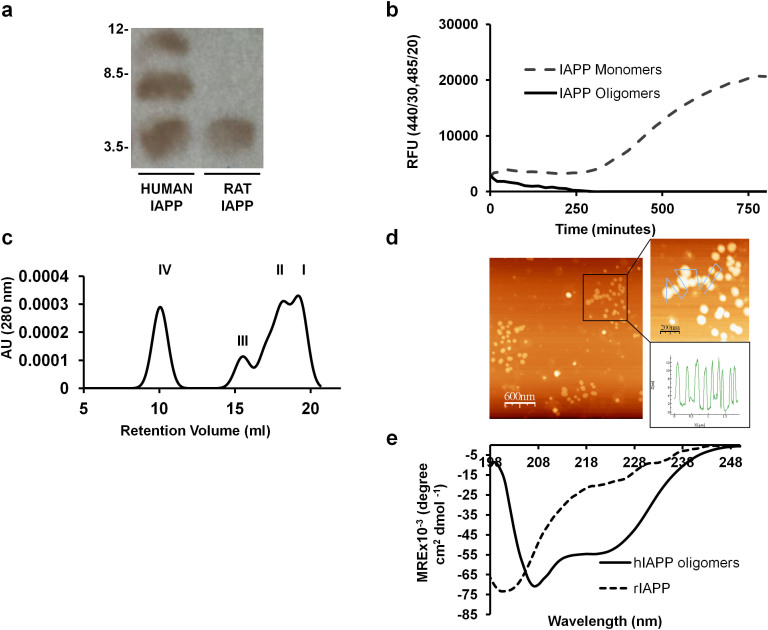
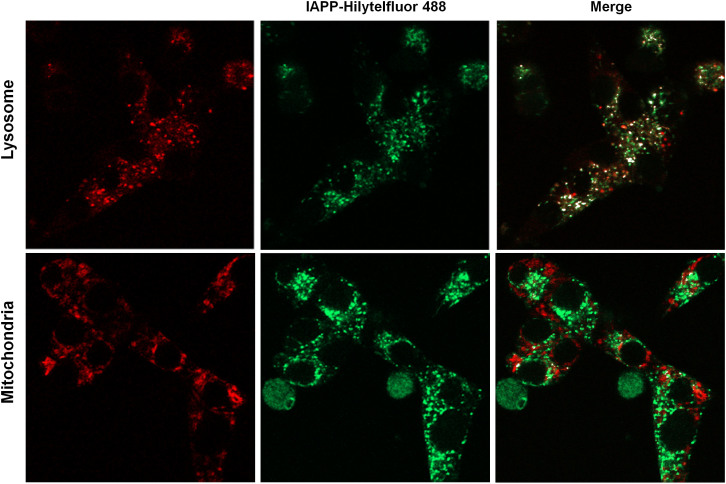
Soluble oligomeric assemblies of amyloidal proteins appear to act as major pathological agents in several degenerative disorders. Isolation and characterization of these oligomers is a pivotal step towards determination of their pathological relevance. Here we describe the isolation of Type 2 diabetes-associated islet amyloid polypeptide soluble cytotoxic oligomers; these oligomers induced apoptosis in cultured pancreatic cells, permeated model lipid vesicles and interacted with cell membranes following complete internalization. Moreover, antibodies which specifically recognized these assemblies, but not monomers or amyloid fibrils, were exclusively identified in diabetic patients and were shown to neutralize the apoptotic effect induced by these oligomers. Our findings support the notion that human IAPP peptide can form highly toxic oligomers. The presence of antibodies identified in the serum of diabetic patients confirms the pathological relevance of the oligomers. In addition, the newly identified structural epitopes may also provide new mechanistic insights and a molecular target for future therapy.
Figures



References
-
- Haass C. The molecular significance of amyloid beta-peptide for Alzheimer's disease. Eur. Arch. Psychiatry Clin. Neurosci. 246, 118–123 (1996). - PubMed
-
- Conway K. A., Harper J. D. & Lansbury P. T. Accelerated in vitro fibril formation by a mutant alpha-synuclein linked to early-onset Parkinson disease. Nat. Med. 4, 1318–1320 (1998). - PubMed
-
- Chuang L. M. et al. Role of S20G mutation of amylin gene in insulin secretion, insulin sensitivity, and type 2 diabetes mellitus in Taiwanese patients. Diabetologia. 41, 1250–1251 (1998). - PubMed
-
- Terry R. D. et al. Physical basis of cognitive alterations in alzheimer's disease: Synapse loss is the major correlate of cognitive impairment. Annals of Neurology. 30, 572–580 (1991). - PubMed
Publication types
MeSH terms
Substances
LinkOut - more resources
Full Text Sources
Other Literature Sources
