


doi: 10.1007/s12471-014-0534-z.
Using genetic variation for establishing causality of cardiovascular risk factors: overcoming confounding and reverse causality
Affiliations
- PMID: 24590770
- PMCID: PMC3954928
- DOI: 10.1007/s12471-014-0534-z
Item in Clipboard
Using genetic variation for establishing causality of cardiovascular risk factors: overcoming confounding and reverse causality
Neth Heart J.
2014 Apr.
Abstract
Cardiovascular disease (CVD) remains the leading cause of death in developed countries, despite the decline of CVD mortality over the last two decades. From observational, predictive research, efforts have been made to find causal risk factors for CVD. However, in recent years, some of these findings have been shown to be mistaken. Possible explanations for the discrepant findings are confounding and reverse causation. Genetic epidemiology has tried to address these problems through the use of Mendelian randomisation. In this paper, we discuss the promise and limitations of using genetic variation for establishing causality of cardiovascular risk factors.
Figures
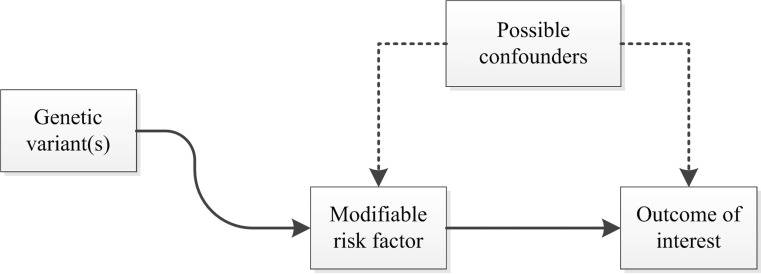
Causal relationships which satisfy the core assumptions of Mendelian randomisation: (1) genotype is associated with phenotype, (2) genotype is independent of confounding factors, and (3) genotype is associated with outcome, but only through phenotype
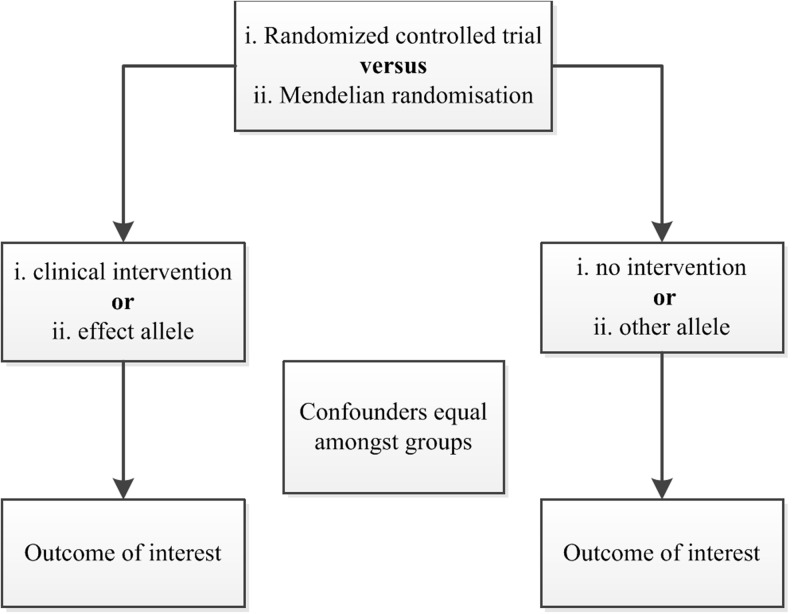
Comparison of randomised controlled trial and Mendelian randomisation study designs
References
-
- Mendis S, Puska P, Norrving B, editors. Global atlas on cardiovascular disease prevention and control. Geneva: World Health Organization; 2011. Available from: www.who.int/cardiovascular_diseases/publications/atlas_cvd/en/.
LinkOut - more resources
Full Text Sources
Other Literature Sources
