


Recurrent furunculosis - challenges and management: a review
- PMID: 24591845
- PMCID: PMC3934592
- DOI: 10.2147/CCID.S35302
Recurrent furunculosis - challenges and management: a review
Abstract
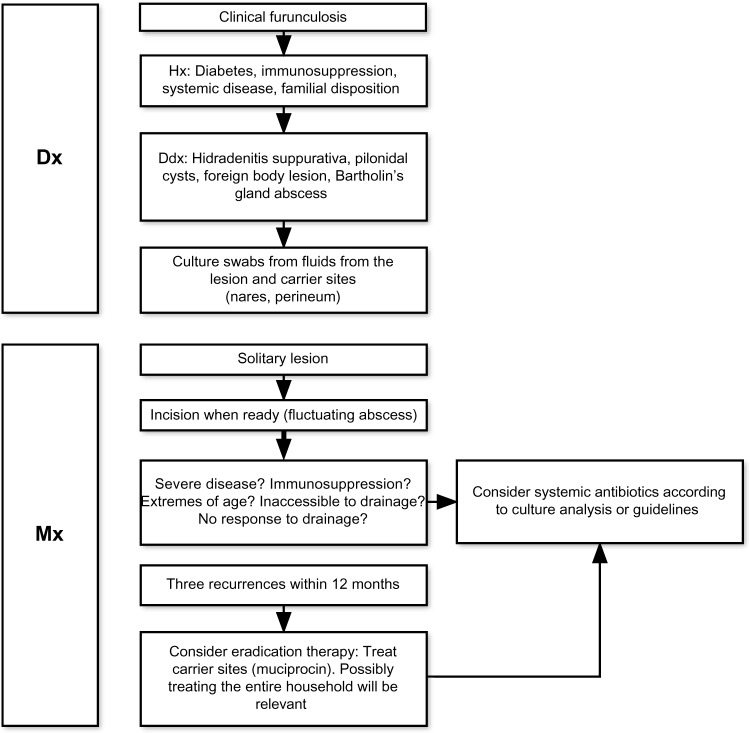
Furunculosis is a deep infection of the hair follicle leading to abscess formation with accumulation of pus and necrotic tissue. Furuncles appear as red, swollen, and tender nodules on hair-bearing parts of the body, and the most common infectious agent is Staphylococcus aureus, but other bacteria may also be causative. In some countries, methicillin resistant S. aureus is the most common pathogen in skin and soft tissue infections which is problematic since treatment is difficult. Furunculosis often tends to be recurrent and may spread among family members. Some patients are carriers of S. aureus and eradication should be considered in recurrent cases. Solitary lesions should be incised when fluctuant, whereas patients with multiple lesions or signs of systemic disease or immunosuppression should be treated with relevant antibiotics. The diagnostic and therapeutic approach to a patient suspected of staphylococcosis should include a thorough medical history, clinical examination, and specific microbiological and biochemical investigations. This is particularly important in recurrent cases where culture swabs from the patient, family members, and close contacts are mandatory to identify and ultimately control the chain of infection. Focus on personal, interpersonal, and environmental hygiene issues is crucial to reduce the risk of contamination and recurrences.
Keywords: MRSA; SSTI; abscess; boils; furunculosis; staphylococcosis.
Figures
References
-
- Dahl MV. Strategies for the management of recurrent furunculosis. South Med J. 1987;80:352–356. - PubMed
-
- Pottinger PS. Methicillin-resistant Staphylococcus aureus infections. Med Clin North Am. 2013;97:601–619. - PubMed
-
- Taira BR, Singer AJ, Thode HC, Jr, Lee CC. National epidemiology of cutaneous abscesses: 1996 to 2005. Am J Emerg Med. 2009;27:289–292. - PubMed
-
- El-Gilany AH, Fathy H. Risk factors of recurrent furunculosis. Dermatol Online J. 2009;15:16. - PubMed
-
- Bukki J, Klein J, But L, et al. Methicillin-resistant Staphylococcus aureus (MRSA) management in palliative care units and hospices in Germany: a nationwide survey on patient isolation policies and quality of life. Palliat Med. 2013;27:84–90. - PubMed
Publication types
LinkOut - more resources
Full Text Sources
Other Literature Sources
