


Gait-related brain activity in people with Parkinson disease with freezing of gait
- PMID: 24595265
- PMCID: PMC3940915
- DOI: 10.1371/journal.pone.0090634
Gait-related brain activity in people with Parkinson disease with freezing of gait
Abstract
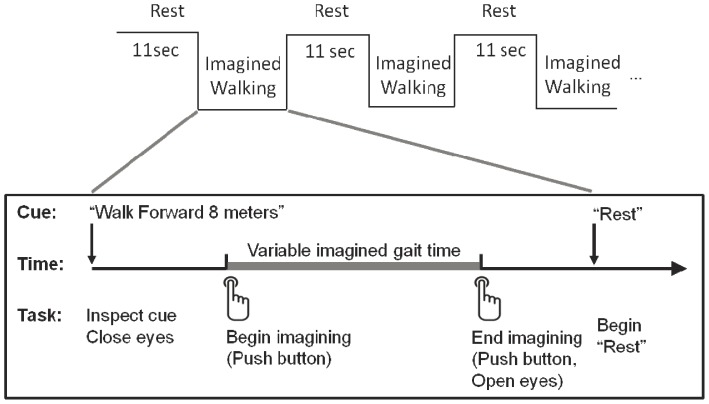
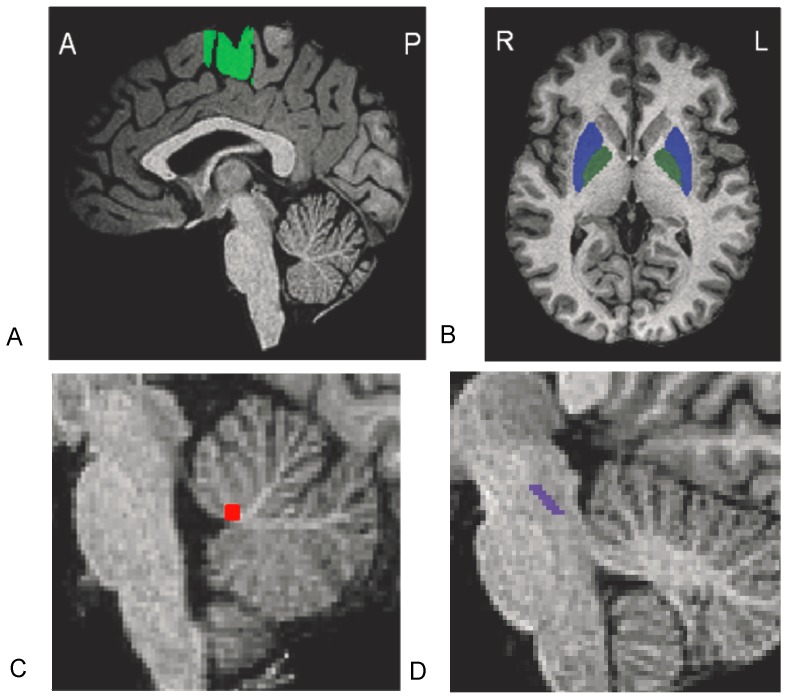
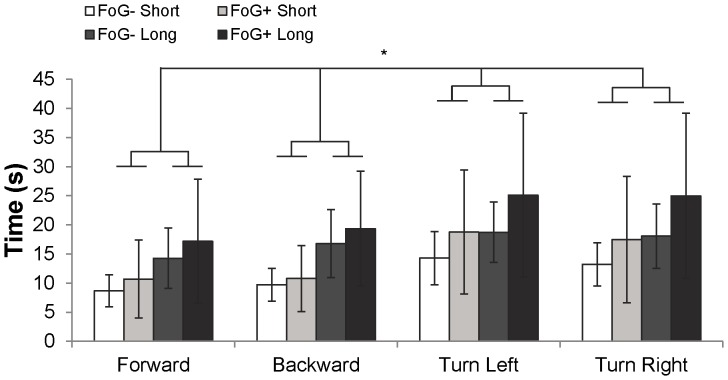
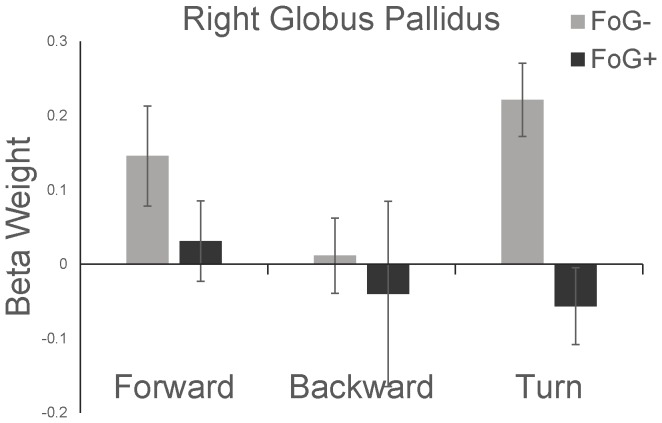
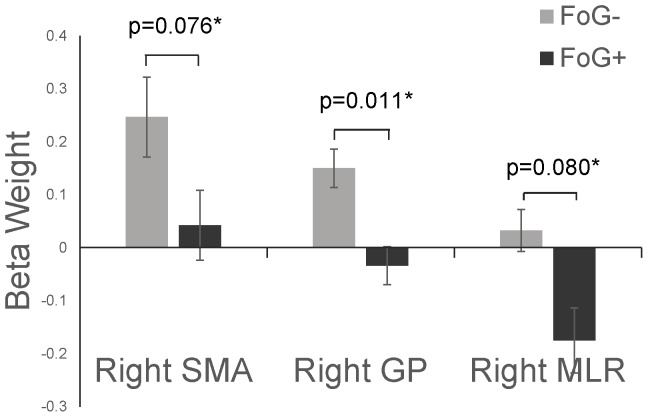
Approximately 50% of people with Parkinson disease experience freezing of gait, described as a transient inability to produce effective stepping. Complex gait tasks such as turning typically elicit freezing more commonly than simple gait tasks, such as forward walking. Despite the frequency of this debilitating and dangerous symptom, the brain mechanisms underlying freezing remain unclear. Gait imagery during functional magnetic resonance imaging permits investigation of brain activity associated with locomotion. We used this approach to better understand neural function during gait-like tasks in people with Parkinson disease who experience freezing--"FoG+" and people who do not experience freezing--"FoG-". Nine FoG+ and nine FoG- imagined complex gait tasks (turning, backward walking), simple gait tasks (forward walking), and quiet standing during measurements of blood oxygen level dependent (BOLD) signal. Changes in BOLD signal (i.e. beta weights) during imagined walking and imagined standing were analyzed across FoG+ and FoG- groups in locomotor brain regions including supplementary motor area, globus pallidus, putamen, mesencephalic locomotor region, and cerebellar locomotor region. Beta weights in locomotor regions did not differ for complex tasks compared to simple tasks in either group. Across imagined gait tasks, FoG+ demonstrated significantly lower beta weights in the right globus pallidus with respect to FoG-. FoG+ also showed trends toward lower beta weights in other right-hemisphere locomotor regions (supplementary motor area, mesencephalic locomotor region). Finally, during imagined stand, FoG+ exhibited lower beta weights in the cerebellar locomotor region with respect to FoG-. These data support previous results suggesting FoG+ exhibit dysfunction in a number of cortical and subcortical regions, possibly with asymmetric dysfunction towards the right hemisphere.
Conflict of interest statement
Figures
References
-
- Morris ME, Iansek R, Matyas TA, Summers JJ (1996) Stride length regulation in Parkinson's disease. Normalization strategies and underlying mechanisms. Brain 119 (Pt 2): 551–568. - PubMed
-
- Hausdorff JM, Cudkowicz ME, Firtion R, Wei JY, Goldberger AL (1998) Gait variability and basal ganglia disorders: stride-to-stride variations of gait cycle timing in Parkinson's disease and Huntington's disease. Mov Disord 13: 428–437. - PubMed
-
- Plotnik M, Giladi N, Hausdorff JM (2008) Bilateral coordination of walking and freezing of gait in Parkinson's disease. Eur J Neurosci 27: 1999–2006. - PubMed
-
- Bartels AL, Balash Y, Gurevich T, Schaafsma JD, Hausdorff JM, et al. (2003) Relationship between freezing of gait (FOG) and other features of Parkinson's: FOG is not correlated with bradykinesia. J Clin Neurosci 10: 584–588. - PubMed
-
- Giladi N, McDermott MP, Fahn S, Przedborski S, Jankovic J, et al. (2001) Freezing of gait in PD: prospective assessment in the DATATOP cohort. Neurology 56: 1712–1721. - PubMed
Publication types
MeSH terms
Grants and funding
LinkOut - more resources
Full Text Sources
Other Literature Sources
Medical
