Distinct Wnt-driven primitive streak-like populations reflect in vivo lineage precursors
- PMID: 24595287
- PMCID: PMC3943179
- DOI: 10.1242/dev.101014
Distinct Wnt-driven primitive streak-like populations reflect in vivo lineage precursors
Erratum in
-
Distinct Wnt-driven primitive streak-like populations reflect in vivo lineage precursors.Development. 2015 Feb 15;142(4):809. doi: 10.1242/dev.122093. Development. 2015. PMID: 25670799 Free PMC article. No abstract available.
Abstract
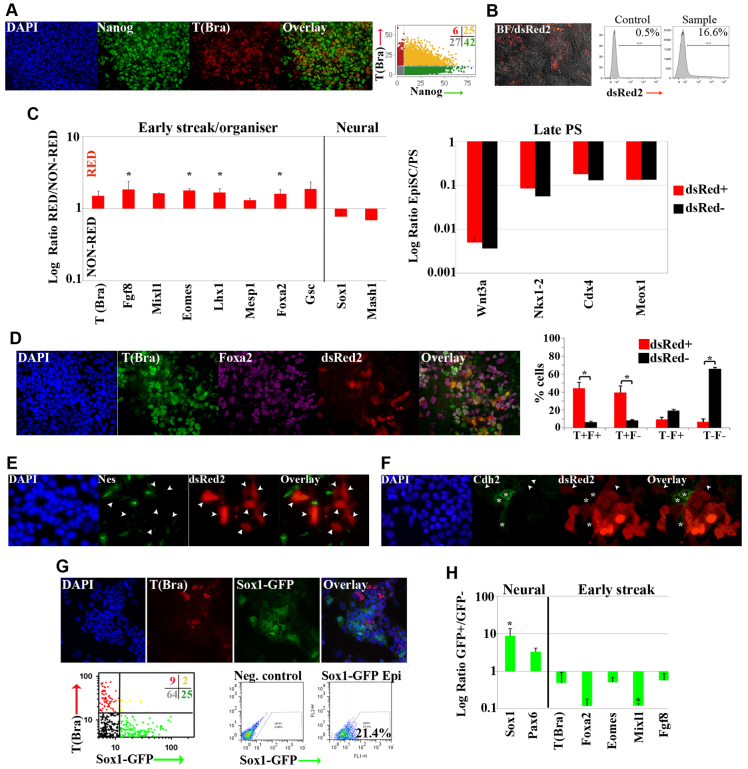
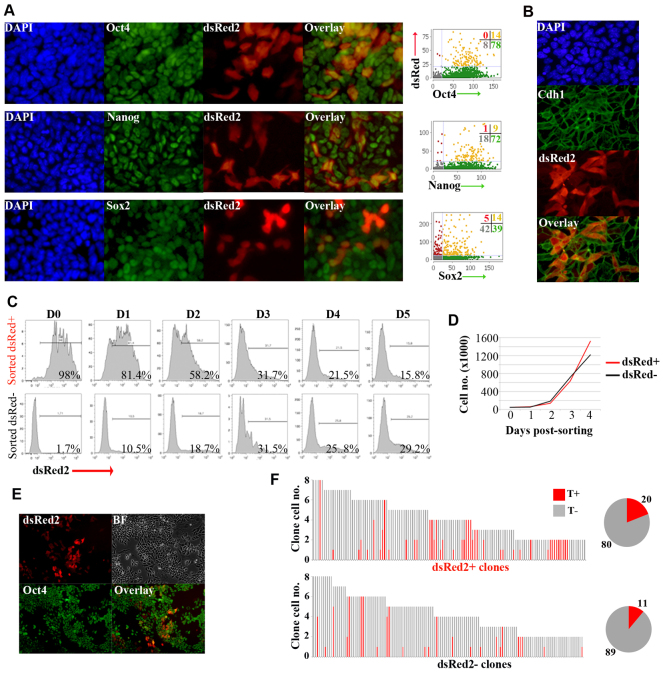
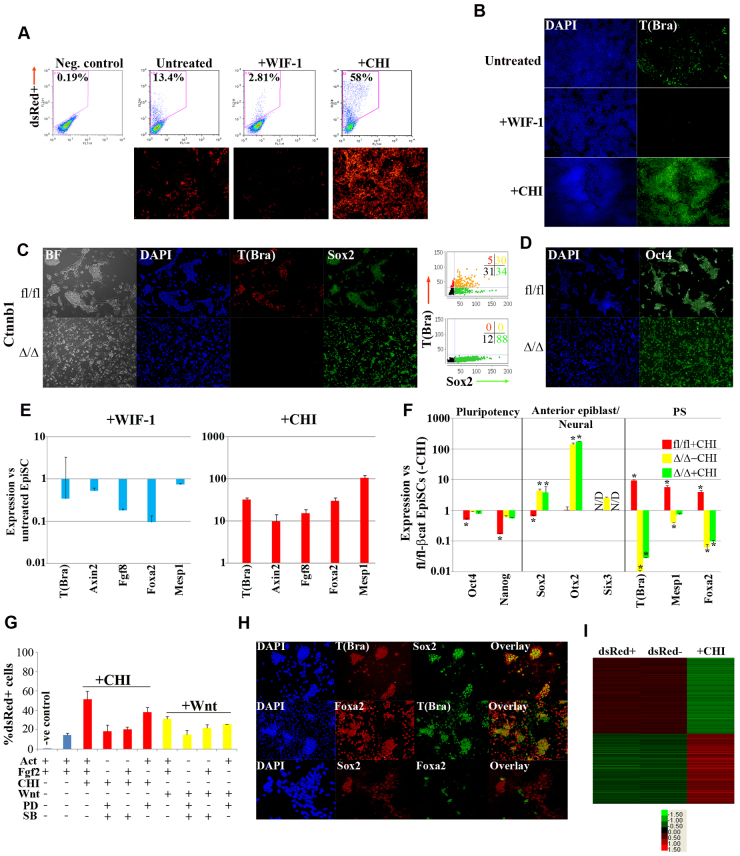
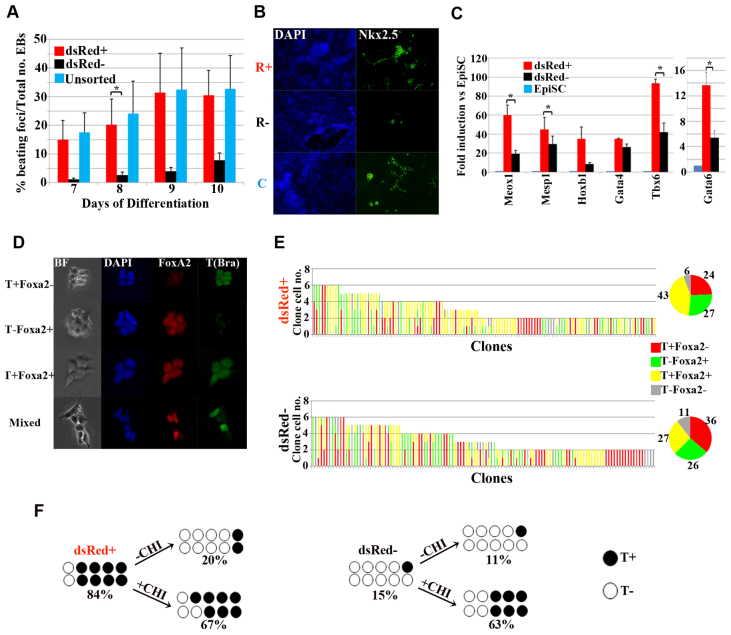
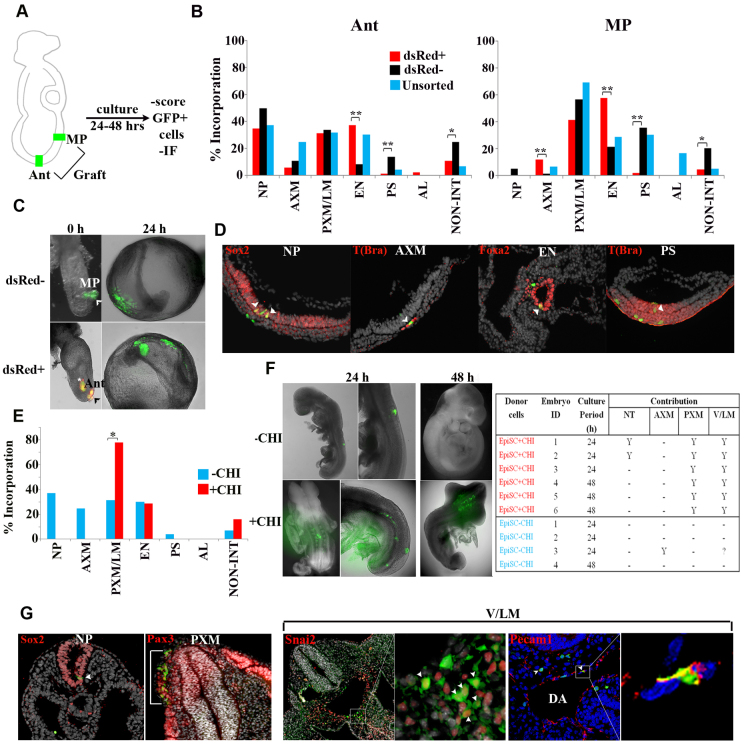
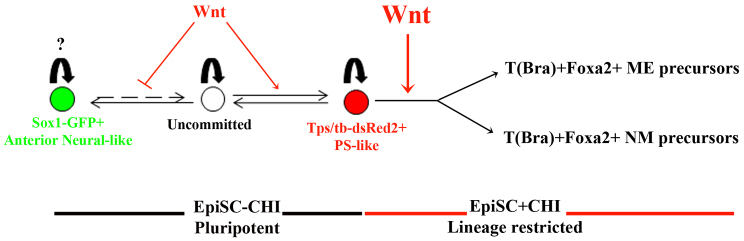
During gastrulation, epiblast cells are pluripotent and their fate is thought to be constrained principally by their position. Cell fate is progressively restricted by localised signalling cues from areas including the primitive streak. However, it is unknown whether this restriction accompanies, at the individual cell level, a reduction in potency. Investigation of these early transition events in vitro is possible via the use of epiblast stem cells (EpiSCs), self-renewing pluripotent cell lines equivalent to the postimplantation epiblast. Strikingly, mouse EpiSCs express gastrulation stage regional markers in self-renewing conditions. Here, we examined the differentiation potential of cells expressing such lineage markers. We show that undifferentiated EpiSC cultures contain a major subfraction of cells with reversible early primitive streak characteristics, which is mutually exclusive to a neural-like fraction. Using in vitro differentiation assays and embryo grafting we demonstrate that primitive streak-like EpiSCs are biased towards mesoderm and endoderm fates while retaining pluripotency. The acquisition of primitive streak characteristics by self-renewing EpiSCs is mediated by endogenous Wnt signalling. Elevation of Wnt activity promotes restriction towards primitive streak-associated lineages with mesendodermal and neuromesodermal characteristics. Collectively, our data suggest that EpiSC pluripotency encompasses a range of reversible lineage-biased states reflecting the birth of pioneer lineage precursors from a pool of uncommitted EpiSCs similar to the earliest cell fate restriction events taking place in the gastrula stage epiblast.
Keywords: Epiblast stem cells; Gastrulation; Heterogeneity; Mouse; Neuromesodermal progenitors; Primitive Streak; Wnt signalling.
Figures
References
-
- Acampora D., Di Giovannantonio L. G., Simeone A. (2013). Otx2 is an intrinsic determinant of the embryonic stem cell state and is required for transition to a stable epiblast stem cell condition. Development 140, 43–55 - PubMed
-
- Arnold S. J., Robertson E. J. (2009). Making a commitment: cell lineage allocation and axis patterning in the early mouse embryo. Nat. Rev. Mol. Cell Biol. 10, 91–103 - PubMed
-
- Arnold S. J., Stappert J., Bauer A., Kispert A., Herrmann B. G., Kemler R. (2000). Brachyury is a target gene of the Wnt/beta-catenin signaling pathway. Mech. Dev. 91, 249–258 - PubMed
-
- Baldwin H. S., Shen H. M., Yan H. C., DeLisser H. M., Chung A., Mickanin C., Trask T., Kirschbaum N. E., Newman P. J., Albelda S. M., et al. (1994). Platelet endothelial cell adhesion molecule-1 (PECAM-1/CD31): alternatively spliced, functionally distinct isoforms expressed during mammalian cardiovascular development. Development 120, 2539–2553 - PubMed
-
- Beddington S. P. (1981). An autoradiographic analysis of the potency of embryonic ectoderm in the 8th day postimplantation mouse embryo. J. Embryol. Exp. Morphol. 64, 87–104 - PubMed
Publication types
MeSH terms
Grants and funding
LinkOut - more resources
Full Text Sources
Other Literature Sources
Molecular Biology Databases