. 2014 May;165(1):160-74.
doi: 10.1104/pp.114.235564. Epub 2014 Mar 4.

OsmiR396d-regulated OsGRFs function in floral organogenesis in rice through binding to their targets OsJMJ706 and OsCR4

Affiliations

OsmiR396d-regulated OsGRFs function in floral organogenesis in rice through binding to their targets OsJMJ706 and OsCR4

Huanhuan Liu et al. Plant Physiol. 2014 May.

Abstract

Inflorescence and spikelet development determine grain yields in cereals. Although multiple genes are known to be involved in the regulation of floral organogenesis, the underlying molecular network remains unclear in cereals. Here, we report that the rice (Oryza sativa) microRNA396d (OsmiR396d) and its Os Growth Regulating Factor (OsGRF) targets, together with Os Growth Regulating Factor-Interacting Factor1 (OsGIF1), are involved in the regulation of floral organ development through the rice JMJD2 family jmjC gene 706 (OsJMJ706) and crinkly4 receptor-like kinase (OsCR4). Transgenic knockdown lines of OsGRF6, a predicted target of OsmiR396d, and overexpression lines of OsmiR396d showed similar defects in floral organ development, including open husks, long sterile lemmas, and altered floral organ morphology. These defects were almost completely rescued by overexpression of OsGRF6. OsGRF6 and its ortholog OsGRF10 were the most highly expressed OsGRF family members in young inflorescences, and the grf6/grf10 double mutant displayed abnormal florets. OsGRF6/OsGRF10 localized to the nucleus, and electrophoretic mobility shift assays revealed that both OsGRF6 and OsGRF10 bind the GA response element in the promoters of OsJMJ706 and OsCR4, which were reported to participate in the regulation of floral organ development. In addition, OsGRF6 and OsGRF10 could transactivate OsJMJ706 and OsCR4, an activity that was enhanced in the presence of OsGIF1, which can bind both OsGRF6 and OsGRF10. Together, our results suggest that OsmiR396d regulates the expression of OsGRF genes, which function with OsGIF1 in floret development through targeting of JMJ706 and OsCR4. This work thus reveals a microRNA-mediated regulation module for controlling spikelet development in rice.


Figures
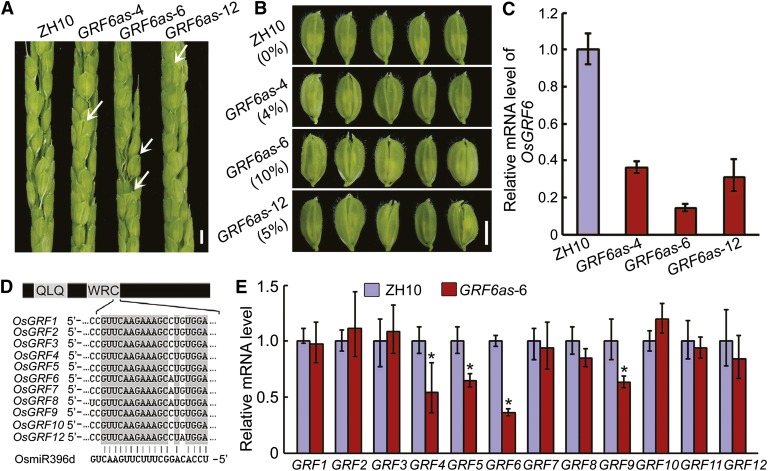
Figure 1.
Figure 1.
Phenotypic and molecular analysis of OsGRF6 antisense transgenic plants. A, Spikelets of OsGRF6 antisense transgenic (OsGRF6as) plants before flowering. White arrowheads indicate florets with open husks or long sterile lemmas. Bar = 3 mm. B, Florets of OsGRF6as plants before flowering. The numbers to the left indicate the ratio of open-husk or long sterile lemma florets. Bar = 3 mm. C, Expression levels of OsGRF6 in the young panicles were detected by qRT-PCR in OsGRF6as plants (n = 3; means ± sds). D, Diagram representing the OsGRF genes and OsmiR396d. The interaction of 11 miR396d-regulated OsGRFs from rice with OsmiR396d is shown, and OsGRF11 was not regulated by OsmiR396d in rice. QLQ and WRC indicate the conserved domains that define the OsGRF family. E, Transcription levels of OsGRF genes in 2-week-old seedlings of ZH10 and OsGRF6as line 6 (OsGRF6as-6) were analyzed by qRT-PCR. *, Significant difference at P ≤ 0.05 compared with ZH10 by Student’s t test (n = 3; means ± sds).
Figure 2.
Figure 2.
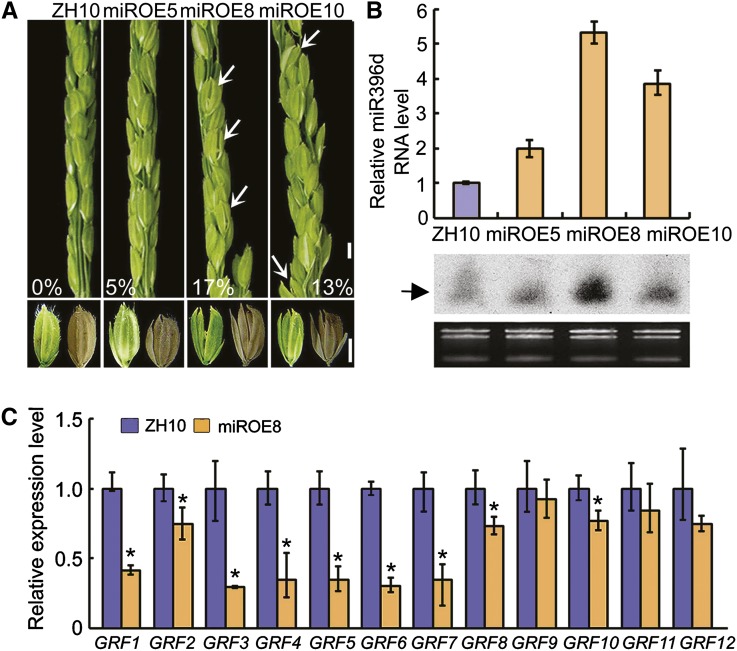
Phenotypic and molecular analysis of miROE lines. A, Phenotypes of spikelets and seeds in miROE and ZH10 plants. White arrowheads indicate florets with open husks or long sterile lemmas. Numbers indicate the ratio of open-husk or long sterile lemma florets. Bars = 3 mm. B, Expression levels of mature OsmiR396d were detected by qRT-PCR (n = 3; means ± sds) and small RNA blots (arrowhead indicates miR396). C, Transcription levels of OsGRF genes in 2-week-old seedlings of ZH10 and miROE8 were analyzed by qRT-PCR. *, Significant difference at P ≤ 0.05 compared with ZH10 by Student’s t test. (n = 3; means ± sds).
Figure 3.
Figure 3.
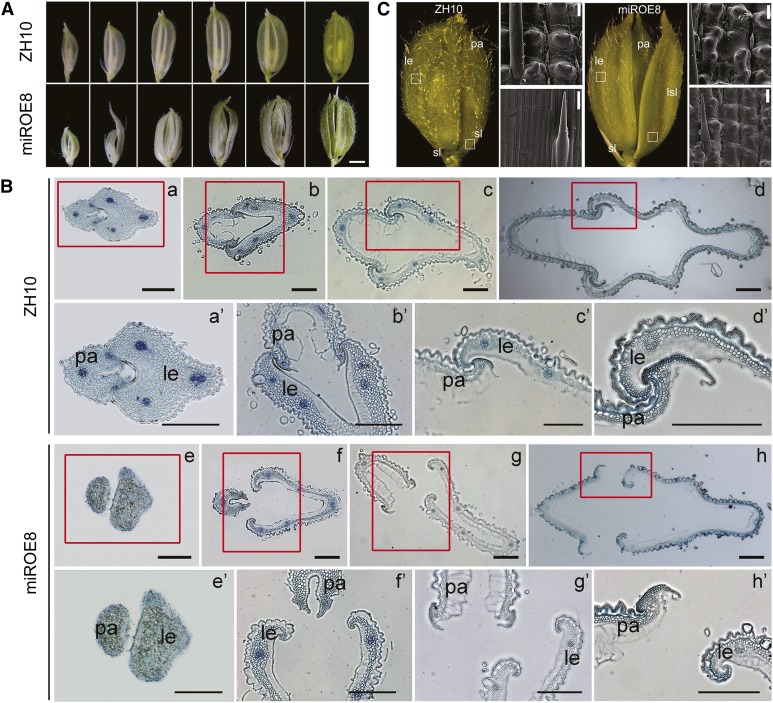
Phenotypic analysis of florets in miROE and ZH10 plants. A, Florets of miROE8 and ZH10 plants at different developmental stages. Bar = 1.5 mm. B, Cross sections of interlocking regions of palea and lemma in ZH10 and miROE8 florets at different developmental stages. a′ to d′ or e′ and f′ to h′ indicates the enlargement of tissues in red frames of a to d or e and f to h. le, Lemma; pa, palea. Bars = 200 μm. C, Epidermal surface of le (top) and sterile lemma (sl) or long sterile lemma (lsl; bottom) of florets in ZH10 and miROE8 plants. Bars = 20 μm.
Figure 4.
Figure 4.
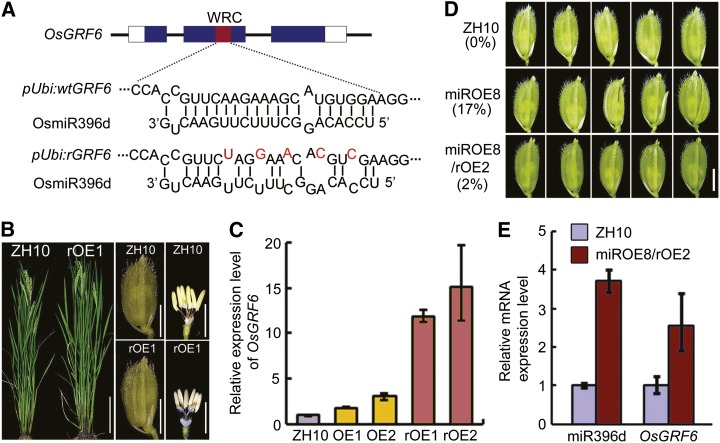
Phenotypic analysis of OsGRF6-overexpressing transgenic plants. A, Schematic diagram of the OsGRF6 and rOsGRF6 genes as well as OsmiR396d. The interaction between OsGRF6/rOsGRF6 and OsmiR396d is shown. Red letters in rOsGRF6 represent synonymous mutations that prevent targeting for degradation by OsmiR396d. B, rOsGRF6 overexpression plants at heading stage (bar = 20 cm) and the florets before flowering (bar = 3 mm). C, Expression levels of OsGRF6 were detected by qRT-PCR in OsGRF6 OE (OE) and rOsGRF6 OE (rOE) lines (n = 3; means ± sds). D, The abnormal floret phenotypes of miROE plants were almost completely rescued by crossing with rOsGRF6 OE plants. The numbers to the left indicate the ratio of open-husk or long sterile lemma florets. Bar = 3 mm. E, Expression levels of miR396d and OsGRF6 were detected by qRT-PCR in ZH10 and miROE8–crossed rOsGRF6 OE line 2 (miROE8/rOE2) plants (n = 3; means ± sds).
Figure 5.
Figure 5.
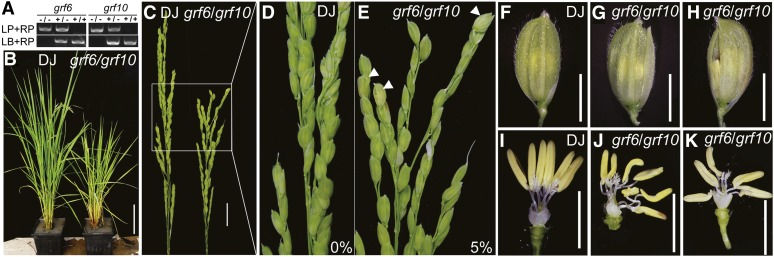
Phenotypic analysis of grf6/grf10 double mutant. A, Genomic identification of the grf6/grf10 double mutant. LP, Left primer; RP, right primer; LB, the T-DNA left border primer. DJ (−/−) is the wild type, and +/+ indicates the homozygous mutant. B, Plants of grf6/grf10 double mutant and the DJ wild type at the tillering stage. Bar = 20 cm. C, Inflorescences of grf6/grf10 and the DJ wild type. Bar = 2 cm. D and E, Inflorescences in C are enlarged to show detail. White arrowheads in E indicate open-husk or long sterile lemma florets of the grf6/grf10 double mutant. F and I, Wild-type floret and inner organs of the floret, respectively. G, H, J, and K, Florets and inner organs of florets in the grf6/grf10 double mutant. Bars = 3 mm.
Figure 6.
Figure 6.
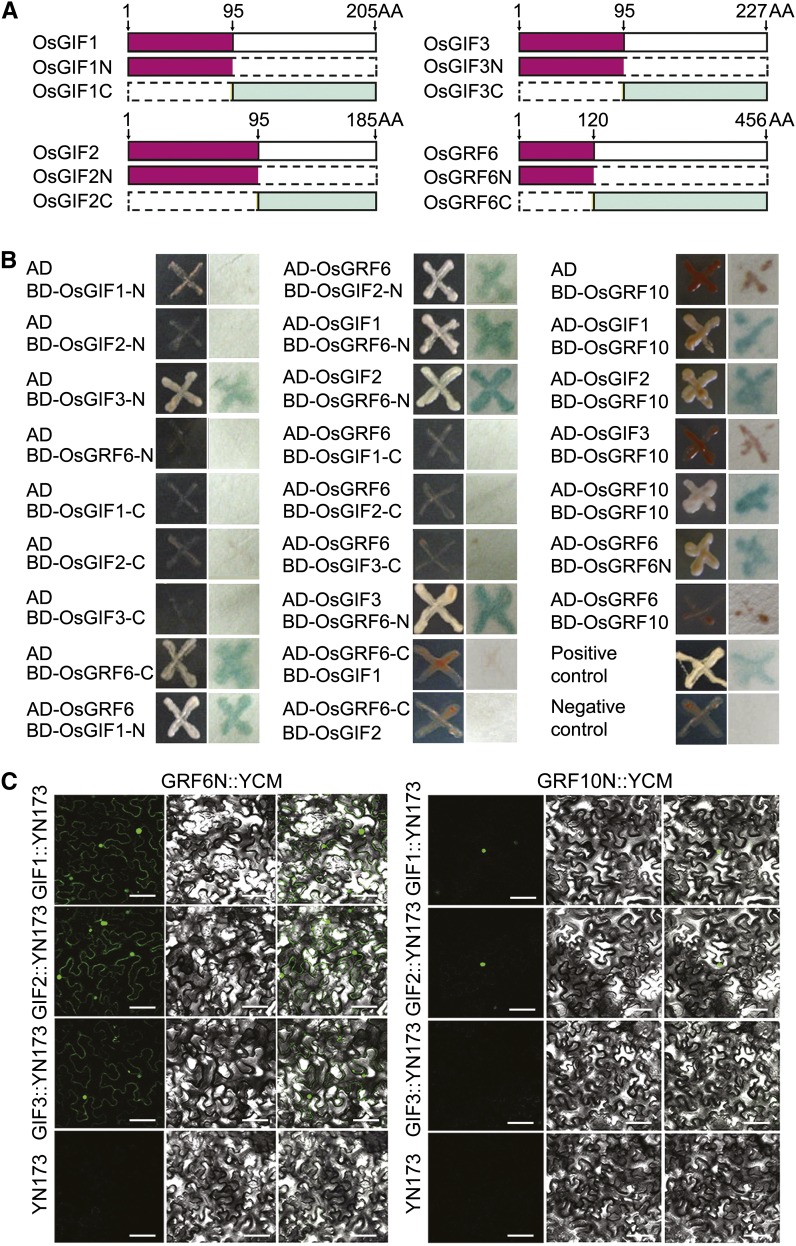
Proteins interaction assays. A, Schematic diagrams of OsGRF6, OsGIF1, OsGIF2, and OsGIF3. B, Yeast two-hybrid interaction assays of OsGRF6, OsGRF10, OsGIF1, OsGIF2, and OsGIF3 as well as OsGRF6 and OsGRF10. AH109 cells containing different plasmid combinations were grown on the selective medium SD-Leu Trp His adenine, and a single clone was used for β-galactosidase activity assays. C, BiFC assays to verify the interactions of OsGRF6, OsGRF10, OsGIF1, OsGIF2, and OsGIF3. Tobacco (Nicotiana spp.) leaves cotransformed with GRF6N:YCM and YN173 empty vectors or GRF10N:YCM and YN173 empty vectors were used as negative controls. Yellow fluorescent protein signals were found in GRF6N:YCM and OsGIF1/OsGIF2/OsGIF3:YN173 cotransformed leaves as well as OsGRF10N:YCM and OsGIF1/2:YN173 cotransformed leaves. No signal was found in OsGRF6N:YCM and YN173 empty vectors, OsGRF10N:YCM and YN173 empty vectors, or OsGRF10N:YCM and OsGIF3:YN173 cotransformed leaves. SD, Synthetic Defined; YCM, mutated eYFP C-terminus; YN173, eYFP N-terminal amino acids 1 to 173. Bar = 100 µm.
Figure 7.
Figure 7.
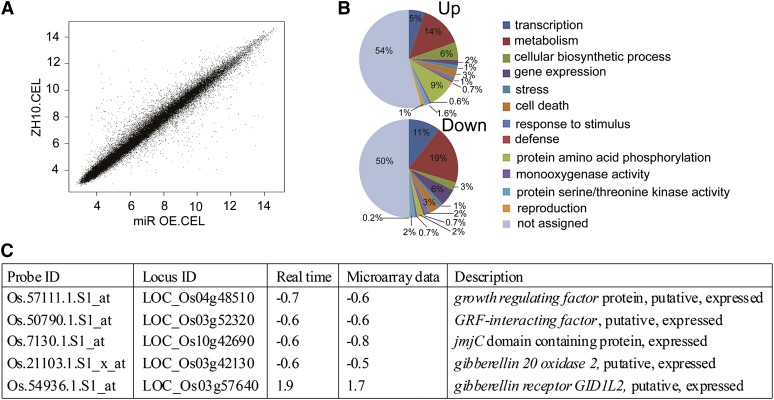
Global analysis of gene expression in young inflorescences of miROE8 compared with ZH10. A, Scatter graph of signals. Only spots with a present signal were used to determine the false-positive rate. B, Predicated functions of the proteins encoded by up-regulated and down-regulated genes in young inflorescences of miROE8 compared with ZH10 on microarray analysis. C, qRT-PCR analysis of relative transcript levels of selected genes from the rice whole-genome DNA microarray experiment (n = 3; means ± sds).
Figure 8.
Figure 8.
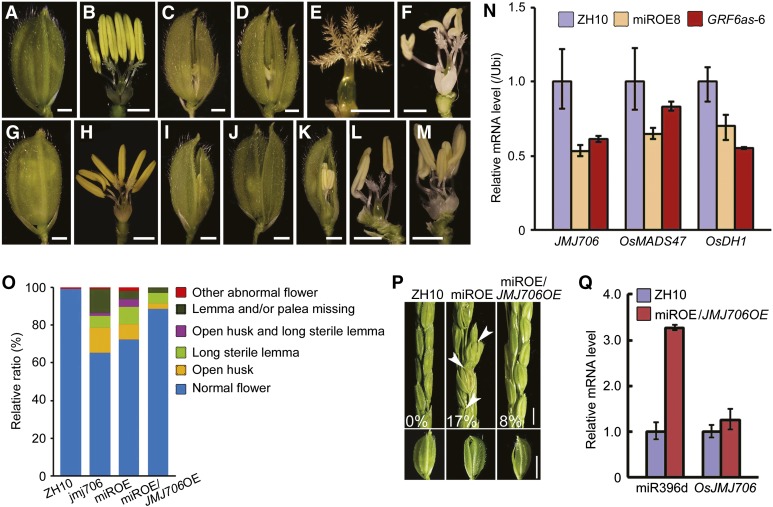
Phenotypic comparisons of miROE8 and jmj706 mutant plants. A and B, Florets before flowering of ZH10. C to F, Florets before flowering of miROE8 showing open husks (C and D), long sterile lemmas (C and D), abnormal stigmas (E), and abnormal numbers of stamens (F). G and H, Florets before flowering of ZH11. I to M, Florets before flowering of jmj706 showing open husks (I), long sterile lemmas (J), missing lemmas or paleas (K), abnormal numbers of stamens and abnormal stigmas (L), and abnormal lodicules (M). Bars in A to M = 1 mm. N, Transcription levels of JMJ706, OsMADS47, and OsDH1 genes in young inflorescences before flowering of miROE8, GRF6as-6 plants, and ZH10 were analyzed by qRT-PCR (n = 3; means ± sds). O, Statistical analysis of different kinds of florets in ZH10, jmj706, miROE8, and miROE8/JMJ706OE plants. The proportional distributions of the florets are indicated by different colors. P, Spikelet before flowering in ZH10, miROE8, and miROE8/JMJ706OE plants. White arrowheads indicate open-husk or long sterile lemma florets in miROE8 plants. Numbers in the figure indicate the ratios of florets with open husks or long sterile lemmas. Bar = 3 mm. Bottom, The florets taken from ZH10, miROE8, and miROE8/JMJ706OE plants are shown. Bar = 4 mm. Q, Transcription levels of miR396d and OsJMJ706 in young inflorescences of ZH10 and miROE8/OsJMJ706OE plants (n = 3; means ± sds).
Figure 9.
Figure 9.
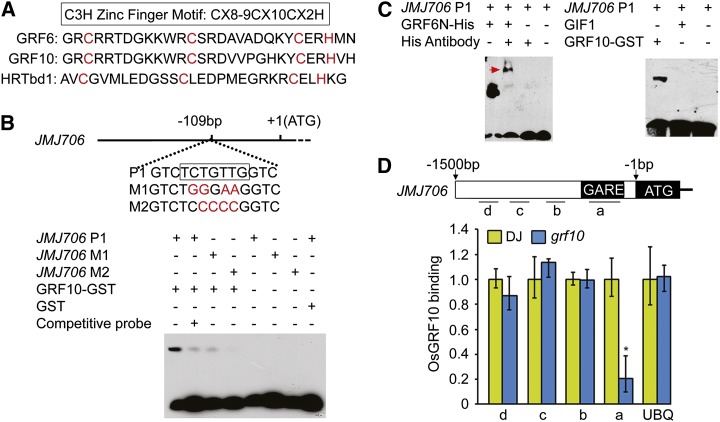
OsGRF6 and OsGRF10 proteins can bind to the promoter of OsJMJ706 both in vitro and in vivo. A, Alignment of amino acid sequences of the C3H zinc finger domain of HRTdb1 in barley (Hordeum vulgare) and OsGRF6 and OsGRF10 in rice. B and C, EMSA shows that OsGRF10-GST and OsGRF6N-His fusion proteins can bind to the promoter of OsJMJ706, whereas OsGIF1 proteins cannot. The GARE cis-element 109 bp upstream of the transcription initiation site is shown in the black box in B. P1, M1, and M2 representing the JMJ706 promoter-binding site and the mild and the severe mutations of P1, respectively, were used as biotin-labeled probes. The red arrowhead in C indicates the complex composed of OsGRF6N-His, JMJ706 P1, and His antibody. D, ChIP assay of binding of OsGRF10 to the promoter of OsJMJ706 tested using anti-OsGRF10 antibody. Regions in the promoter of OsJMJ706 analyzed by real-time PCR are shown by short lines marked with letters (a–d; a is the region containing the GARE). The quantification of binding by OsGRF10 is shown in the bar graph, and the promoter of Ubiquitin (UBQ) is the control. *, Significant difference at P ≤ 0.05 compared with DJ by Student’s t test. Data are means ± sds (n = 3).
Figure 10.
Figure 10.
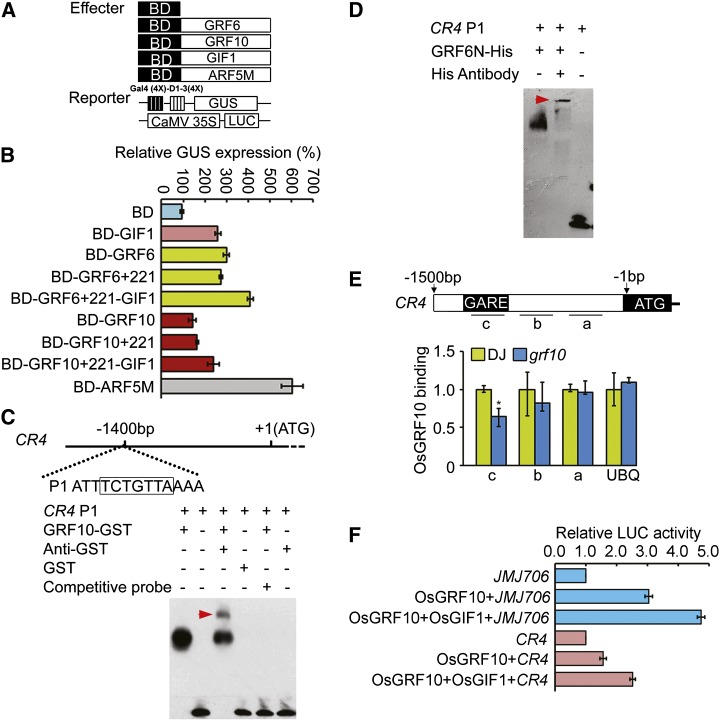
OsGRF6 and OsGRF10 proteins have transactivation activity and can bind to the promoter of OsCR4 in vitro and in vivo. A, Schematic representation of the reporter and effector constructs used in the transcription activity assays. B, OsGRF6 and OsGRF10 function as transcription activators, whereas OsGIF1 protein may function as a coactivator. Arabidopsis leaf protoplasts were cotransfected with two reporter genes and one effector gene. Effector genes contain yeast Gal4 BD fused in frame with OsGRF6, OsGRF10, OsGIF1, OsGIF2, or Auxin Response Factor5M (ARF5M; positive control). Data are means of three independent experiments. C and D, EMSA showing that GRF10-GST and GRF6N-His fusion proteins can bind to the promoter of OsCR4. GARE cis-element 1,400 bp upstream of the transcription initiation site is shown in the black box in C. The OsCR4 P1 oligonucleotide was used as the biotin-labeled probe. Red arrowheads indicate the complexes composed of OsGRF10-GST, CR4 P1, and GST antibody or OsGRF6N-His, CR4 P1, and His antibody. E, ChIP assays of the binding of OsGRF10 to the promoter of OsCR4 tested using anti-OsGRF10 antibody. Regions in the promoter of OsCR4 analyzed by real-time PCR are shown by short lines marked with letters (a–c; c is the region containing the GARE). The binding ability of the GARE cis-element was reduced in the grf10 mutant; the promoter of Ubiquitin (UBQ) is the control. *, Significant difference at P ≤ 0.05 compared with DJ by Student’s t test. Data are means ± sds (n = 3). F, Transcriptional activation activity assays in Arabidopsis protoplasts. JMJ706 and CR4 indicate the promoters of OsJMJ706 and OsCR4 genes individually. Data are means of three independent experiments. LUC, Luciferase.
Figure 11.
Figure 11.
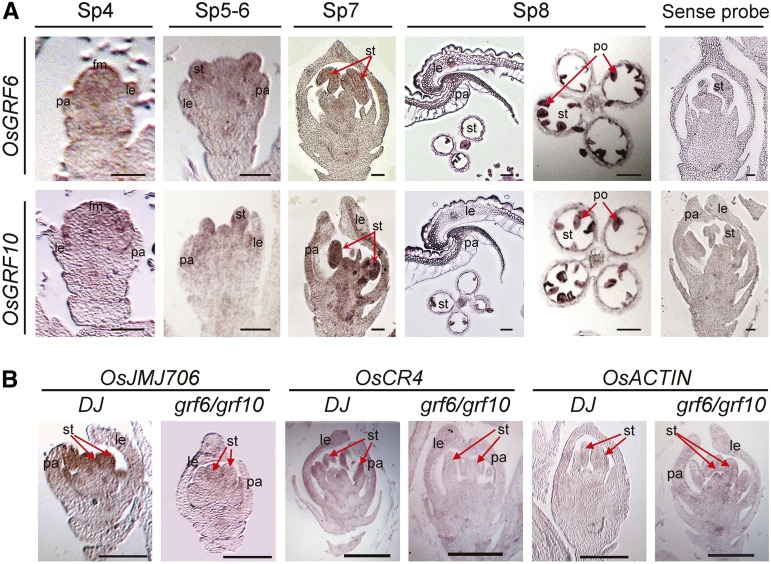
RNA in situ hybridization assays. A, RNA in situ hybridization assays for OsGRF6 and OsGRF10 in florets at different developmental stages in DJ. Red arrows in SP7 and SP8 indicate stamens and pollens individually. fm, Floral meristem; le, lemma; pa, palea; po, pollen; st, stamen. Bars = 50 µm. B, RNA in situ hybridization assays of OsJMJ706 and OsCR4 in florets of DJ and grf6/grf10 double mutants at the overlapping expression regions of OsGRF6 and OsGRF10. Red arrows indicate stamens. OsACTIN was used as the internal control. Bars = 200 µm.

References

    1. Aukerman MJ, Sakai H. (2003) Regulation of flowering time and floral organ identity by a MicroRNA and its APETALA2-like target genes. Plant Cell 15: 2730–2741 - PMC - PubMed
    1. Bommert P, Satoh-Nagasawa N, Jackson D, Hirano HY. (2005) Genetics and evolution of inflorescence and flower development in grasses. Plant Cell Physiol 46: 69–78 - PubMed
    1. Chen C, Ridzon DA, Broomer AJ, Zhou Z, Lee DH, Nguyen JT, Barbisin M, Xu NL, Mahuvakar VR, Andersen MR, et al. (2005) Real-time quantification of microRNAs by stem-loop RT-PCR. Nucleic Acids Res 33: e179. - PMC - PubMed
    1. Choi D, Kim JH, Kende H. (2004) Whole genome analysis of the OsGRF gene family encoding plant-specific putative transcription activators in rice (Oryza sativa L.). Plant Cell Physiol 45: 897–904 - PubMed
    1. Cui R, Han J, Zhao S, Su K, Wu F, Du X, Xu Q, Chong K, Theissen G, Meng Z. (2010) Functional conservation and diversification of class E floral homeotic genes in rice (Oryza sativa). Plant J 61: 767–781 - PubMed

Publication types

MeSH terms

LinkOut - more resources