


Combinatorial effects of malaria season, iron deficiency, and inflammation determine plasma hepcidin concentration in African children
- PMID: 24596418
- PMCID: PMC4046425
- DOI: 10.1182/blood-2013-10-533000
Combinatorial effects of malaria season, iron deficiency, and inflammation determine plasma hepcidin concentration in African children
Abstract
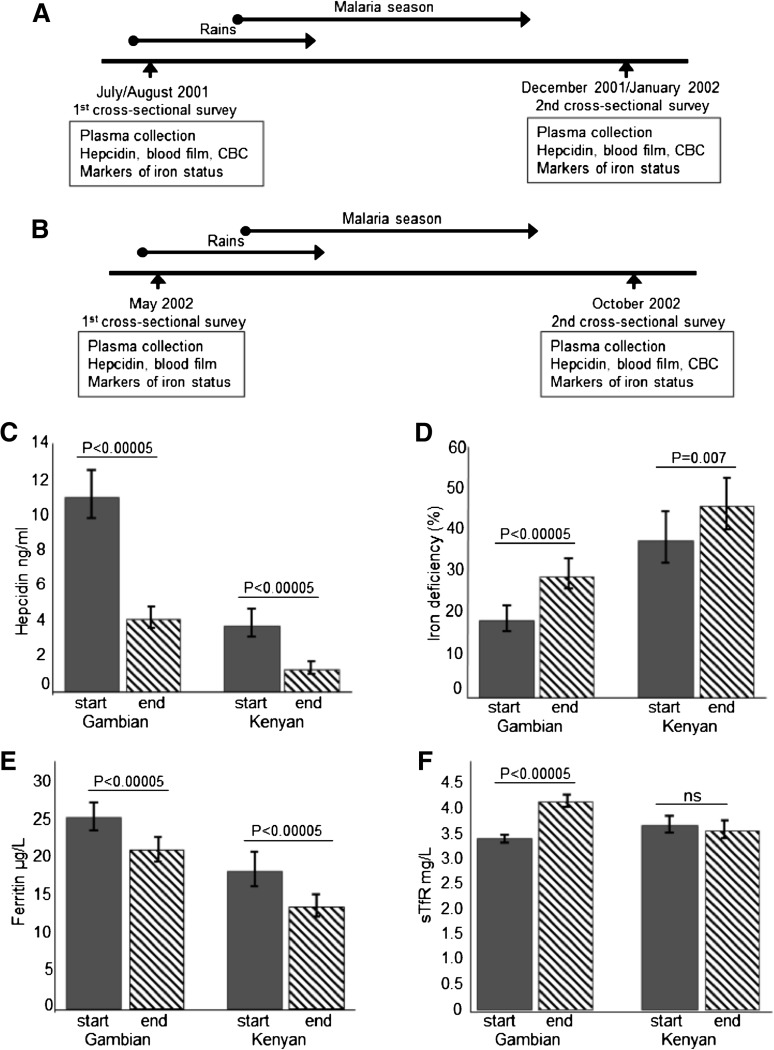
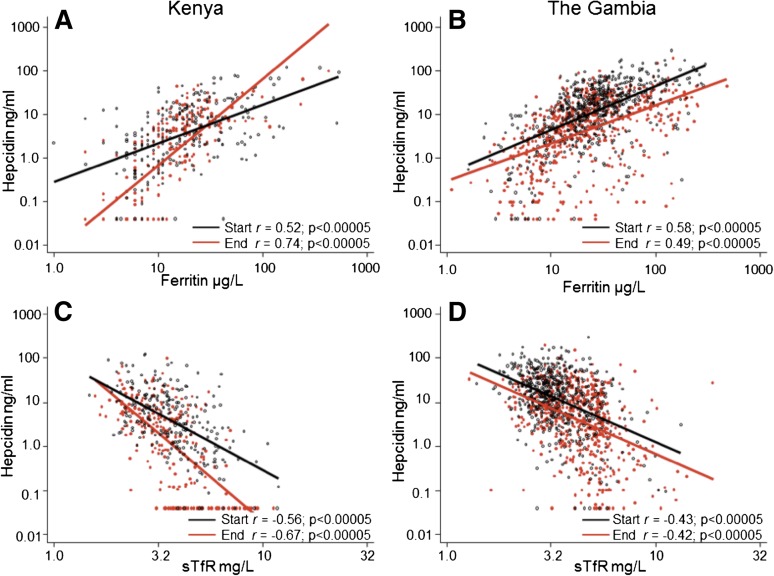
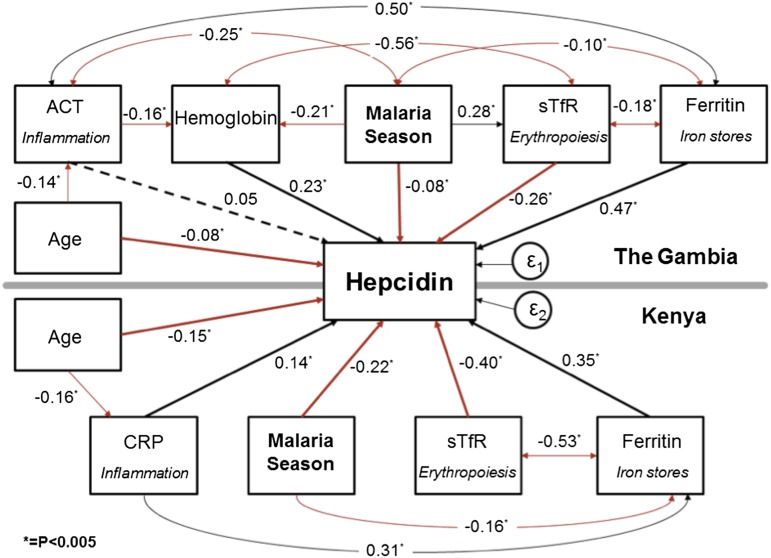
Hepcidin is the master regulatory hormone that governs iron homeostasis and has a role in innate immunity. Although hepcidin has been studied extensively in model systems, there is less information on hepcidin regulation in global health contexts where iron deficiency (ID), anemia, and high infectious burdens (including malaria) all coexist but fluctuate over time. We evaluated iron status, hepcidin levels, and determinants of hepcidin in 2 populations of rural children aged ≤8 years, in the Gambia and Kenya (total n = 848), at the start and end of a malaria season. Regression analyses and structural equation modeling demonstrated, for both populations, similar combinatorial effects of upregulating stimuli (iron stores and to a lesser extent inflammation) and downregulating stimuli (erythropoietic drive) on hepcidin levels. However, malaria season was also a significant factor and was associated with an altered balance of these opposing factors. Consistent with these changes, hepcidin levels were reduced whereas the prevalence of ID was increased at the end of the malaria season. More prevalent ID and lower hepcidin likely reflect an enhanced requirement for iron and an ability to efficiently absorb it at the end of the malaria season. These results, therefore, have implications for ID and malaria control programs.
© 2014 by The American Society of Hematology.
Figures
Comment in
-
The iron fist: malaria and hepcidin.Blood. 2014 May 22;123(21):3217-8. doi: 10.1182/blood-2014-04-562223. Blood. 2014. PMID: 24855192 Free PMC article.
References
-
- Vos T, Flaxman AD, Naghavi M, et al. Years lived with disability (YLDs) for 1160 sequelae of 289 diseases and injuries 1990-2010: a systematic analysis for the Global Burden of Disease Study 2010 [published correction appears in Lancet. 2013;381(9867):628]. Lancet. 2012;380(9859):2163–2196. - PMC - PubMed
-
- Grantham-McGregor S, Ani C. A review of studies on the effect of iron deficiency on cognitive development in children. J Nutr. 2001;131(2, suppl 2):649S–666S. - PubMed
-
- Sazawal S, Black RE, Ramsan M, et al. Effects of routine prophylactic supplementation with iron and folic acid on admission to hospital and mortality in preschool children in a high malaria transmission setting: community-based, randomised, placebo-controlled trial. Lancet. 2006;367(9505):133–143. - PubMed
-
- Soofi S, Cousens S, Iqbal SP, et al. Effect of provision of daily zinc and iron with several micronutrients on growth and morbidity among young children in Pakistan: a cluster-randomised trial. Lancet. 2013;382(9886):29–40. - PubMed
Publication types
MeSH terms
Substances
Grants and funding
LinkOut - more resources
Full Text Sources
Other Literature Sources
Medical
