


Inhibition of triosephosphate isomerase by phosphoenolpyruvate in the feedback-regulation of glycolysis
- PMID: 24598263
- PMCID: PMC3971408
- DOI: 10.1098/rsob.130232
Inhibition of triosephosphate isomerase by phosphoenolpyruvate in the feedback-regulation of glycolysis
Abstract
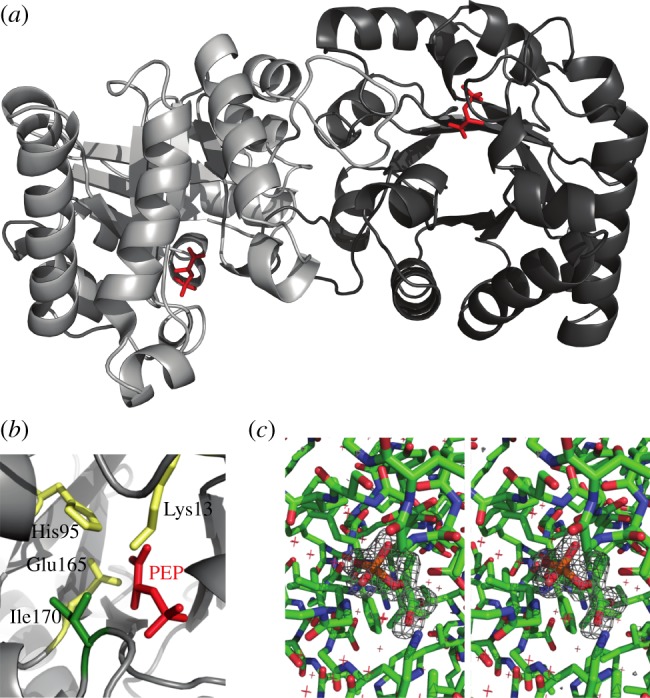
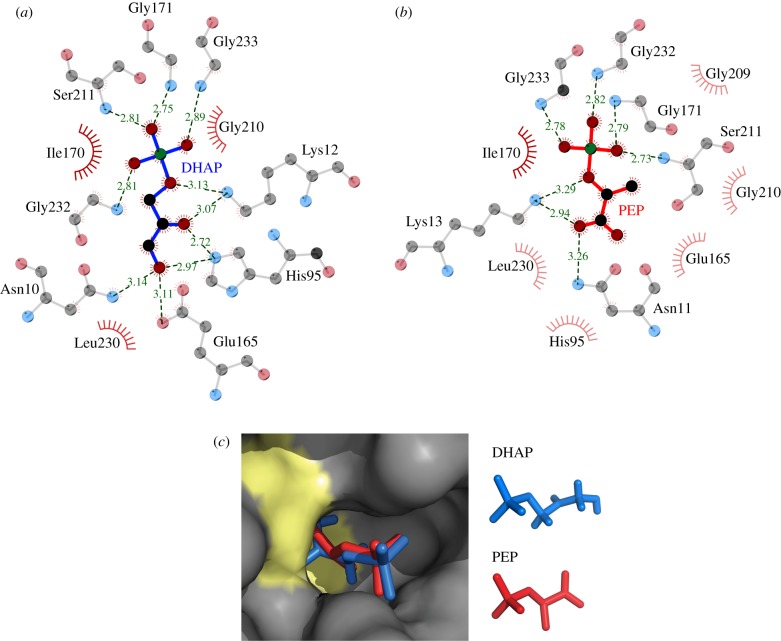
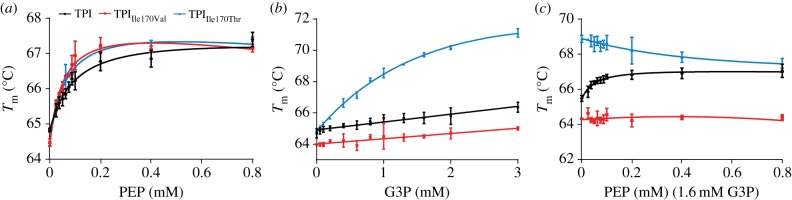
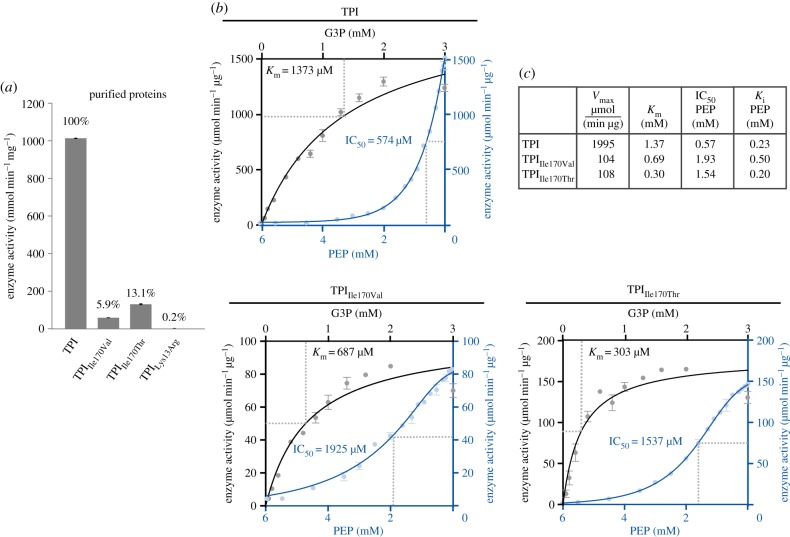
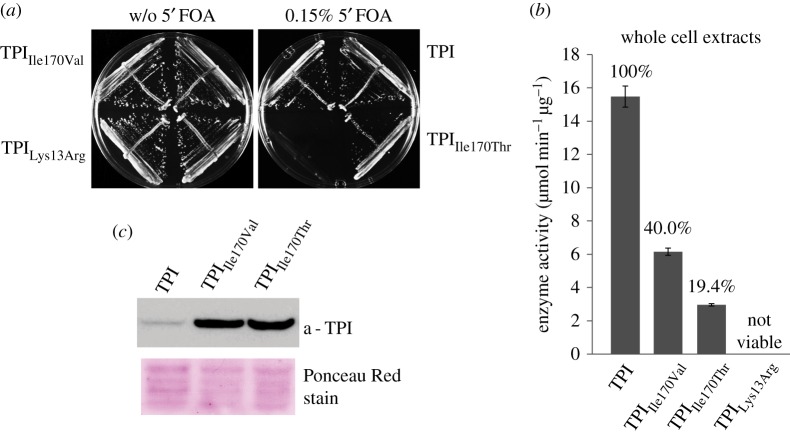
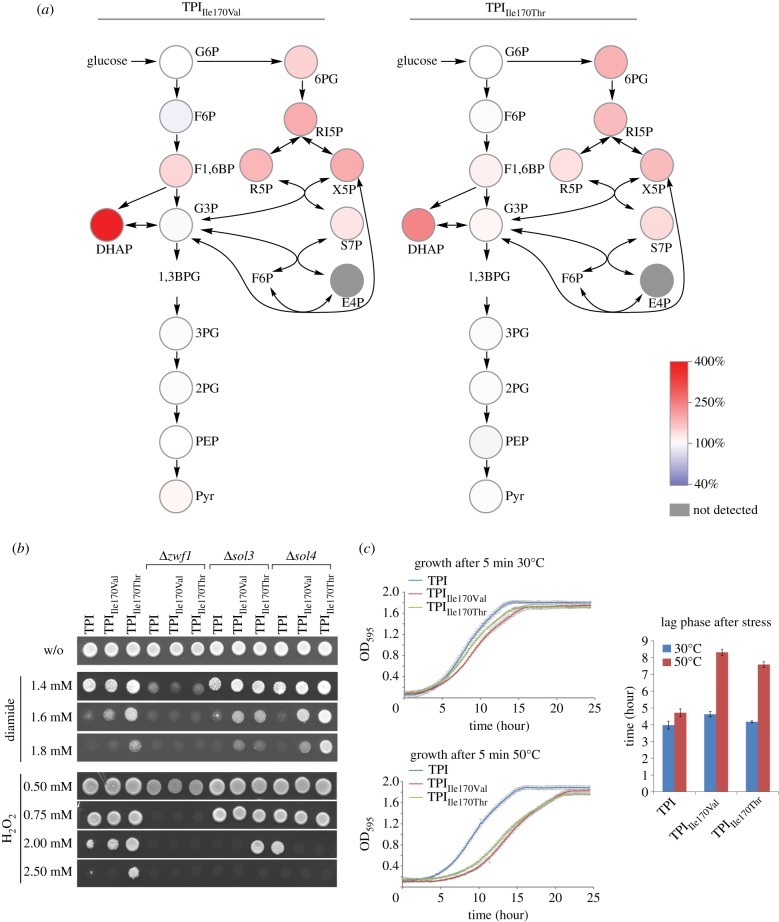
The inhibition of triosephosphate isomerase (TPI) in glycolysis by the pyruvate kinase (PK) substrate phosphoenolpyruvate (PEP) results in a newly discovered feedback loop that counters oxidative stress in cancer and actively respiring cells. The mechanism underlying this inhibition is illuminated by the co-crystal structure of TPI with bound PEP at 1.6 Å resolution, and by mutational studies guided by the crystallographic results. PEP is bound to the catalytic pocket of TPI and occludes substrate, which accounts for the observation that PEP competitively inhibits the interconversion of glyceraldehyde-3-phosphate and dihydroxyacetone phosphate. Replacing an isoleucine residue located in the catalytic pocket of TPI with valine or threonine altered binding of substrates and PEP, reducing TPI activity in vitro and in vivo. Confirming a TPI-mediated activation of the pentose phosphate pathway (PPP), transgenic yeast cells expressing these TPI mutations accumulate greater levels of PPP intermediates and have altered stress resistance, mimicking the activation of the PK-TPI feedback loop. These results support a model in which glycolytic regulation requires direct catalytic inhibition of TPI by the pyruvate kinase substrate PEP, mediating a protective metabolic self-reconfiguration of central metabolism under conditions of oxidative stress.
Keywords: feedback loop; glycolysis; phosphoenolpyruvate; pyruvate kinase; triosephosphate isomerase.
Figures
References
-
- Buescher JM, et al. 2012. Global network reorganization during dynamic adaptations of Bacillus subtilis metabolism. Science 335, 1099–1103. (doi:10.1126/science.1206871) - DOI - PubMed
-
- Grüning N-MM, Lehrach H, Ralser M. 2010. Regulatory crosstalk of the metabolic network. Trends Biochem. Sci. 35, 220–227. (doi:10.1016/j.tibs.2009.12.001) - DOI - PubMed
-
- Cornish-Bowden A, et al. 2013. A model of yeast glycolysis based on a consistent kinetic characterisation of all its enzymes. FEBS Lett. 587, 2832–2841. (doi:10.1016/j.febslet.2013.06.043) - DOI - PMC - PubMed
-
- Daran-Lapujade P, et al. 2007. The fluxes through glycolytic enzymes in Saccharomyces cerevisiae are predominantly regulated at posttranscriptional levels. Proc. Natl Acad. Sci. USA 104, 15 753–15 758. (doi:10.1073/pnas.0707476104) - DOI - PMC - PubMed
-
- Teusink B, et al. 2000. Can yeast glycolysis be understood in terms of in vitro kinetics of the constituent enzymes? Testing biochemistry. Eur. J. Biochem. 267, 5313–5329. (doi:10.1046/j.1432-1327.2000.01527.x) - DOI - PubMed
Publication types
MeSH terms
Substances
Grants and funding
LinkOut - more resources
Full Text Sources
Other Literature Sources
Molecular Biology Databases
Research Materials
Miscellaneous
