


Objective assessment of spectral ripple discrimination in cochlear implant listeners using cortical evoked responses to an oddball paradigm
- PMID: 24599314
- PMCID: PMC3943794
- DOI: 10.1371/journal.pone.0090044
Objective assessment of spectral ripple discrimination in cochlear implant listeners using cortical evoked responses to an oddball paradigm
Abstract
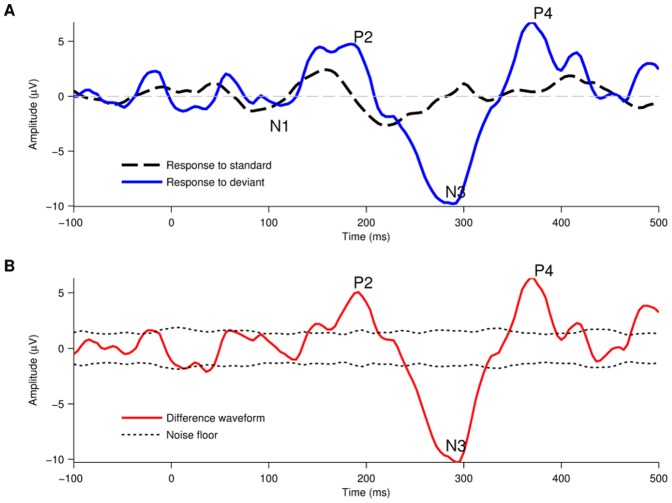
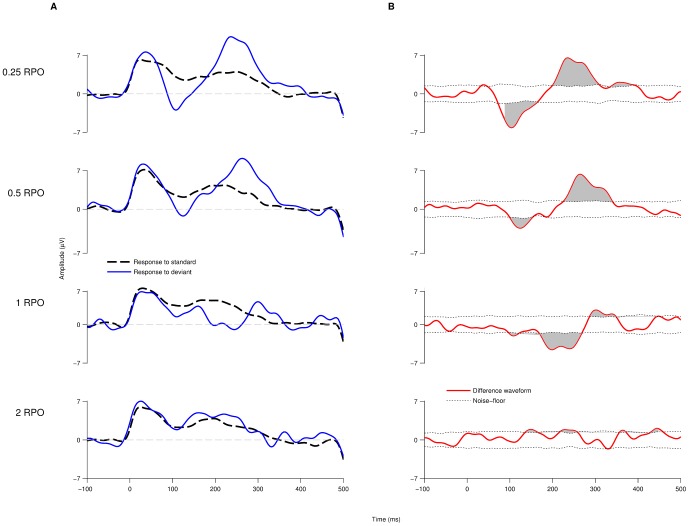
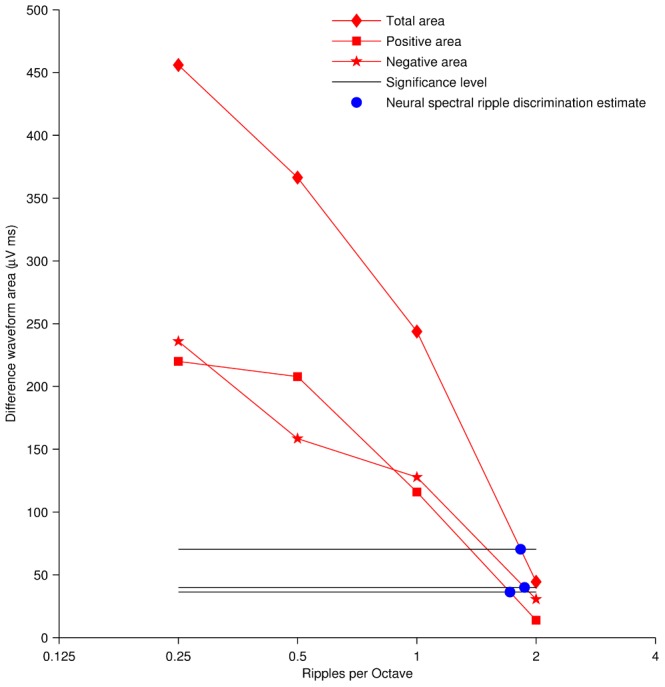
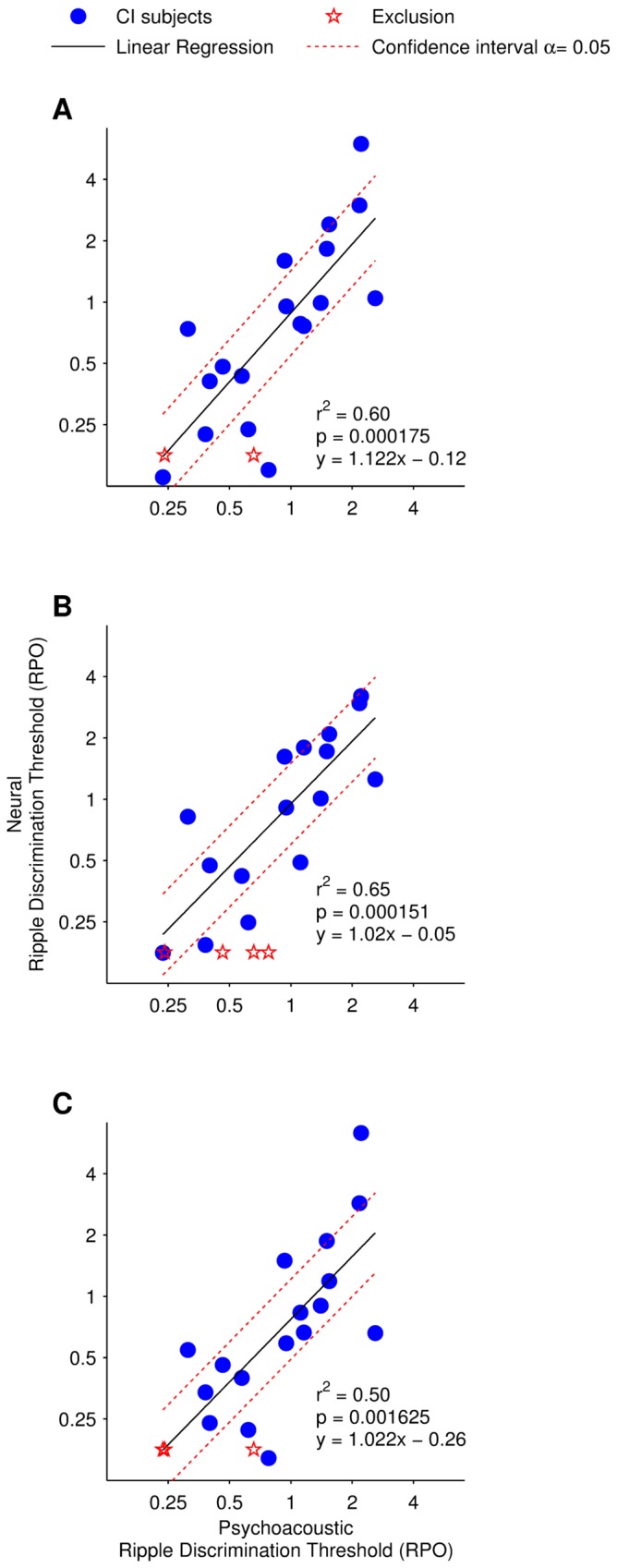
Cochlear implants (CIs) can partially restore functional hearing in deaf individuals. However, multiple factors affect CI listener's speech perception, resulting in large performance differences. Non-speech based tests, such as spectral ripple discrimination, measure acoustic processing capabilities that are highly correlated with speech perception. Currently spectral ripple discrimination is measured using standard psychoacoustic methods, which require attentive listening and active response that can be difficult or even impossible in special patient populations. Here, a completely objective cortical evoked potential based method is developed and validated to assess spectral ripple discrimination in CI listeners. In 19 CI listeners, using an oddball paradigm, cortical evoked potential responses to standard and inverted spectrally rippled stimuli were measured. In the same subjects, psychoacoustic spectral ripple discrimination thresholds were also measured. A neural discrimination threshold was determined by systematically increasing the number of ripples per octave and determining the point at which there was no longer a significant difference between the evoked potential response to the standard and inverted stimuli. A correlation was found between the neural and the psychoacoustic discrimination thresholds (R2=0.60, p<0.01). This method can objectively assess CI spectral resolution performance, providing a potential tool for the evaluation and follow-up of CI listeners who have difficulty performing psychoacoustic tests, such as pediatric or new users.
Conflict of interest statement
Figures
References
-
- Waltzman SB, Roland JT (2005) Cochlear implantation in children younger than 12 months. Pediatrics 116: e487–e493. - PubMed
-
- van Dijk JE, van Olphen AF, Langereis MC, Mens LH, Brokx JP, et al. (1999) Predictors of cochlear implant performance. Audiology 38: 109–116. - PubMed
-
- Blamey P, Arndt P, Bergeron F, Bredberg G, Brimacombe J, et al. (1996) Factors affecting auditory performance of postlinguistically deaf adults using cochlear implants. Audiology and Neurotology 1: 293–306. - PubMed
Publication types
MeSH terms
Grants and funding
LinkOut - more resources
Full Text Sources
Other Literature Sources
Medical
