


Regulation of seasonal reproduction by hypothalamic activation of thyroid hormone
- PMID: 24600435
- PMCID: PMC3930870
- DOI: 10.3389/fendo.2014.00012
Regulation of seasonal reproduction by hypothalamic activation of thyroid hormone
Abstract
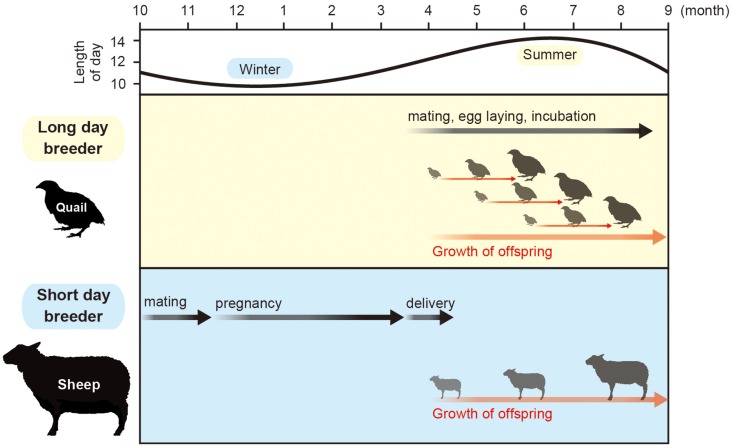
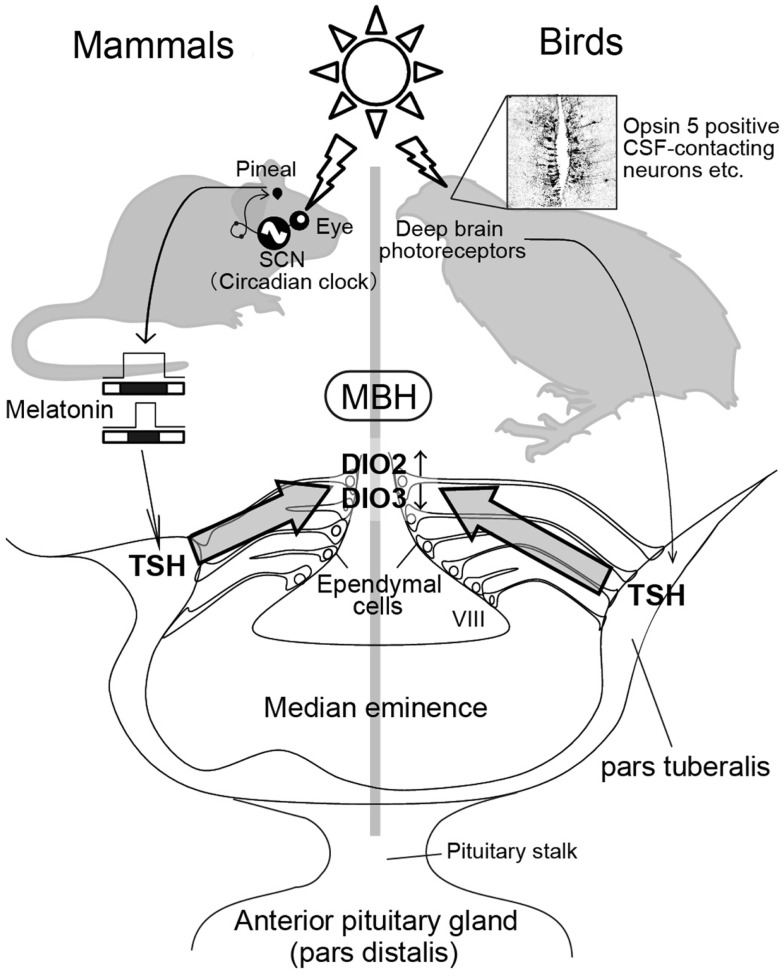
Organisms living outside the tropics measure the changes in the length of the day to adapt to seasonal changes in the environment. Animals that breed during spring and summer are called long-day breeders, while those that breed during fall are called short-day breeders. Although the influence of thyroid hormone in the regulation of seasonal reproduction has been known for several decades, its precise mechanism remained unknown. Recent studies revealed that the activation of thyroid hormone within the mediobasal hypothalamus plays a key role in this phenomenon. This localized activation of the thyroid hormone is controlled by thyrotropin (thyroid-stimulating hormone) secreted from the pars tuberalis of the pituitary gland. Although seasonal reproduction is a rate-limiting factor in animal production, genes involved in photoperiodic signal transduction pathway could emerge as potential targets to facilitate domestication.
Keywords: ependymal cell; iodothyronine deiodinase; mediobasal hypothalamus; pars tuberalis; seasonal reproduction; thyroid hormone; thyrotropin.
Figures
References
-
- Garner WW, Allard HA. Effect of the relative length of day and night and other factors of the environment on growth and reproduction in plants. J Agric Res (1920) 18:553–606
-
- Follett BK, King VM, Meddle SL. Rhythms and photoperiodism in birds. In: Lumsden PJ, Miller AJ. editors. Biological Rhythms and Photoperiodism in Plants. Oxford: Biostatistics Scientific; (1998). p. 231–42
-
- Nicholls TJ, Goldsmith AR, Dawson A. Photorefractoriness in birds and comparison with mammals. Physiol Rev (1988) 68:133–76 - PubMed
Publication types
LinkOut - more resources
Full Text Sources
Other Literature Sources
Miscellaneous
