


Duodenal follicular lymphoma: comprehensive gene expression analysis with insights into pathogenesis
- PMID: 24602001
- PMCID: PMC4317842
- DOI: 10.1111/cas.12392
Duodenal follicular lymphoma: comprehensive gene expression analysis with insights into pathogenesis
Abstract
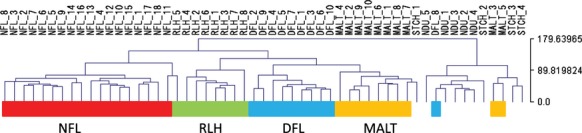
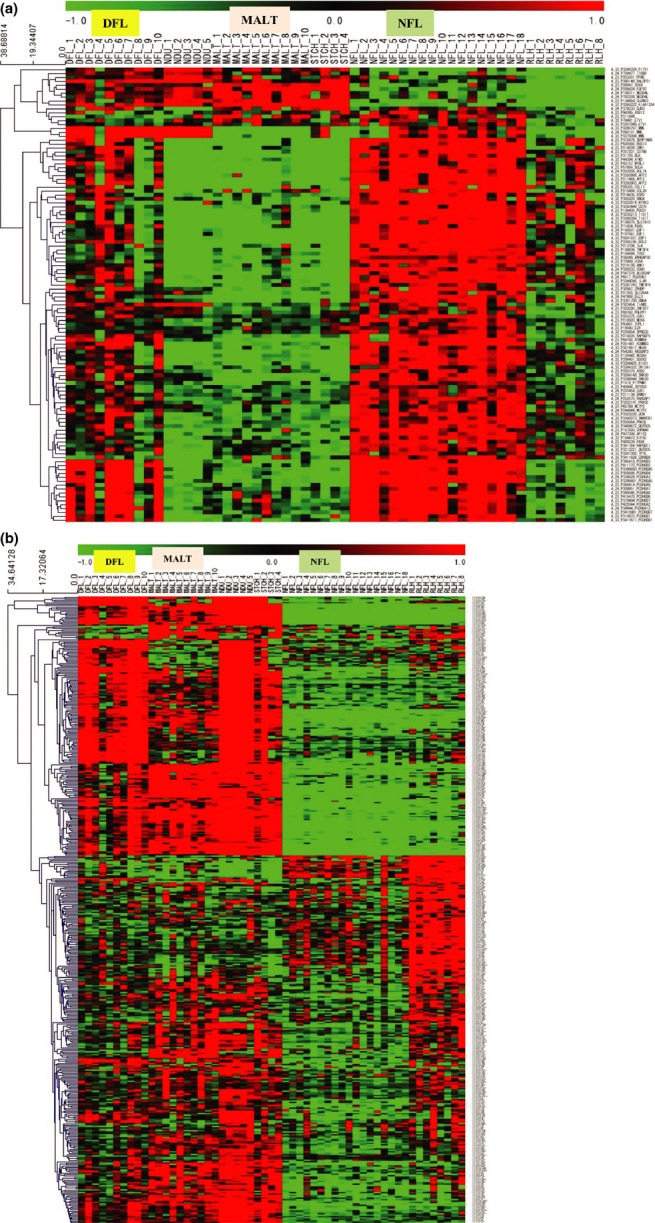
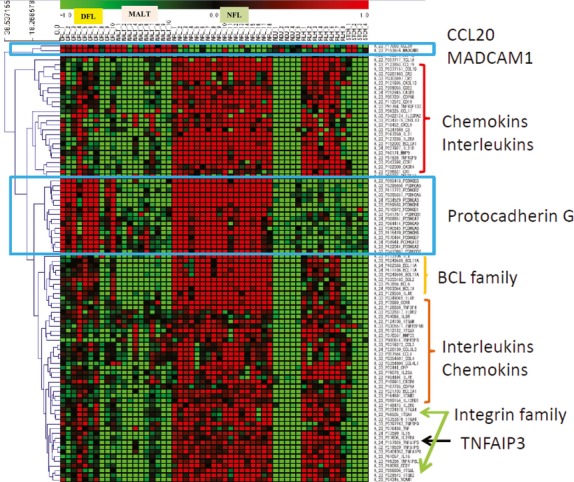
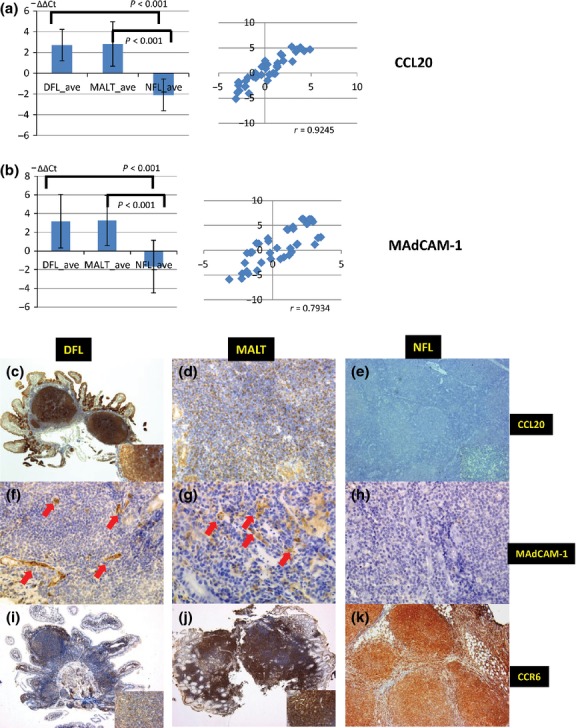
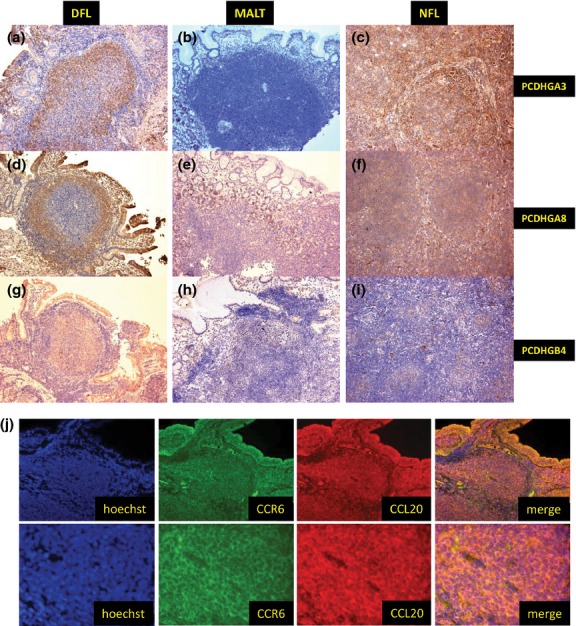
Follicular lymphoma (FL) of the gastrointestinal tract, particularly duodenal follicular lymphoma (DFL), is a rare variant of FL with indolent clinical behavior, and this disease is included in the 2008 World Health Organization classification system. In contrast to nodal follicular lymphoma (NFL), DFL occurs most frequently in the second part of the duodenum, lacks follicular dendritic cell meshworks and has memory B-cell characteristics. However, its molecular pathogenesis is still unclear. In the present study, we examined 10 DFL, 18 NFL and 10 gastric MALT lymphoma samples using gene expression analysis. Quantitative RT-PCR experiments and immunohistochemical analysis for 72 formalin-fixed, paraffin-embedded tissues from an independent series, including 32 DFL, 19 gastric MALT lymphoma and 27 NFL samples, were performed for validation of microarray data. Gene expression profiles of the three lymphoma types were compared using 2918 differentially expressed genes (DEG) and results suggested that DFL shares characteristics of MALT lymphoma. Among these DEG, CCL20 and MAdCAM-1 were upregulated in DFL and MALT but downregulated in NFL. In contrast, protocadherin gamma subfamily genes were upregulated in DFL and NFL. Quantitative RT-PCR and immunohistochemical studies demonstrated concordant results. Double immunofluorescence studies revealed that CCL20 and CCR6 were co-expressed in both DFL and MALT. We hypothesize that increased expression of CCL20 and MAdCAM-1 and co-expression of CCL20 and CCR6 may play an important role in tumorigenesis.
Keywords: CCL20; MALT lymphoma; MAdCAM-1; duodenal follicular lymphoma; gene expression profile.
© 2014 The Authors. Cancer Science published by Wiley Publishing Asia Pty Ltd on behalf of Japanese Cancer Association.
Figures
References
-
- Harris NL, Swerdlow SH, Jaffe ES. Follicular lymphoma. In: Harris NL, Swerdlow SH, Jaffe ES, Ott G, Nathwani BN, de Jong D, Yoshino T, Spagnolo D, et al., editors. WHO Classification of Tumours of Haematopoietic and Lymphoid Tissues. 4th. Lyon: IARC; 2008. pp. 220–6.
-
- Yoshino T, Miyake K, Ichimura K, et al. Increased incidence of follicular lymphoma in the duodenum. Am J Surg Pathol. 2000;24:688–93. - PubMed
-
- Takata K, Sato Y, Nakamura N, et al. Duodenal and nodal follicular lymphomas are distinct: the former lacks activation-induced cytidine deaminase and follicular dendritic cells despite ongoing somatic hypermutations. Mod Pathol. 2009;22:940–9. - PubMed
-
- Takata K, Okada H, Ohmiya N, et al. Primary gastrointestinal follicular lymphoma involving the duodenal second portion is a distinct entity: a multicenter, retrospective analysis in Japan. Cancer Sci. 2011;102:1532–6. - PubMed
-
- Takata K, Sato Y, Nakamura N, et al. Follicular lymphoma lacks AID but express BACH2 and has memory B cell characteristics. Mod Pathol. 2013;26:22–31. - PubMed
Publication types
MeSH terms
Substances
Associated data
- Actions
LinkOut - more resources
Full Text Sources
Other Literature Sources
Medical
Molecular Biology Databases
