


Extended release naltrexone injection is performed in the majority of opioid dependent patients receiving outpatient induction: a very low dose naltrexone and buprenorphine open label trial
- PMID: 24602363
- PMCID: PMC4017322
- DOI: 10.1016/j.drugalcdep.2014.02.002
Extended release naltrexone injection is performed in the majority of opioid dependent patients receiving outpatient induction: a very low dose naltrexone and buprenorphine open label trial
Abstract
Background: The approval of extended release injectable naltrexone (XR-NTX; Vivitrol(®)) has introduced a new option for treating opioid addiction, but studies are needed to identify its place within the spectrum of available therapies. The absence of physiological opioid dependence is a necessary and challenging first step for starting XR-NTX. Outpatient detoxification gives poor results and inpatient detoxification is either unavailable or too brief for the physiological effects of opioids to resolve. Here we present findings from an open label study that tested whether the transition from opioid addiction to XR-NTX can be safely and effectively performed in an outpatient setting using very low dose naltrexone and buprenorphine.
Methods: Twenty treatment seeking opioid addicted individuals were given increasing doses of naltrexone starting at 0.25mg with decreasing doses of buprenorphine starting at 4 mg during a 7-day outpatient XR-NTX induction procedure. Withdrawal discomfort, craving, drug use, and adverse events were assessed daily until the XR-NTX injection, then weekly over the next month.
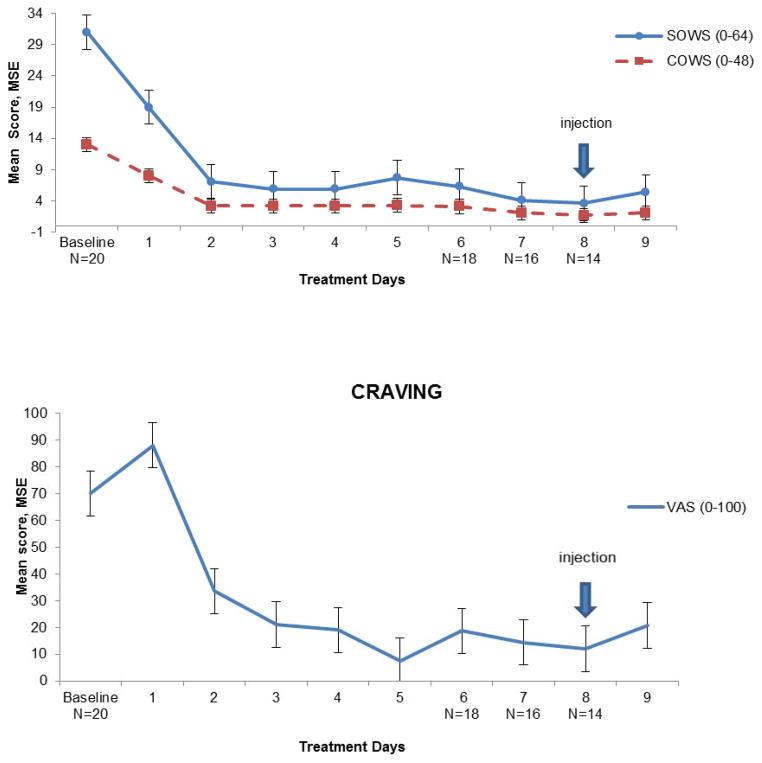
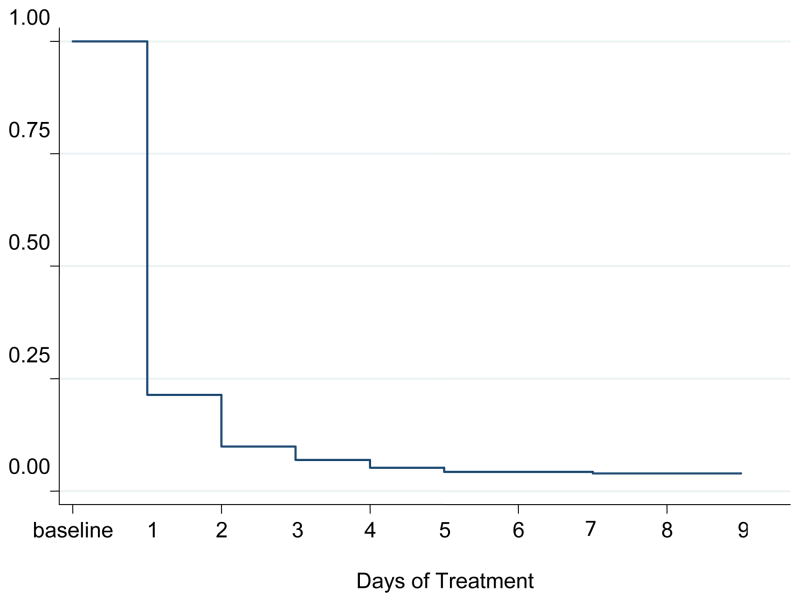
Results: Fourteen of the 20 participants received XR-NTX and 13 completed weekly assessments. Withdrawal, craving, and opioid or other drug use were significantly lower during induction and after XR-NTX administration compared with baseline, and no serious adverse events were recorded.
Conclusions: Outpatient transition to XR-NTX combining upward titration of very low dose naltrexone with downward titration of low dose buprenorphine was safe, well tolerated, and completed by most participants. Further studies with larger numbers of subjects are needed to see if this approach is useful for naltrexone induction.
Keywords: Addiction; Detoxification; Minority recruitment; Opioid agonist; Opioid antagonist; Pharmacotherapy.
Copyright © 2014 Elsevier Ireland Ltd. All rights reserved.
Figures
References
-
- Adi Y, Juarez-Garcia A, Wang D, Jowett S, Frew E, Day E, Bayliss S, Roberts T, Burls A. Oral naltrexone as a treatment for relapse prevention in formerly opioid-dependent drug users: a systematic review and economic evaluation. Health Technol Assess. 2007;11:iii–iv. 1–85. - PubMed
-
- APA. Diagnostic and statistical manual of mental disorders. 4. American Psychiatric Association; Washington, DC: 2000. text rev.
-
- Eissenberg T, Greenwald M, Johnson R, Liebson I, Bigelow G, Stitzer M. Buprenorphine’s physical dependence potential: antagonist-precipitated withdrawal in humans. J Pharm Exp Thera. 1996;276:449–459. - PubMed
-
- First M, Spitzer RMG, Williams J. Structured Clinical Interview for Axis I DSM-IV Disorders--Patient Edition. Washington, DC: 1994.
Publication types
MeSH terms
Substances
Grants and funding
LinkOut - more resources
Full Text Sources
Other Literature Sources
Medical
