


A twin study of heritable and shared environmental contributions to autism
- PMID: 24604525
- PMCID: PMC4104233
- DOI: 10.1007/s10803-014-2081-2
A twin study of heritable and shared environmental contributions to autism
Abstract
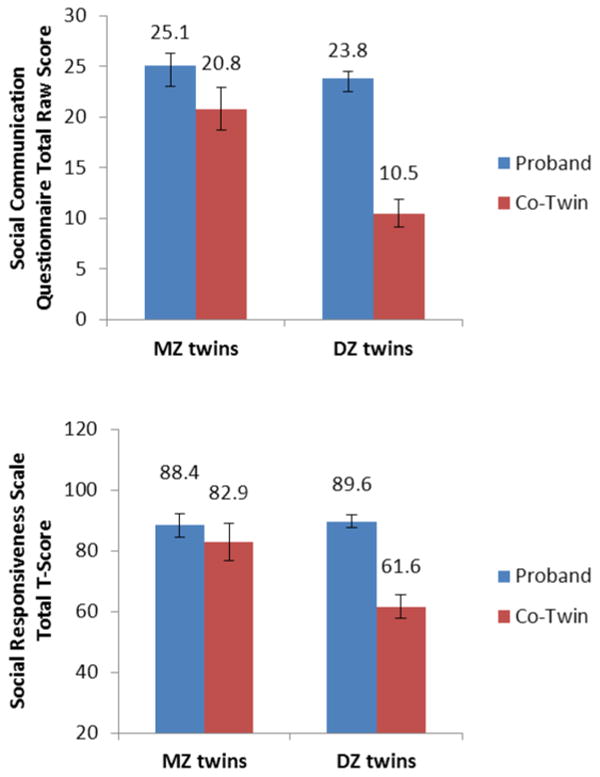
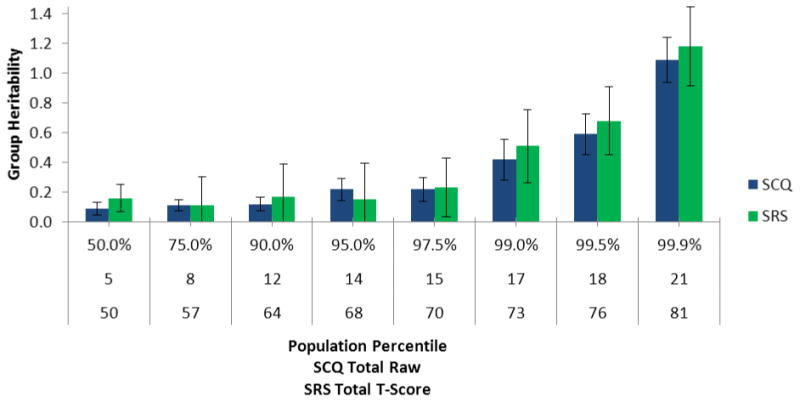
The present study examined genetic and shared environment contributions to quantitatively-measured autism symptoms and categorically-defined autism spectrum disorders (ASD). Participants included 568 twins from the Interactive Autism Network. Autism symptoms were obtained using the Social Communication Questionnaire and Social Responsiveness Scale. Categorically-defined ASD was based on clinical diagnoses. DeFries-Fulker and liability threshold models examined etiologic influences. Very high heritability was observed for extreme autism symptom levels ([Formula: see text]). Extreme levels of social and repetitive behavior symptoms were strongly influenced by common genetic factors. Heritability of categorically-defined ASD diagnosis was comparatively low (.21, 95 % CI 0.15-0.28). High heritability of extreme autism symptom levels confirms previous observations of strong genetic influences on autism. Future studies will require large, carefully ascertained family pedigrees and quantitative symptom measurements.
Figures
References
-
- American Psychiatric Association - DSM-5 Development. 299.00 Autistic Disorder. [Accessed February 01 2011];American Psychiatric Association. 2011 http://www.dsm5.org/ProposedRevisions/Pages/proposedrevision.aspx?rid=94.
-
- Bailey A, et al. Autism as a strongly genetic disorder: Evidence from a British twin study. Psychol Med. 1995;25:63–77. - PubMed
-
- Bilder D, Pinborough-Zimmerman J, Miller J, McMahon W. Prenatal, perinatal, and neonatal factors associated with autism spectrum disorders. Pediatrics. 2009;123:1293–300. doi:123/5/1293 [pii] 10.1542/peds.2008-0927. - PubMed
Publication types
MeSH terms
Grants and funding
LinkOut - more resources
Full Text Sources
Other Literature Sources
