Review
. 2014;99(5):531-41.
doi: 10.1007/s12185-014-1552-8. Epub 2014 Mar 9.

Long noncoding RNAs during normal and malignant hematopoiesis

Affiliations
Review

Long noncoding RNAs during normal and malignant hematopoiesis

Juan R Alvarez-Dominguez et al. Int J Hematol. 2014.

Abstract

Long noncoding RNAs (lncRNAs) are increasingly recognized to contribute to cellular development via diverse mechanisms during both health and disease. Here, we highlight recent progress on the study of lncRNAs that function in the development of blood cells. We emphasize lncRNAs that regulate blood cell fates through epigenetic control of gene expression, an emerging theme among functional lncRNAs. Many of these noncoding genes and their targets become dysregulated during malignant hematopoiesis, directly implicating lncRNAs in blood cancers such as leukemia. In a few cases, dysregulation of an lncRNA alone leads to malignant hematopoiesis in a mouse model. Thus, lncRNAs may be not only useful as markers for the diagnosis and prognosis of cancers of the blood, but also as potential targets for novel therapies.


Conflict of interest statement

Conflict of interest The authors declare that they have no conflict of interest.

Figures

Fig. 1
Fig. 1
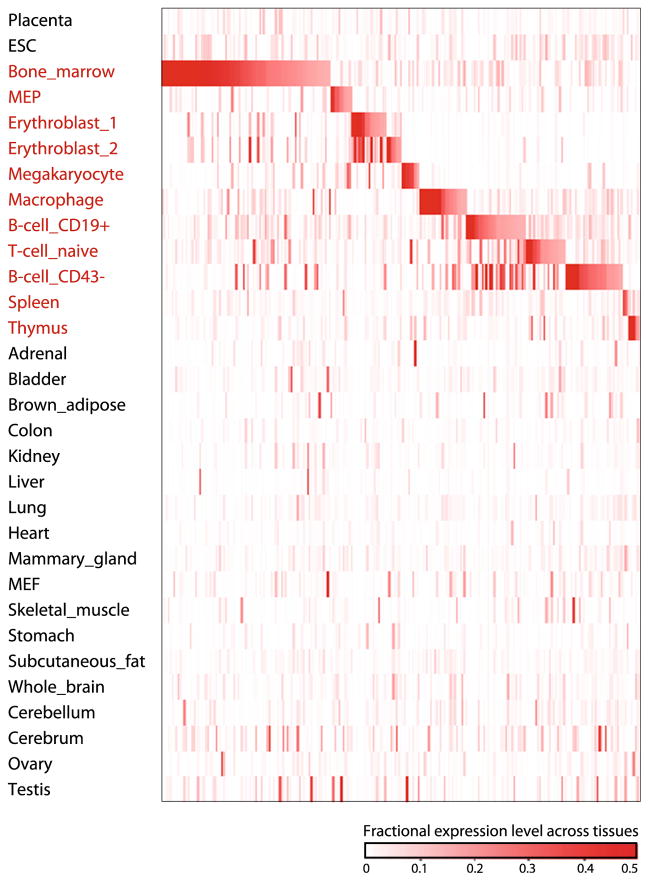
Tissue specificity of mouse fetal liver lncRNAs. Relative abundance of lncRNAs (rows) expressed in the E14.5 mouse fetal liver across 30 primary cell and tissue types (columns) from the mouse ENCODE consortium. Color intensity represents the fractional gene-level expression across all tissues examined. Hematopoietic tissues are highlighted in red. Adapted from [44]
Fig. 2
Fig. 2
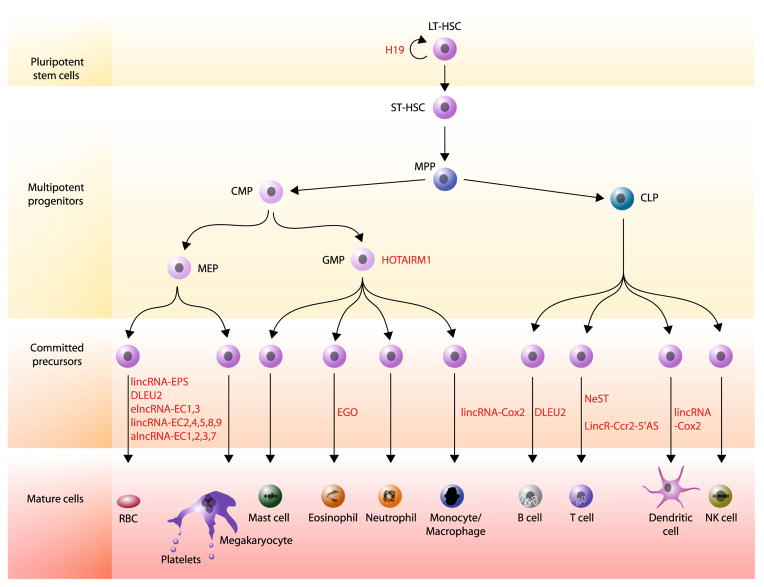
Involvement of lncRNAs in blood cell development. lncRNAs required for blood cell development, as determined through loss-of-function studies, are depicted next to the stage of hematopoietic development affected by their inhibition. LT-HSC, long-term hematopoietic stem cell; ST-HSC, short-term hematopoietic cell; MPP, multipotent progenitor; CMP, common myeloid progenitor; CLP, common lymphoid progenitor; MEP, megakaryocyte/erythroid progenitor; GMP; granulocyte/monocyte progenitor; RBC, red blood cell; NK cell, natural killer cell
Fig. 3
Fig. 3
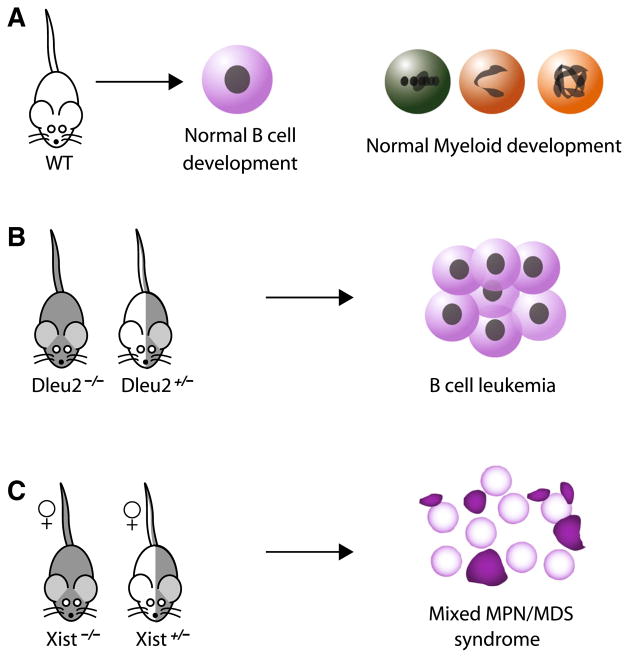
Mouse knockout models link lncRNAs to blood cancer pathogenesis. Proper expression of Dleu2 and Xist is required for normal hematopoiesis. a Wild-type mice develop B cells and myeloid cells normally. b Dleu2 −/− and Dleu2∓ mice fail to properly regulate cell cycle progression and apoptosis of B cells, developing a B cell chronic lymphocytic leukemia reminiscent of human CLL that significantly reduces lifespan. c Xist −/− and Xist∓ female mice fail to maintain proper X dosage, developing a deficiency in HSC maturation that leads to a lethal mixed myeloproliferative neoplasm and myelodysplastic (MPN/MDS) syndrome

References

    1. Guttman M, et al. Chromatin signature reveals over a thousand highly conserved large non-coding RNAs in mammals. Nature. 2009;458(7235):223–7. - PMC - PubMed
    1. Derrien T, et al. The GENCODE v7 catalog of human long noncoding RNAs: analysis of their gene structure, evolution, and expression. Genome Res. 2012;22(9):1775–89. - PMC - PubMed
    1. Djebali S, et al. Landscape of transcription in human cells. Nature. 2012;489(7414):101–8. - PMC - PubMed
    1. Banfai B, et al. Long noncoding RNAs are rarely translated in two human cell lines. Genome Res. 2012;22(9):1646–57. - PMC - PubMed
    1. Guttman M, et al. Ribosome profiling provides evidence that large noncoding RNAs do not encode proteins. Cell. 2013;154 (1):240–51. - PMC - PubMed

Publication types

Substances

LinkOut - more resources