Meta-Analysis
. 2014 Jun;25(6):1357-66.
doi: 10.1681/ASN.2013040430. Epub 2014 Mar 7.

Phospholipase A2 receptor autoantibodies and clinical outcome in patients with primary membranous nephropathy

Affiliations
Meta-Analysis

Phospholipase A2 receptor autoantibodies and clinical outcome in patients with primary membranous nephropathy

Elion Hoxha et al. J Am Soc Nephrol. 2014 Jun.

Abstract

Membranous nephropathy (MN) is the most common cause of nephrotic syndrome in adults, with an uncertain clinical outcome. The characterization of the phospholipase A2 receptor (PLA2R) as the major target antigen in primary MN and the detection of circulating autoantibodies in these patients is a major advance in understanding this disease. To test whether PLA2R antibody levels reflect disease activity or clinical outcome, we performed a prospective multicenter study of 133 adult patients with primary MN and detectable serum PLA2R antibodies who had not received immunosuppressive therapy. Patients were followed ≤24 months. PLA2R antibody levels associated with clinical disease activity (proteinuria) in patients with immunosuppressive therapy (n=101) or supportive care (n=32). Within 3 months, immunosuppressive therapy led to a sustained 81% reduction in PLA2R antibody levels paralleled by a 39% reduction in proteinuria. Patients who experienced remission of proteinuria after 12 months had significantly lower PLA2R antibody levels at the time of study inclusion compared with patients with no remission. Patients with high PLA2R antibody levels achieved remission of proteinuria significantly later than patients with low PLA2R antibody levels. PLA2R antibody levels fell over time in patients with spontaneous remission but remained elevated in patients who did not show a reduction in proteinuria. Multivariable Cox regression analysis confirmed PLA2R antibody level as an independent risk factor for not achieving remission of proteinuria. We conclude that a decrease in PLA2R antibody level is associated with a decrease of proteinuria in patients with primary MN.


Figures

Figure 1.
Figure 1.
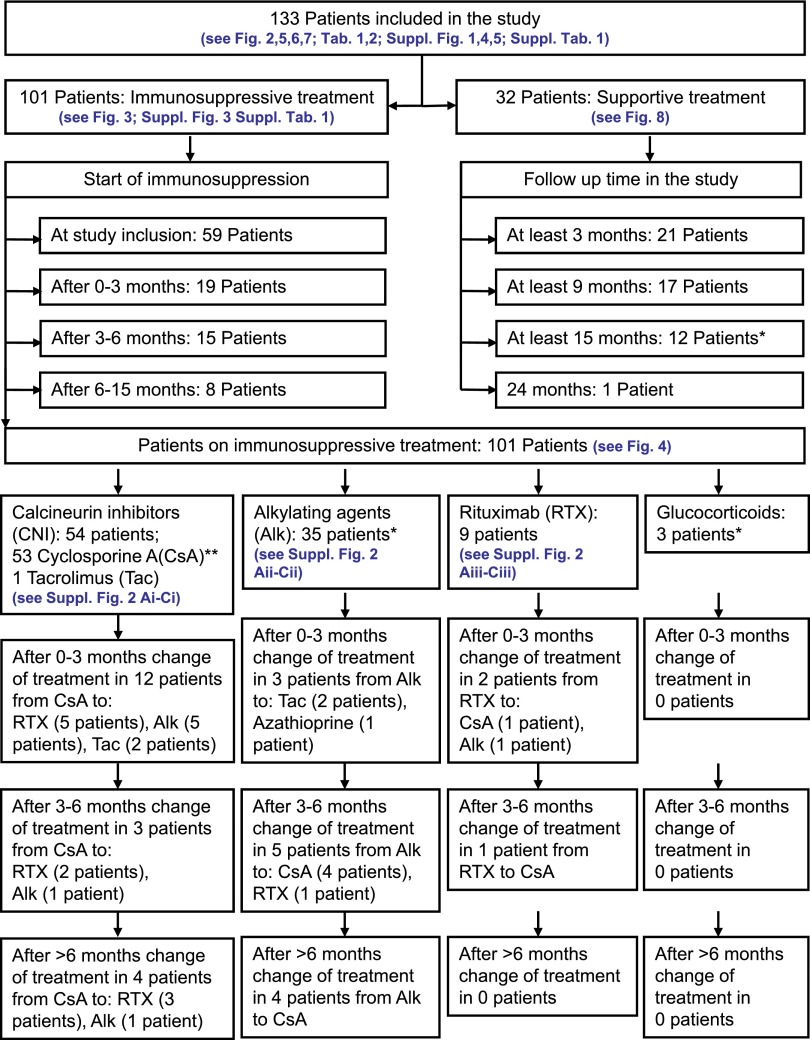
Flow chart of patients included in the study and their follow-up. Of the 133 patients included in the study, 101 receive immunosuppressive treatment and 32 are treated with supportive care only. Immunosuppressive treatment is started at the time of inclusion in 59 patients and 3–15 months after study inclusion in the remaining 42 patients. After 0–3 months, immunosuppressive treatment is switched from one agent to another in 17 patients. After 3–6 months, immunosuppressive agents are changed in an additional nine patients. After >6 months, eight patients received a different immunosuppressant. *Five patients for whom no ELISA PLA2R antibody levels are available at the time of study inclusion.
Figure 2.
Figure 2.
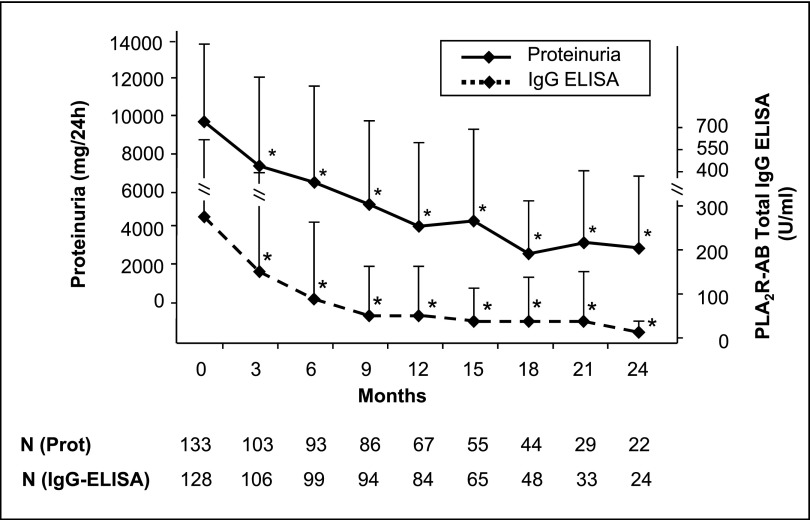
Proteinuria and PLA2R antibody levels of all patients included in the study. Over the 24-month follow-up period, proteinuria (solid line) and PLA2R antibody levels (dashed line) constantly decrease over time. The decrease is already significant at 3 months, yet the decrease of PLA2R antibody levels is more pronounced than the decrease of proteinuria at 3 months. The bars show the SD values of proteinuria and PLA2R antibody levels. Time 0 shows data at the time of the first PLA2R measurement. N gives the number of patients for whom data were available at the different time points. *P<0.05, statistically significant difference between the single time point and the start of the study.
Figure 3.
Figure 3.
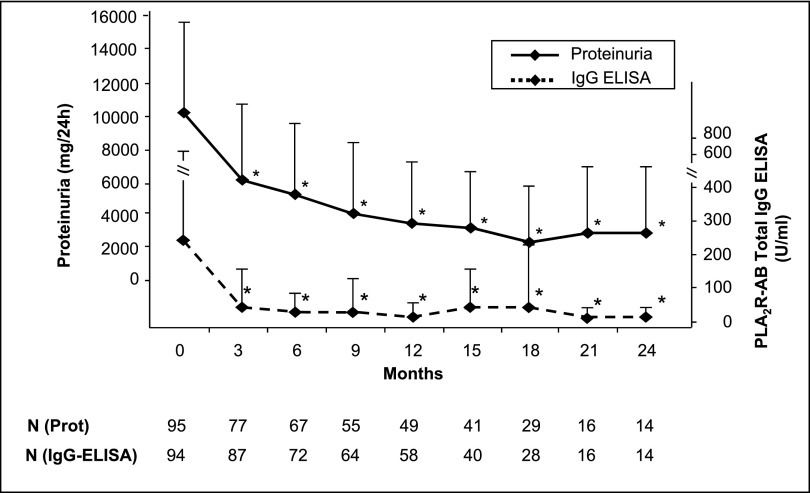
Proteinuria and PLA2R antibody levels of patients treated with immunosuppressive therapy. Within 3 months after the start of the immunosuppressive therapy (0 months), proteinuria decreases by 39% and PLA2R antibody levels by 81%. Proteinuria continuously declines during the further follow-up, whereas PLA2R antibody levels remained low. The bars show the SD values of proteinuria and PLA2R antibody levels. Time 0 shows data at the time of the start of immunosuppression. *P<0.05, statistically significant difference between the single time point and the start of immunosuppression (0 months).
Figure 4.
Figure 4.
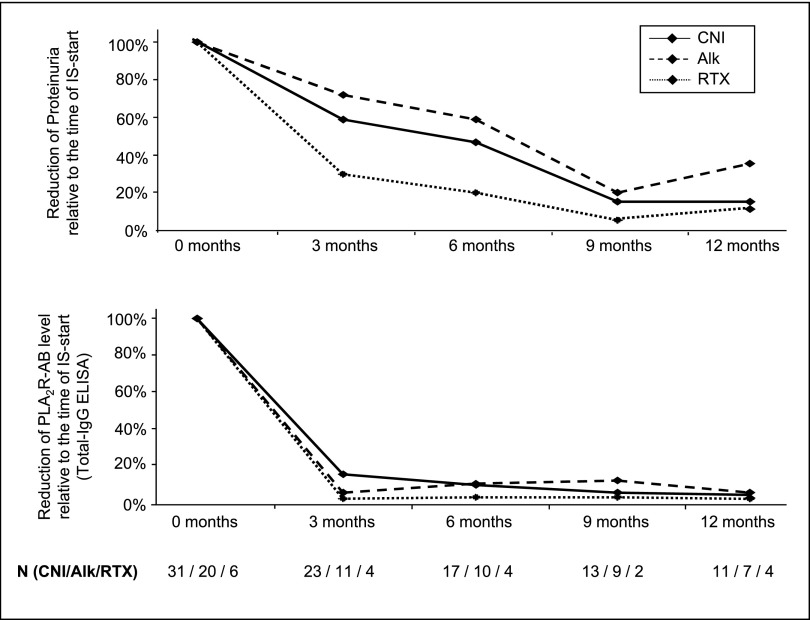
Changes in PLA2R antibody levels and proteinuria after immunosuppressive therapy with all three treatment protocols (calcineurin inhibitors [CNI], alkylating agents [Alk], rituximab [RTX]) in patients treated with only one treatment regime. Data are presented as the relation of PLA2R antibody levels or proteinuria at the given time point (3, 6, 9, or 12 months) to the time of start of immunosuppression (Time 0). Data are presented for patients treated with calcineurin inhibitors, alkylating agents, or rituximab, in whom immunosuppressive therapy is not changed throughout the study follow-up and for whom both PLA2R antibody levels and proteinuria for the given time points are available. There is no significant difference in the decrease in PLA2R antibody levels and in the decrease in proteinuria between the three treatment groups. The decrease of PLA2R antibody levels is more rapid and is followed by the decrease in proteinuria. The average dosage of cyclosporine A is 187±98 mg/d at 3 months, 203±88 mg/d at 6 months, 197±81 mg/d at 9 months, and 185±67 mg/d at 12 months. The average cumulative dose of cyclophosphamide is 6.6±5.9 g at 3 months, 15.0±12.5 g at 6 months, 17.3±18.8 g at 9 months, and 31.9±33.5 g at 12 months. Patients receive on average 1.6±1.0 g rituximab. Time 0 shows data at the time of the start of immunosuppression. N gives the number of patients for which data are available for the times of follow-up.
Figure 5.
Figure 5.
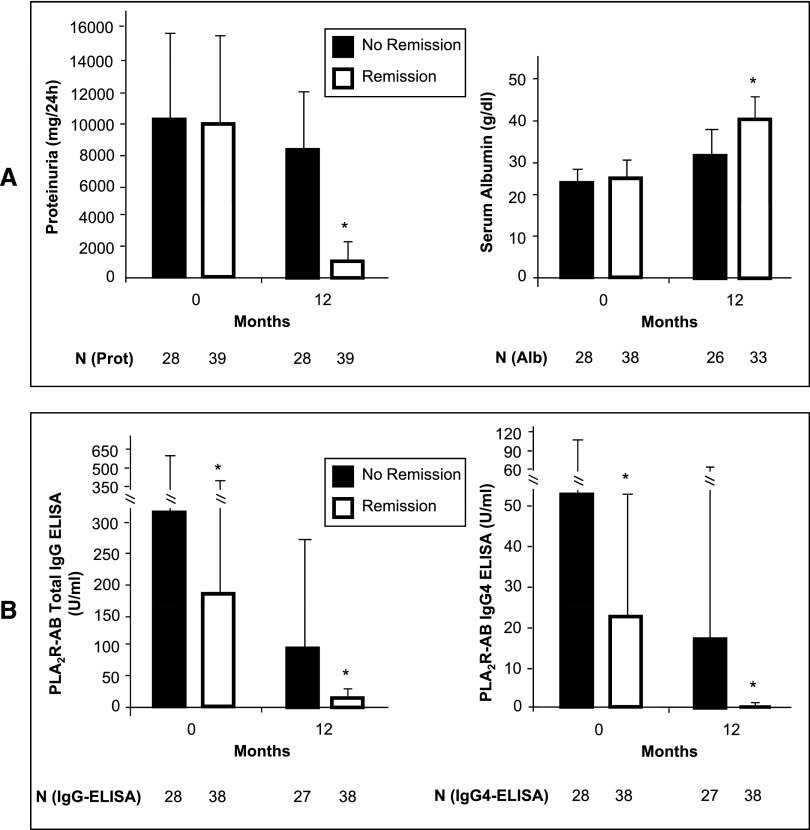
Proteinuria, serum albumin, and PLA2R antibody levels in patients with remission or no remission of proteinuria after 12 months. Patients who reach a remission of proteinuria after 12 months have statistically significant lower proteinuria than patients who do not have a remission in proteinuria. In the patients with a reduction in proteinuria, serum albumin levels normalize after 12 months, but remain lower in the patients who did not have remission. In patients with remission of proteinuria, antibody levels fall during the follow-up and are significantly lower than in patients who do not have a remission in proteinuria. Time 0 refers to the time of study inclusion and first serum measurement. The bars show the SD values. *P<0.05.
Figure 6.
Figure 6.
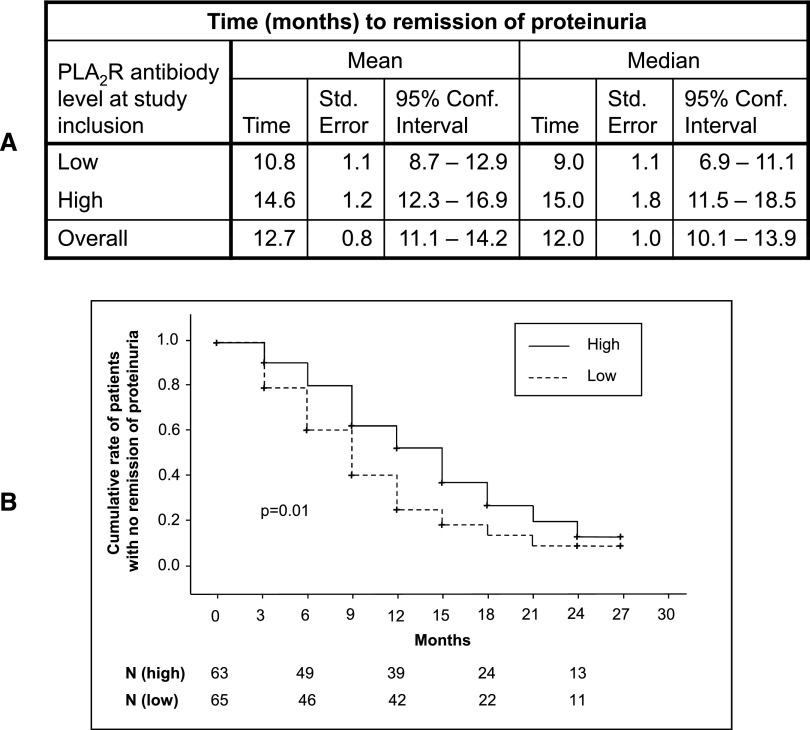
Time to achievement of remission of proteinuria in patients with high versus low PLA2R antibody levels at study inclusion. (A) Mean and median time to remission of proteinuria. The 128 patients for whom ELISA PLA2R antibody levels are available are divided in two groups. In patients in the low group, PLA2R antibody levels at study inclusion are lower than the median PLA2R antibody level. In patients in the high group, PLA2R antibody levels at study inclusion are higher than the median PLA2R antibody levels. For five patients, there are no ELISA PLA2R antibody levels available at the time of study inclusion and they are not included in this analysis. (B) Kaplan–Meier analysis. Patients with low PLA2R antibody levels at study inclusion (low group) reach remission of proteinuria significantly faster than patients with high PLA2R antibody levels at study inclusion (high group). N gives the number of patients at the different time points.
Figure 7.
Figure 7.
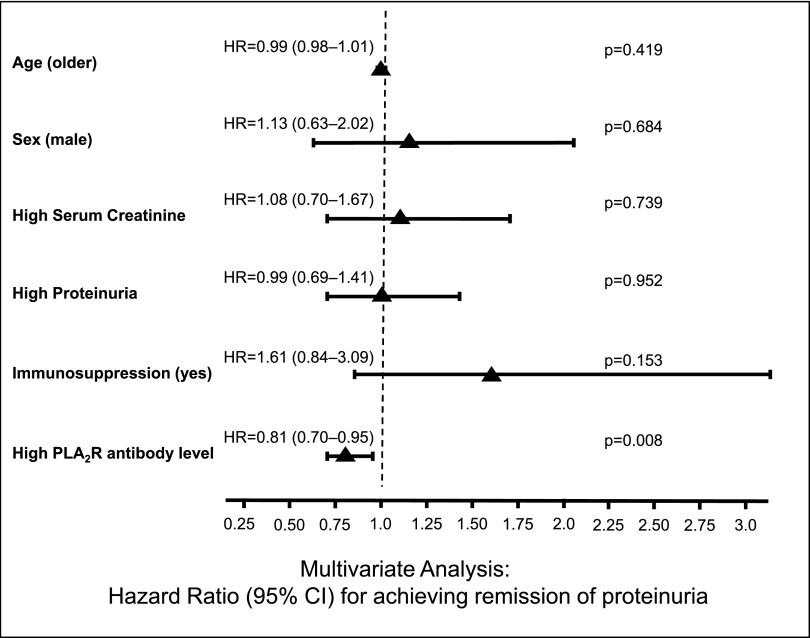
Multivariable Cox regression analysis. Total IgG PLA2R antibody levels measured by ELISA are identified as risk factors for not achieving a remission of proteinuria in the 128 patients for whom ELISA PLA2R antibody levels at are available at the study start. Hazard ratios for achieving a remission of proteinuria are expressed per natural logarithm unit of serum creatinine, proteinuria, and PLA2R antibody levels measured by ELISA per unit of age and dichotomized for sex and treatment.
Figure 8.
Figure 8.
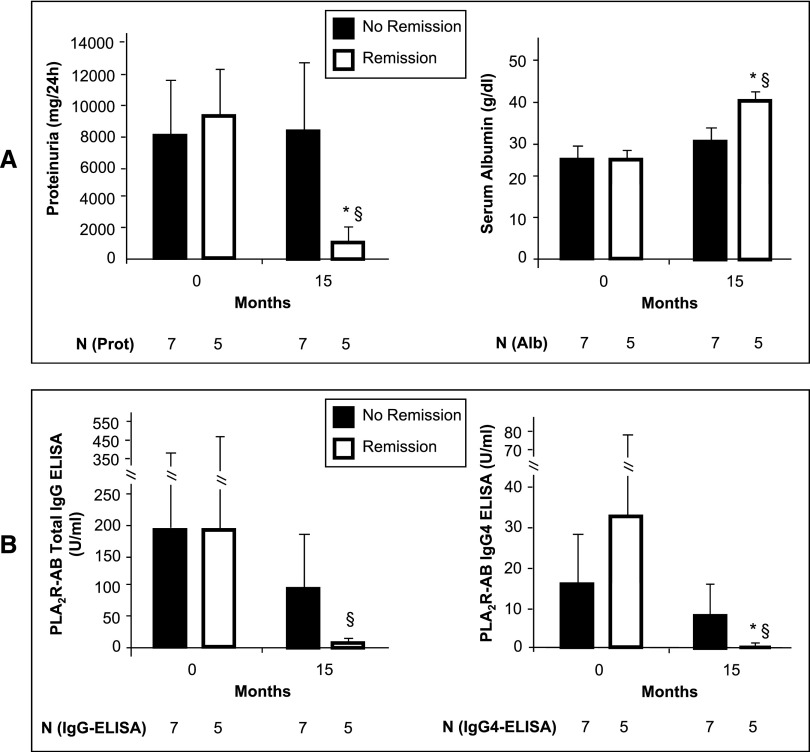
Proteinuria and PLA2R antibody levels in 12 patients who do not receive immunosuppressive therapy and complete 15 months of follow-up. (A) Proteinuria and serum albumin in patients with remission or no remission of proteinuria after 15 months. Twelve patients not on immunosuppressive therapy could be analyzed for a 15-month follow-up period. Five of these patients reach a remission of proteinuria over the 15-month follow-up period. In these patients, proteinuria after 15 months is significantly lower than at the time of study inclusion (*P<0.05) and compared with the seven patients who did not have a remission in proteinuria (§P<0.05). In the patients with the reduction in proteinuria serum albumin levels normalized after 15 months, however, remained below normal in the patients who did not have remission. The bars show the SD values of proteinuria and serum albumin. (B) PLA2R antibody levels in patients with remission or no remission of proteinuria after 15 months. At the time of study inclusion, PLA2R antibody levels (both total IgG and IgG4 subclass) are not different between the patients who experience remission and those who do not show significant improvement in proteinuria after 15 months. In those patients with remission of proteinuria, PLA2R antibody levels (both total IgG and IgG 4 subclass) fall during the follow-up and are significantly lower after 15 months compared with patients who did not show remission of proteinuria (§P<0.05). Time 0 shows data at the time of the first PLA2R measurement. The bars show the SD values.

Comment in

References

    1. Beck LH, Jr, Bonegio RG, Lambeau G, Beck DM, Powell DW, Cummins TD, Klein JB, Salant DJ: M-type phospholipase A2 receptor as target antigen in idiopathic membranous nephropathy. N Engl J Med 361: 11–21, 2009 - PMC - PubMed
    1. Schieppati A, Mosconi L, Perna A, Mecca G, Bertani T, Garattini S, Remuzzi G: Prognosis of untreated patients with idiopathic membranous nephropathy. N Engl J Med 329: 85–89, 1993 - PubMed
    1. Polanco N, Gutiérrez E, Covarsí A, Ariza F, Carreño A, Vigil A, Baltar J, Fernández-Fresnedo G, Martín C, Pons S, Lorenzo D, Bernis C, Arrizabalaga P, Fernández-Juárez G, Barrio V, Sierra M, Castellanos I, Espinosa M, Rivera F, Oliet A, Fernández-Vega F, Praga M, Grupo de Estudio de las Enfermedades Glomerulares de la Sociedad Española de Nefrología : Spontaneous remission of nephrotic syndrome in idiopathic membranous nephropathy. J Am Soc Nephrol 21: 697–704, 2010 - PMC - PubMed
    1. Cattran DC, Pei Y, Greenwood CM, Ponticelli C, Passerini P, Honkanen E: Validation of a predictive model of idiopathic membranous nephropathy: Its clinical and research implications. Kidney Int 51: 901–907, 1997 - PubMed
    1. van den Brand JAJG, Hofstra JM, Wetzels JFM: Prognostic value of risk score and urinary markers in idiopathic membranous nephropathy. Clin J Am Soc Nephrol 7: 1242–1248, 2012 - PMC - PubMed

Publication types

MeSH terms