


Early dropout predictive factors in obesity treatment
- PMID: 24611111
- PMCID: PMC3944162
- DOI: 10.4162/nrp.2014.8.1.94
Early dropout predictive factors in obesity treatment
Abstract
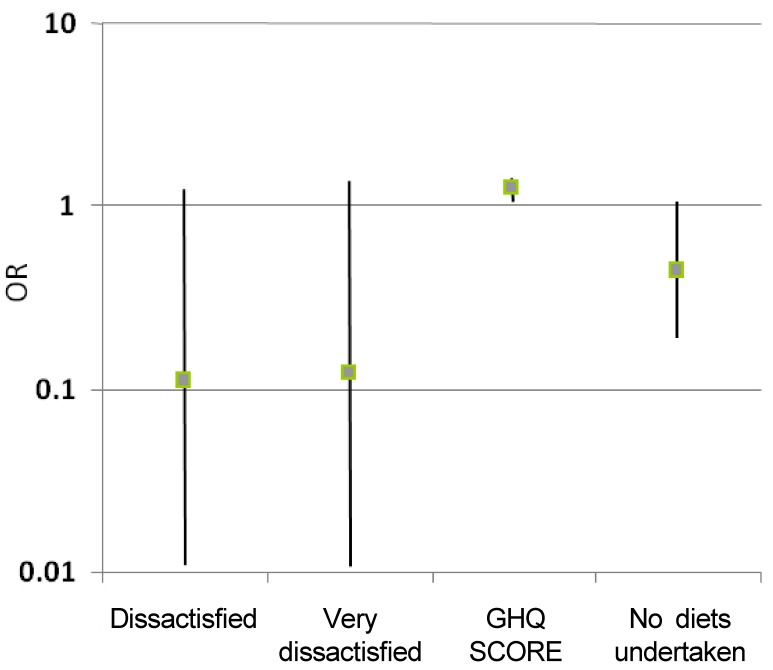
Diet attrition and failure of long term treatment are very frequent in obese patients. This study aimed to identify pre-treatment variables determining dropout and to customise the characteristics of those most likely to abandon the program before treatment, thus making it possible to modify the therapy to increase compliance. A total of 146 outpatients were consecutively enrolled; 73 patients followed a prescriptive diet while 73 followed a novel brief group Cognitive Behavioural Treatment (CBT) in addition to prescriptive diet. The two interventions lasted for six months. Anthropometric, demographic, psychological parameters and feeding behaviour were assessed, the last two with the Italian instrument VCAO Ansisa; than, a semi-structured interview was performed on motivation to lose weight. To identify the baseline dropout risk factors among these parameters, univariate and multivariate logistic models were used. Comparison of the results in the two different treatments showed a higher attrition rate in CBT group, despite no statistically significant difference between the two treatment arms (P = 0.127). Dropout patients did not differ significantly from those who did not dropout with regards to sex, age, Body Mass Index (BMI), history of cycling, education, work and marriage. Regardless of weight loss, the most important factor that determines the dropout appears to be a high level of stress revealed by General Health Questionnaire-28 items (GHQ-28) score within VCAO test. The identification of hindering factors during the assessment is fundamental to reduce the dropout risk. For subjects at risk, it would be useful to dedicate a stress management program before beginning a dietary restriction.
Keywords: Obesity treatment; diet attrition; dropout predictive factor; dropout risk factor; weight loss.
Figures
References
-
- Grossi E, Dalle Grave R, Mannucci E, Molinari E, Compare A, Cuzzolaro M, Marchesini G. Complexity of attrition in the treatment of obesity: clues from a structured telephone interview. Int J Obes (Lond) 2006;30:1132–1137. - PubMed
-
- Olivieri M, Minniti A, Bosello O. Predittori di esito e prevenzione delle ricadute. In: Bosello O, editor. Obesità: un Trattato Multidimensionale. 2th Ed. Milano: Kurtis; 2009. pp. 845–851.
-
- Dalle Grave R, Calugi S, Molinari E, Petroni ML, Bondi M, Compare A, Marchesini G QUOVADIS Study Group. Weight loss expectations in obese patients and treatment attrition: an observational multicenter study. Obes Res. 2005;13:1961–1969. - PubMed
-
- Moroshko I, Brennan L, O'Brien P. Predictors of dropout in weight loss interventions: a systematic review of the literature. Obes Rev. 2011;12:912–934. - PubMed
LinkOut - more resources
Full Text Sources
Other Literature Sources
