


A survey on depression among infertile women in Ghana
- PMID: 24612693
- PMCID: PMC3995861
- DOI: 10.1186/1472-6874-14-42
A survey on depression among infertile women in Ghana
Abstract
Background: The desire of many young women to become parents may be influenced by the premium placed on children by society. In Africa, children are highly valued for social, cultural and economic reasons. Infertile and childless women in Africa are therefore confronted with a series of societal discrimination and stigmatization which may lead to psychological disorders such as anxiety and depression. Even though some research has been done on the prevalence of infertility in Ghana, very little is known about the psychological impact of childlessness among infertile women. The present study aimed to examine prevalence and severity of depression in relation to age, type of infertility and duration of infertility in Ghanaian infertile women.
Methods: A total of 100 infertile women who met the selection criteria and had agreed to participate in the study were interviewed using the Beck Depression Inventory questionnaire from December 2012 to April 2013 at the Tamale Teaching Hospital, Tamale/Ghana. Data concerning socio-demographic characteristics such as age, monthly income, duration of infertility, marital status, educational level, number of previous conception, number of previous children, religion, as well as occupation of the respondents were recorded.
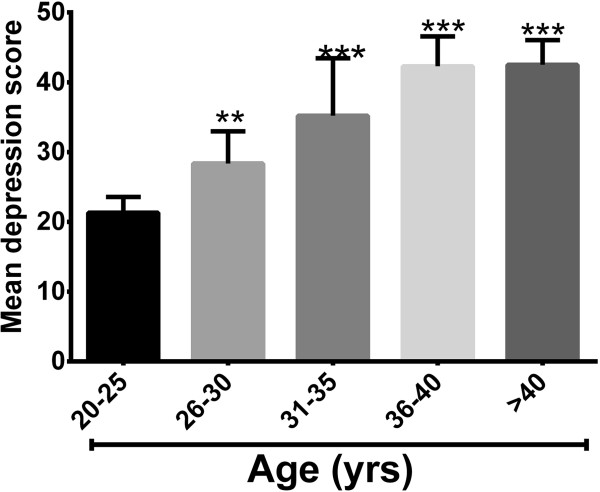
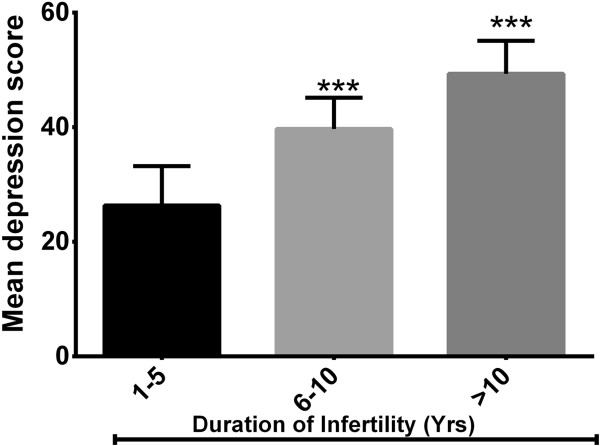
Results: The prevalence of depression among the women was 62.0% with the level of depression showing a significant positive correlation with age of the women and the duration of infertility. The level of depression was significantly higher among subjects with low or no formal education and among the unemployed. Women with primary infertility also presented with high depression scores as measured by BDI.
Conclusions: In conclusion, the prevalence of depression among the infertile women is high, especially among infertile women age 26 and above, those who are less educated, those with primary infertility, as well as those who have been diagnosed as infertile for more than 3 years. Interventions to decrease and prevent the development of severe depression among these patients should be considered.
Figures
References
-
- Practice Committee, American Society for Reproductive Medicine. Fertility and Sterility, Volume 89. American Society for Reproductive Medicine Practice Committee; 2008. Definitions of infertility and recurrent pregnancy loss; p. 1603.
-
- WHO. Reproductive Health Indicators for Global Monitoring: Report of the Second Interagency Meeting. Geneva: World Health Organization; 2001.
-
- Cates W, Farley TM, Rowe PJ. Worldwide patterns of infertility: is Africa different? Lancet. 1985;2:596–598. - PubMed
MeSH terms
LinkOut - more resources
Full Text Sources
Other Literature Sources
Medical
Miscellaneous
