Review
. 2014 Jul 15;592(14):2943-50.
doi: 10.1113/jphysiol.2014.271155. Epub 2014 Mar 10.

Neuro-humoral signalling by bile acids and the TGR5 receptor in the gastrointestinal tract

Affiliations
Review

Neuro-humoral signalling by bile acids and the TGR5 receptor in the gastrointestinal tract

Nigel W Bunnett. J Physiol. .

Abstract

In addition to their role in the digestion and absorption of dietary fats, bile acids (BAs) are tightly regulated signalling molecules. Their levels in the intestinal lumen, circulation and tissues fluctuate after feeding and fasting, and as a result of certain diseases and therapies. BAs regulate many cell types in the gut wall and beyond by activating nuclear and plasma membrane receptors. Of these, the G protein-coupled receptor TGR5 has emerged as a key mediator of the non-genomic actions of BAs. TGR5 is a cell-surface receptor that couples to Gαs, formation of cAMP, activation of protein kinase A and extracellular signal-regulated kinases, and inhibition of inflammatory signalling pathways. TGR5 has been implicated in mediating the actions of BAs on secretion of glucagon-like peptide 1 and glucose homeostasis, gastrointestinal motility and transit, electrolyte and fluid transport in the colon, bile formation and secretion, sensory transduction and inflammation. TGR5 agonists have been developed as treatments for metabolic, inflammatory and digestive disorders, and emerging evidence suggests that TGR5 mutations are associated with inflammatory diseases. Thus, TGR5 plays an important role in the normal processes of digestion and is a new therapeutic target for important digestive diseases.


Figures

Figure 1
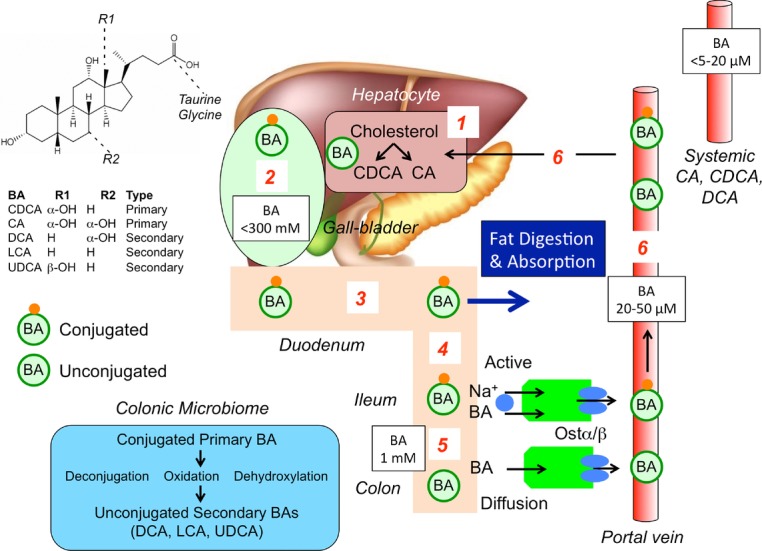
Figure 1. Synthesis, secretion and enterohepatic circulation of BAs in humans
(1) Primary bile acids are synthesized in hepatocytes from cholesterol. (2) BAs are conjugated to glycine and taurine and are stored in the gallbladder at high concentrations. (3) After feeding, conjugated BAs are secreted in the intestine where they emulsify dietary fats and form mixed micelles that facilitate digestion and absorption of the products of triglyceride digestion. (4) Conjugated BAs are not passively absorbed in the small intestine, but are actively and efficiently absorbed in the terminal ileum by the apical sodium BA co-transporter at the apical membrane of enterocytes of the terminal ileum. (5) In the colon, bacteria deconjugate, oxidise and hydroxylatedehydroxylate conjugated primary bile acids to form secondary bile acids, which are passively absorbed. (6) Conjugated and unconjugated BAs enter to portal vein and recirculate to the liver for reuse Ursodeoxycholic acid (UDCA).
Figure 2
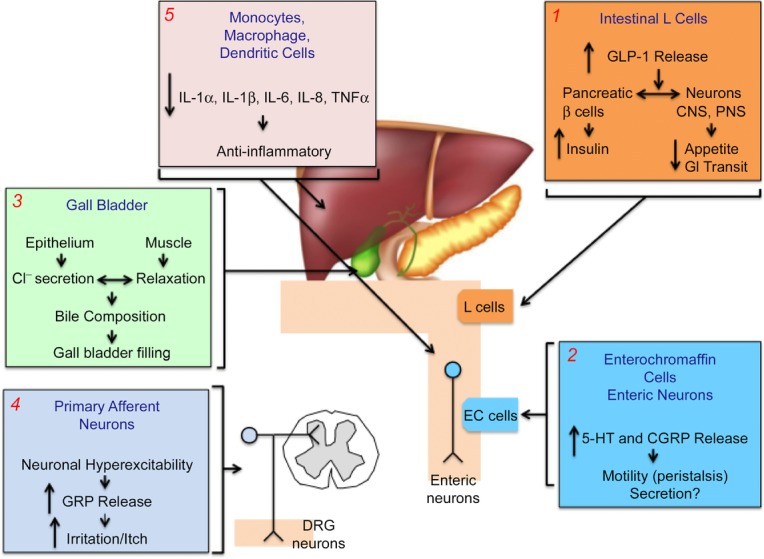
Figure 2. Potential functions of TGR5 in the digestive system
(1) Luminal BAs activate TGR5 on L cells to stimulate release of GLP-1, which promotes insulin secretion and inhibits food intake and gastric emptying, all of which lower blood glucose. (2) In the colon, BAs activate TGR5 on EC cells to stimulate release of 5–HT and on enteric neurons to stimulate release of CGRP. 5–HT and CGRP promote peristalsis. (3) In the gallbladder, activation of TGR5 on epithelial cells stimulates chloride secretion and activation of TGR5 on myocytes inhibits contractility. (4) In the skin and possibly in the intestine, BAs activate TGR5 on primary sensory neurons to induce hyperexcitability and release of GRP, a transmitter of itch and possibly irritant sensations. (5) BAs can activate TGR5 on immune cells of the liver and colon to suppress the release of proinflammatory cytokines and thereby dampen inflammation.
Figure 3
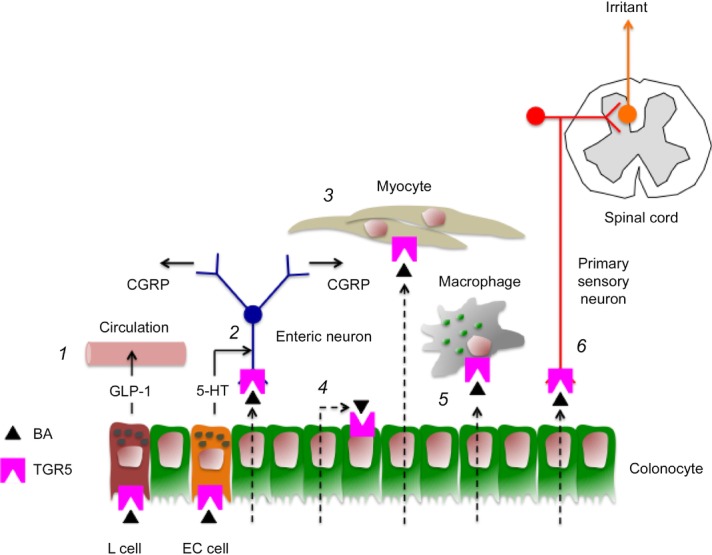
Figure 3. Neuro-humoral signalling of BAs and TGR5 in the gastrointestinal wall
(1) In the small intestine, luminal BAs can activate TGR5 on L cells to induce secretion of the hormone GLP-1. (2) In the colon, luminal BAs can activate TGR5 on EC cells to stimulate secretion of 5–HT, which activates 5–HT4 receptors on intrinsic primary afferent neurons, which release CGRP, a mediator of the ascending and descending components of the peristaltic reflex. Absorbed BAs may directly activate TGR5 on enteric neurons to induce release of CGRP. (3) TGR5 is expressed by gastric myocytes, where activation by absorbed BAs can inhibit contractility. (4) Absorbed BAs may activate TGR5 on colonocytes to inhibit chloride secretion. (5) Absorbed BAs activate TGR5 on colonic macrophages to suppress secretion of tumour necrosis factor α and dampen inflammation. (6) By analogy to the skin, absorbed BAs may activate TGR5 on primary sensory neurons that transmit irritant signals to the spinal cord.

References

    1. Alemi F, Kwon E, Poole DP, Lieu T, Lyo V, Cattaruzza F, Cevikbas F, Steinhoff M, Nassini R, Materazzi S, Guerrero-Alba R, Valdez-Morales E, Cottrell GS, Schoonjans K, Geppetti P, Vanner SJ, Bunnett NW, Corvera CU. The TGR5 receptor mediates bile acid-induced itch and analgesia. J Clin Invest. 2013a;123:1513–1530. - PMC - PubMed
    1. Alemi F, Poole DP, Chiu J, Schoonjans K, Cattaruzza F, Grider JR, Bunnett NW, Corvera CU. The receptor TGR5 mediates the prokinetic actions of intestinal bile acids and is required for normal defecation in mice. Gastroenterology. 2013b;144:145–154. - PMC - PubMed
    1. Angelin B, Björkhem I, Einarsson K, Ewerth S. Hepatic uptake of bile acids in man. Fasting and postprandial concentrations of individual bile acids in portal venous and systemic blood serum. J Clin Invest. 1982;70:724–731. - PMC - PubMed
    1. Camilleri M. Pharmacology of the new treatments for lower gastrointestinal motility disorders and irritable bowel syndrome. Clin Pharmacol Ther. 2012;91:44–59. - PubMed
    1. Camilleri M, Vazquez-Roque MI, Carlson P, Burton D, Wong BS, Zinsmeister AR. Association of bile acid receptor TGR5 variation and transit in health and lower functional gastrointestinal disorders. Neurogastroenterol Motil. 2011;23:995–999. e458. - PMC - PubMed

Publication types

MeSH terms

Substances

LinkOut - more resources