


Neurobiology of stress, depression, and rapid acting antidepressants: remodeling synaptic connections
- PMID: 24616149
- PMCID: PMC4432471
- DOI: 10.1002/da.22227
Neurobiology of stress, depression, and rapid acting antidepressants: remodeling synaptic connections
Abstract
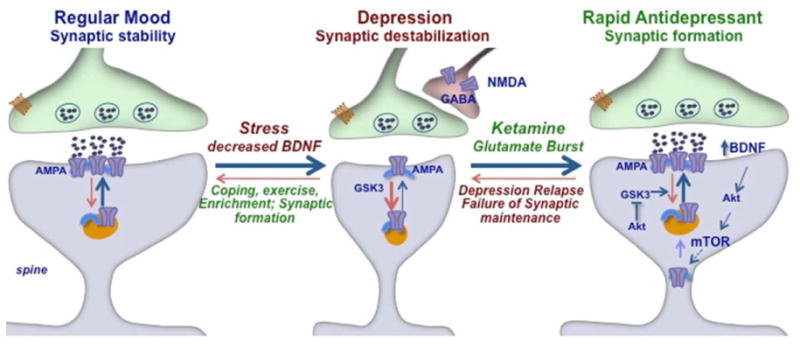
Stress and depression are associated with atrophy and loss of neurons in limbic and cortical brain regions that could contribute to the symptoms of depression. Typical monoamine reuptake inhibitor antidepressants have only modest efficacy and require long-term treatment, and are only weakly effective in blocking or reversing these structural changes caused by stress. Recent findings demonstrate that ketamine, an NMDA receptor antagonist, produces rapid antidepressant actions in difficult to treat depressed patients. In addition, preclinical studies demonstrate that ketamine rapidly increases synaptic connections in the prefrontal cortex by increasing glutamate signaling and activation of pathways that control the synthesis of synaptic proteins. Moreover, ketamine rapidly reverses the synaptic deficits caused by exposure to chronic stress in rodent models. Studies of the signaling mechanisms underlying the actions of ketamine have provided novel approaches and targets for new rapid acting antidepressants with decreased side effects, as well as a better understanding of the neurobiology of stress, depression, and treatment response.
Keywords: Scopolamine; brain-derived neurotrophic factor; glycogen synthase kinase-3; lithium; mechanistic target of rapamycin.
© 2014 Wiley Periodicals, Inc.
Figures
References
-
- Trivedi M, Rush AJ, Wisniewski SR, et al. STAR*D Study Team. Evaluation of outcomes with citalopram for depression using measurement-based care in STAR*D: implications for clinical practice. Am J Psych. 2006;163(1):28–40. - PubMed
-
- MacQueen G, Frodl T. The hippocampus in major depression: evidence for the convergence of the bench and bedside in psychiatric research? Mol Psych. 2011;16(3):252–264. - PubMed
-
- Sheline Y, Gado MH, Kraemer HC. Untreated depression and hippocampal volume loss. Amer J Psych. 2003;160(8):1516–1518. - PubMed
Publication types
MeSH terms
Substances
Grants and funding
LinkOut - more resources
Full Text Sources
Other Literature Sources
Medical
