Review
. 2014 Aug;79(4):679-92.
doi: 10.1111/tpj.12503. Epub 2014 May 21.

Revealing insect herbivory-induced phenolamide metabolism: from single genes to metabolic network plasticity analysis

Affiliations
Review

Revealing insect herbivory-induced phenolamide metabolism: from single genes to metabolic network plasticity analysis

Emmanuel Gaquerel et al. Plant J. 2014 Aug.

Abstract

The phenylpropanoid metabolic space comprises a network of interconnected metabolic branches that contribute to the biosynthesis of a large array of compounds with functions in plant development and stress adaptation. During biotic challenges, such as insect attack, a major rewiring of gene networks associated with phenylpropanoid metabolism is observed. This rapid reconfiguration of gene expression allows prioritized production of metabolites that help the plant solve ecological problems. Phenolamides are a group of phenolic derivatives that originate from diversion of hydroxycinnamoyl acids from the main phenylpropanoid pathway after N-acyltransferase-dependent conjugation to polyamines or aryl monoamines. These structurally diverse metabolites are abundant in the reproductive organs of many plants, and have recently been shown to play roles as induced defenses in vegetative tissues. In the wild tobacco, Nicotiana attenuata, in which herbivory-induced regulation of these metabolites has been studied, rapid elevations of the levels of phenolamides that function as induced defenses result from a multi-hormonal signaling network that re-shapes connected metabolic pathways. In this review, we summarize recent findings in the regulation of phenolamides obtained by mass spectrometry-based metabolomics profiling, and outline a conceptual framework for gene discovery in this pathway. We also introduce a multifactorial approach that is useful in deciphering metabolic pathway reorganizations among tissues in response to stress.

Keywords: N-acyltransferase; Nicotiana attenuata; metabolomics; phenolamides; phenylpropanoid pathway; self-organizing maps; systems biology.


Figures

Figure 1
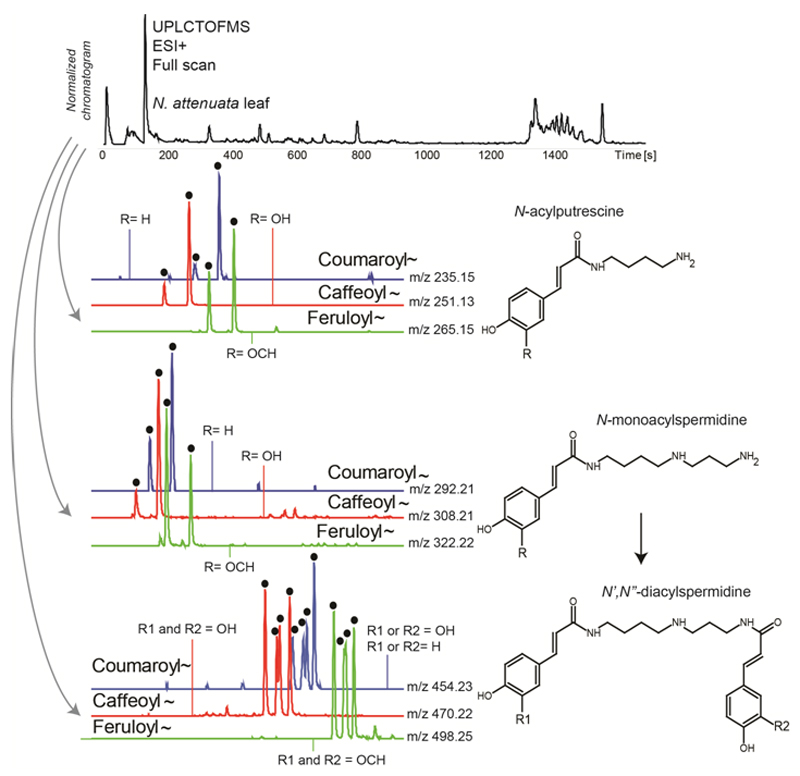
Figure 1. Mass spectrometry-based metabolomics of main phenolamides in N. attenuata leaves.
Phenolamides can readily be analyzed by ultra-high performance liquid chromatography coupled with a mass spectrometer. A representative UHPLC-time-of-flight-mass spectrometry (TOFMS) full scan chromatogram recorded in the positive ionization mode for an extract of an herbivory-induced leaf of Nicotina attenuata is shown. Coumaroyl- (m/z 147.05), caffeoyl- (m/z 163.04), or feruloyl (m/z 177.05) moieties resulting from the cleavage from different core molecules can, for example, be queried rapidly to compute extracted ion currents from the chromatogram. Specific m/z signals corresponding to either coumaroyl-, caffeoyl- and feruloyl-containing mono-acylated putrescine molecules or mono- and diacylated spermidines (N’,N”-coumaroyl,caffeoylspermidine, N’,N”-dicaffeoylspermidine, N’,N”-diferuloylspermidine) can be queried to reveal phenolamide peaks (highlighted with black dots). Representative structures are shown.
Figure 2
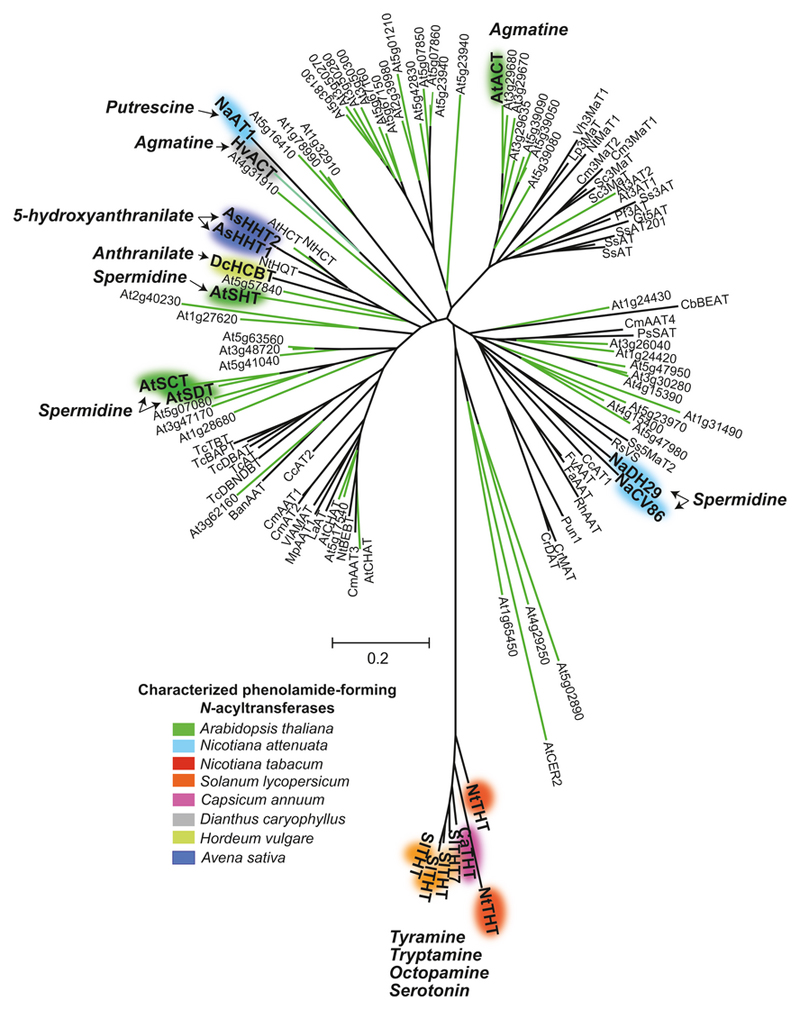
Figure 2. Phylogenetic relationships among phenolamide-forming N-acyltransferases.
A phylogenetic analysis was conducted for Arabidopsis BAHD (green branches of the tree) and functionally characterized N-acyltransferases including phenolamide-forming ones (acyl acceptor indicated) summarized in Bassard et al. (2010) and additional characterized N-acyltransferases reported in Luo et al. (2009). The phylogenetic tree reveals that N. attenuata DH29 and CV86 (highlighted in blue), which control the two-step synthesis of diacylated spermidines, cluster far from the Arabidopsis polyacylated spermidine-forming N-acyltransferases (AtSCT and AtSHT). Phenolamide N-acyltransferases with different acyl acceptor specificities (indicated next N-acyltransferases) are located on different parts of the tree. Sequences were aligned with Muscle and the alignment was trimmed with Gblocks to obtain 133 positions in 16 blocks that were used to calculate the phylogenetic tree using MEGA 4 and the Neighbor-Joining clustering method with 1000 iterations to calculate bootstrap values (Onkokesung et al. 2012). Colored ellipses of the tree connected to gene name in bold -- plant species names are reported in the color key -- denote for characterized phenolamide-forming N-acyltransferases. Plant species names are abbreviated as follows: Arabidopsis thaliana, At; Avena sativa, As; Capsicum annuum, Ca; Catharanthus roseus, Cr; Clarkia breweri, Cb; Curcumis melo, Cm; Dianthus caryophyllus, Dc; Fragaria anassa, Fa; Hordeum vulgare, Hv; Lupinus albus, La; Malus pumila, Mp; Nicotiana attenuata, Na; Nicotiana tabacum, Nt; Papaver somniferum, Ps; Salvia splendens, Ss; Solanum lycopersicum, Sl; Taxum cupsidata, Tc; Vitis labrusca, Vl.
Figure 3
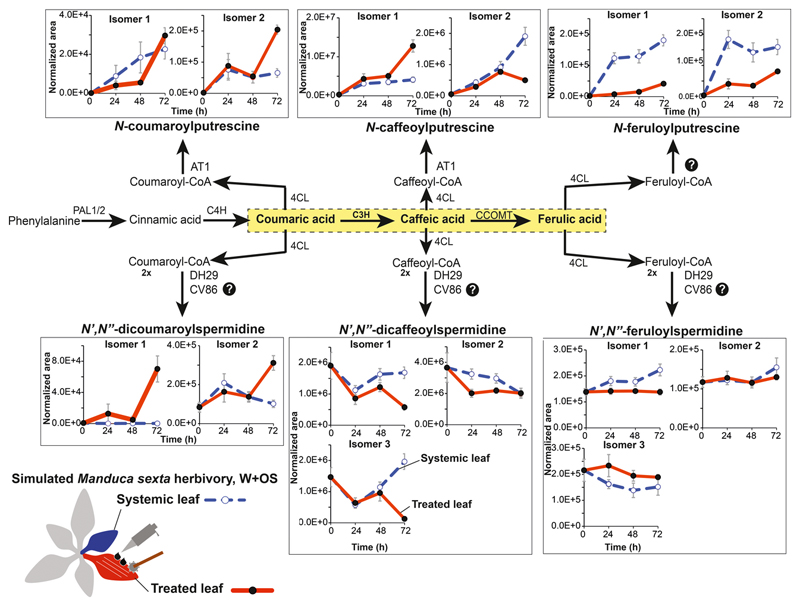
Figure 3. Herbivory-induced changes in N. attenuata leaf phenolamide metabolism.
Gene names and functions are given in the main text. Dark blue lines depict metabolite accumulation patterns in W+OS-treated leaves and red dashed lines depict responses in a systemic leaf from the same plant. Putrescine conjugates show greater induced changes than do spermidine conjugates. Dynamics differ among the predicted isomers.
Figure 4
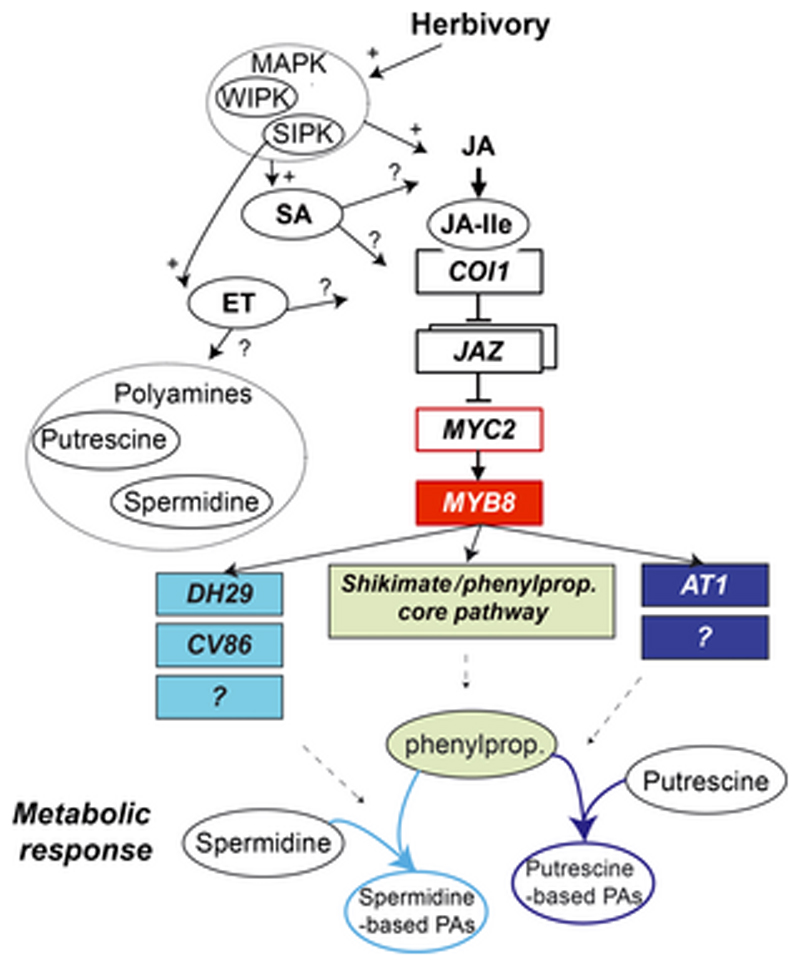
Figure 4. Current view of the regulation of herbivory-induced phenolamide biosynthesis in N. attenuata as mediated by the core jasmonic acid biosynthetic and transcriptional pathway.
MAPK signaling and interactions among other hormonal signaling networks shape the amplitude of the jasmonate bursts and downstream signaling. The role of ethylene in cross-regulating polyamine metabolism has yet to be rigorously investigated. Specific JAZ proteins inhibiting MYB8 transcription are not yet known. MYB8 regulates induced changes in the core phenylpropanoid pathway and DH29, CV86, AT1 and yet unknown phenolamide-forming N-acyltransferases.
Figure 5
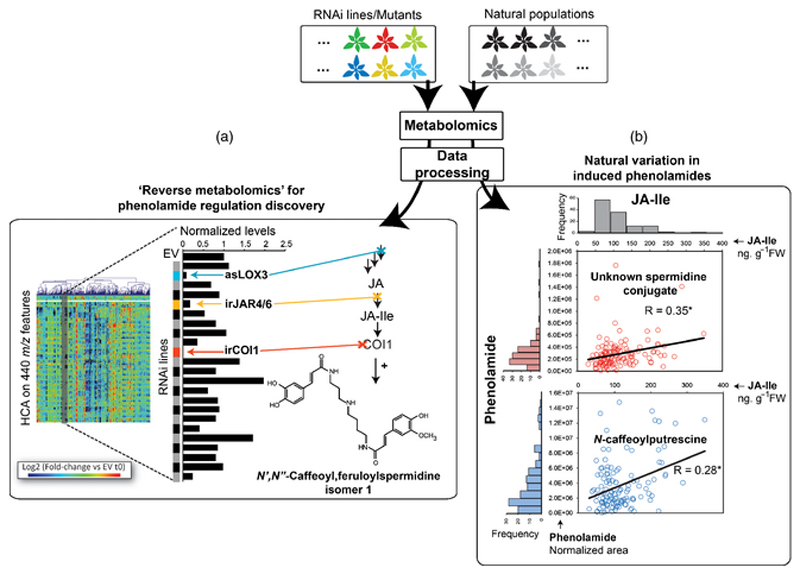
Figure 5. Novel approaches based on metabolomics to the discovery of regulatory mechanisms for herbivory-induced changes in phenolamide metabolism.
(a) High-throughput non-targeted metabolite profiling of herbivory-induced changes in a large collection of RNAi transgenic lines reveals regulators of metabolite accumulation. Processed data can be classified using hierarchical clustering and clusters of m/z signals of interest screened across the library of transgenic lines. The jasmonate regulation of N’,N”-caffeoyl,feruloyspermidine is provided as an example. (b) Natural variation in W+OS-induced levels of N-caffeoylputrescine and of an unknown spermidine-based phenolamide in 176 natural accessions of N. attenuata positively correlate with natural variation in the OS-induced JA-Ile bursts.
Figure 6
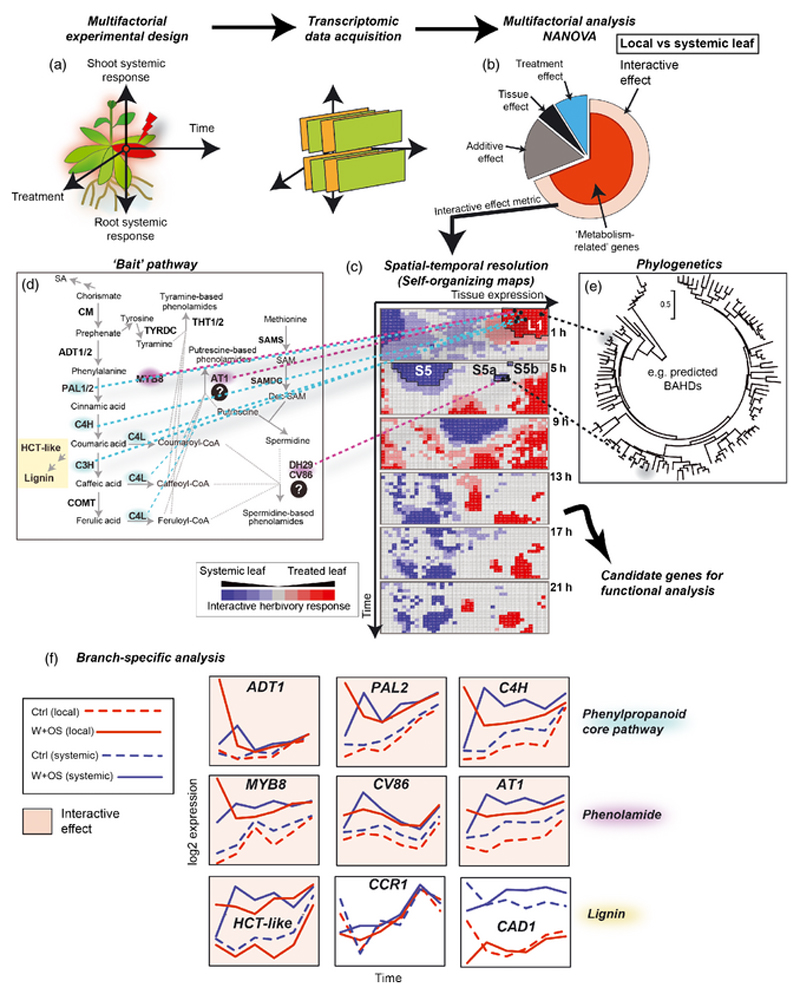
Figure 6. A multifactorial-based coexpression analysis work-flow for delineating systemically-induced secondary metabolic pathways.
A multifactorial analysis work-flow has been developed by Gulati et al. (2013) and its use in delineating genes in the acyclic diterpene glycoside pathway has previously been reported. This strategy is applied to the analysis of multidimensional transcriptomic data-sets acquired from multifactorial experimental designs (different tissue types, treatment, etc…) including time-series experiments (a). Transcriptomic data collected at each time point are combined into a data matrix used for multifactorial analysis. The statistical group corresponding to the interactive effect genes (those genes that respond to the treatment differently according to the tissue type, here locally vs systemically treated leaves) is highly overrepresented with metabolism-related genes (red sector) (b). Self-organizing maps are used to impose structure (c) and to cluster genes within this bin according to their temporal dynamics using a metric derived from the multifactorial analysis. Bait genes (here from the phenylpropanoid and phenolamide pathways) can be localized on the maps to identify clusters of genes of interest (phenylpropanoid genes: L1 for early interactive effects in local leaves; phenolamide genes: L1, S5a and S5b for local and then systemic interactive effects) (d). These clusters of genes can be subsequently mined in accordance with the predictions of phylogenetic relationships (e). (f) Genes from specific branches of the phenylpropanoid space can be classified according to the detection of an interactive effect regulation. Most lignin-related genes, except HCT-Like, do not show interactive effect regulation in response to herbivory, unlike the core phenylpropanoid and phenolamide genes.

References

    1. Agrawal AA, Hastings AP, Johnson MT, Maron JL, Salminen J-P. Insect herbivores drive real-time ecological and evolutionary change in plant populations. Science. 338:113–116. - PubMed
    1. Bassard JE, Ullmann P, Bernier F, Werck-Reichhart D. Phenolamides: Bridging polyamines to the phenolic metabolism. Phytochemistry. 2010;71:1808–1824. - PubMed
    1. Berenbaum MR, Zangerl AR. Facing the future of plant-insect interaction research: Le Retour a la “Raison d'Etre”. Plant physiology. 2008;146:804–811. - PMC - PubMed
    1. Bittner M, Meltzer P, Trent J. Data analysis and integration: of steps and arrows. Nat Genet. 1999;22:213–215. - PubMed
    1. Chitwood DH, Maloof JN, Sinha NR. Dynamic transcriptomic profiles between tomato and a wild relative reflect distinct developmental architectures. Plant physiology. 2013;162:537–552. - PMC - PubMed

Publication types

LinkOut - more resources